Breed news
HerdingStarted by a grandfather in 1937, this Florida ranch now covers 50,000 acres, feeds local communities and...BreedsKasaragod Kullan set to be Keralam’s third indigenous cattle varietyHerdingTexas Cattle Feeders Convention to focus on herd rebuilding and 2027 outlookHistoryAncient cattle love affairs: East Asian cattle genomes reveal Tang-Song dynasty mixing and wild bovine introgressionHealthState announces public comment period for proposed bovine tuberculosis testing areasShowsNortheast 4-H Livestock Show celebrates 91 years of traditionShowsAnnual Webster Parish 4-H Livestock Show set to begin next weekBreedsA Leap Forward in Indigenous Breeding: ICAR–IVRI’s Breakthrough in Producing Sahiwal Calves through Advanced Reproductive TechnologiesBreedsBoyd Beef Cattle to Donate 2027 Angus Foundation Heifer PackageBreedsU.P. State Fair dairy show highlights youth, dairy cattle and communityHerdingStarted by a grandfather in 1937, this Florida ranch now covers 50,000 acres, feeds local communities and...BreedsKasaragod Kullan set to be Keralam’s third indigenous cattle varietyHerdingTexas Cattle Feeders Convention to focus on herd rebuilding and 2027 outlookHistoryAncient cattle love affairs: East Asian cattle genomes reveal Tang-Song dynasty mixing and wild bovine introgressionHealthState announces public comment period for proposed bovine tuberculosis testing areasShowsNortheast 4-H Livestock Show celebrates 91 years of traditionShowsAnnual Webster Parish 4-H Livestock Show set to begin next weekBreedsA Leap Forward in Indigenous Breeding: ICAR–IVRI’s Breakthrough in Producing Sahiwal Calves through Advanced Reproductive TechnologiesBreedsBoyd Beef Cattle to Donate 2027 Angus Foundation Heifer PackageBreedsU.P. State Fair dairy show highlights youth, dairy cattle and community

Breeds of Hortobágy

The great Hungarian puszta, where herds of grey long-horned cattle graze under the eye of mounted herdsmen.

Breeds of this place

Hungarian GreyPodolian cattle

Best time: May to September; the bridge fair is in August.

The Hortobágy is the largest natural grassland in Hungary, a flat steppe east of the Tisza river. Herders have grazed cattle, horses and sheep here for centuries, and the Hungarian Grey, a long-horned steppe cattle, is its emblem. Hortobágy became Hungary's first national park in 1973, and the pastoral landscape is a World Heritage Site.
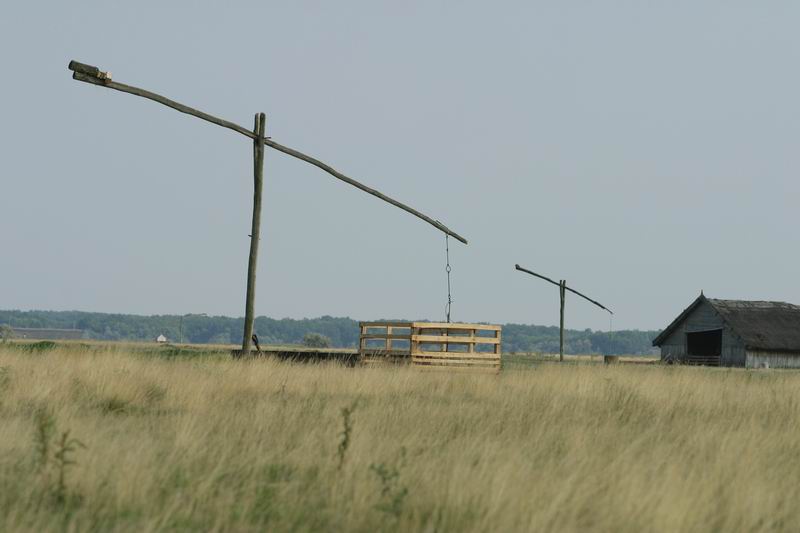
Well (hungarian gémeskút ) in the Hortobágy National Park (?) Puszta, Hungary
Photo: Andreas Poeschek , fotografikus.hu, CC BY 2.0 at, via Wikimedia Commons

Hungarian Grey

Hungarian Grey cattle are silver-grey, with dark skin and long, upward-curving horns. Between the fifteenth and seventeenth centuries, great herds were driven on foot from the puszta to markets in Vienna, Nuremberg and Venice. The breed fell to a few hundred animals in the 1960s, and conservation has since brought it back. It is raised mostly for beef and kept in herds on the open grassland.

Herdsmen of the puszta

The puszta had its own herders: the csikós for horses, the juhász for sheep and the gulyás for cattle, whose stews gave the world the word goulash. The Nine-Arch Bridge at Hortobágy village is the scene of a bridge fair held in August. The park's herds include grey cattle, water buffalo, Racka sheep and horses.

A trail idea for Hortobágy

  1. Nine-Arch Bridge The stone bridge and village at the centre of the puszta.
  2. Herdsmen's museum Displays on the herding life of the plain.
  3. Máta stud Horse shows and carriage rides across the grassland.
  4. Open grassland Herds of grey cattle grazing the steppe.
About this page

Written by the EveryCow desk with AI assistance. Background: "Hortobágy National Park" on Wikipedia. Fair dates, markets and visiting rules change; check locally before travelling, and keep a respectful distance from working animals. If something is wrong, tell us.

The weekly digest

Every Monday: seven cattle breeds you may not know, the cattle days of the week ahead, and one product explained step by step.