Breeds of Lascaux and Montignac
A cave in the Vézère valley whose Hall of the Bulls holds paintings of aurochs some 17,000 years old.
Breeds of this place
Best time: April to October.
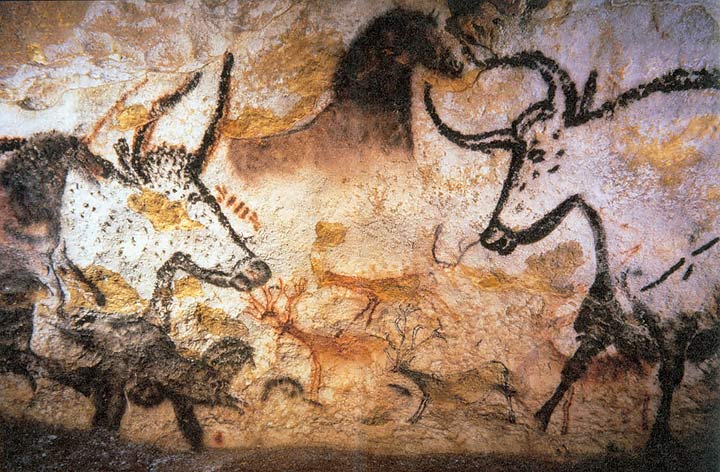
The cave of Lascaux, above the town of Montignac in the Dordogne, was found by four teenagers in 1940. Its walls are covered with paintings of horses, deer and aurochs, the wild ancestors of cattle, made about 17,000 years ago. In the Hall of the Bulls, huge black aurochs stride across the ceiling, one of them more than five metres long.
The aurochs in art
The aurochs was a massive wild ox, with bulls standing close to two metres at the shoulder, that lived across Europe, Asia and North Africa. Painters at Lascaux drew them with sweeping lines and swollen bodies, often with horns shown from the front while the head was in profile. The aurochs survived in Europe until 1627, when the last one died in Poland.
Protecting the cave
The original cave was closed to the public in 1963 because visitors' breath was damaging the paintings. Replicas have been built nearby, the most recent, opened in 2016, reproducing the entire cave. The Vézère valley's decorated caves are a World Heritage Site.
A trail idea for Lascaux and Montignac
- Lascaux IV The full replica of the cave and its paintings at Montignac.
- Montignac The town on the Vézère below the cave.
- Les Eyzies A village with the national museum of prehistory.
Written by the EveryCow desk with AI assistance. Background: "Lascaux" on Wikipedia. Fair dates, markets and visiting rules change; check locally before travelling, and keep a respectful distance from working animals. If something is wrong, tell us.
No breeds here yet. New pages are added every day.