Breeds of Hortobágy
The great Hungarian puszta, where herds of grey long-horned cattle graze under the eye of mounted herdsmen.
Breeds of this place
Best time: May to September; the bridge fair is in August.
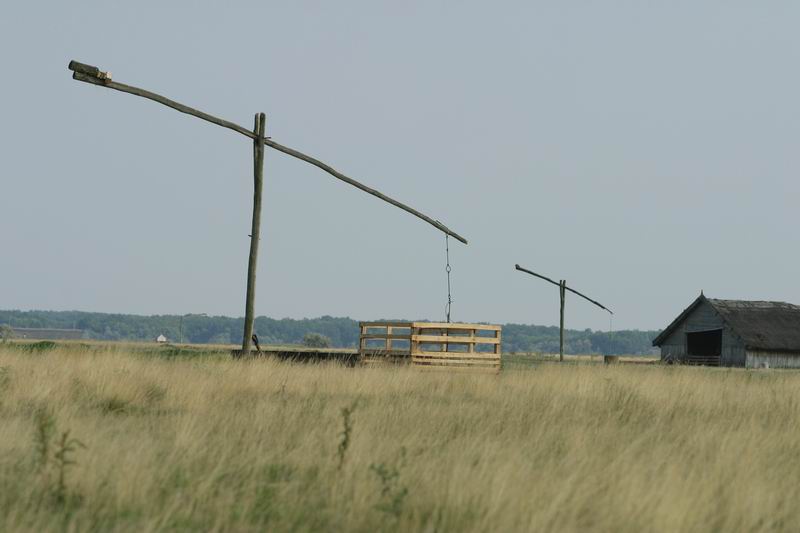
The Hortobágy is the largest natural grassland in Hungary, a flat steppe east of the Tisza river. Herders have grazed cattle, horses and sheep here for centuries, and the Hungarian Grey, a long-horned steppe cattle, is its emblem. Hortobágy became Hungary's first national park in 1973, and the pastoral landscape is a World Heritage Site.
Hungarian Grey
Hungarian Grey cattle are silver-grey, with dark skin and long, upward-curving horns. Between the fifteenth and seventeenth centuries, great herds were driven on foot from the puszta to markets in Vienna, Nuremberg and Venice. The breed fell to a few hundred animals in the 1960s, and conservation has since brought it back. It is raised mostly for beef and kept in herds on the open grassland.
Herdsmen of the puszta
The puszta had its own herders: the csikós for horses, the juhász for sheep and the gulyás for cattle, whose stews gave the world the word goulash. The Nine-Arch Bridge at Hortobágy village is the scene of a bridge fair held in August. The park's herds include grey cattle, water buffalo, Racka sheep and horses.
A trail idea for Hortobágy
- Nine-Arch Bridge The stone bridge and village at the centre of the puszta.
- Herdsmen's museum Displays on the herding life of the plain.
- Máta stud Horse shows and carriage rides across the grassland.
- Open grassland Herds of grey cattle grazing the steppe.
Written by the EveryCow desk with AI assistance. Background: "Hortobágy National Park" on Wikipedia. Fair dates, markets and visiting rules change; check locally before travelling, and keep a respectful distance from working animals. If something is wrong, tell us.
Nothing matches those filters yet. Take one off, or check back: new breeds are written every day.