Breed news
HerdingStarted by a grandfather in 1937, this Florida ranch now covers 50,000 acres, feeds local communities and...BreedsKasaragod Kullan set to be Keralam’s third indigenous cattle varietyHerdingTexas Cattle Feeders Convention to focus on herd rebuilding and 2027 outlookHistoryAncient cattle love affairs: East Asian cattle genomes reveal Tang-Song dynasty mixing and wild bovine introgressionHealthState announces public comment period for proposed bovine tuberculosis testing areasShowsNortheast 4-H Livestock Show celebrates 91 years of traditionShowsAnnual Webster Parish 4-H Livestock Show set to begin next weekBreedsA Leap Forward in Indigenous Breeding: ICAR–IVRI’s Breakthrough in Producing Sahiwal Calves through Advanced Reproductive TechnologiesBreedsBoyd Beef Cattle to Donate 2027 Angus Foundation Heifer PackageBreedsU.P. State Fair dairy show highlights youth, dairy cattle and communityHerdingStarted by a grandfather in 1937, this Florida ranch now covers 50,000 acres, feeds local communities and...BreedsKasaragod Kullan set to be Keralam’s third indigenous cattle varietyHerdingTexas Cattle Feeders Convention to focus on herd rebuilding and 2027 outlookHistoryAncient cattle love affairs: East Asian cattle genomes reveal Tang-Song dynasty mixing and wild bovine introgressionHealthState announces public comment period for proposed bovine tuberculosis testing areasShowsNortheast 4-H Livestock Show celebrates 91 years of traditionShowsAnnual Webster Parish 4-H Livestock Show set to begin next weekBreedsA Leap Forward in Indigenous Breeding: ICAR–IVRI’s Breakthrough in Producing Sahiwal Calves through Advanced Reproductive TechnologiesBreedsBoyd Beef Cattle to Donate 2027 Angus Foundation Heifer PackageBreedsU.P. State Fair dairy show highlights youth, dairy cattle and community

Breeds of Mishima

A small island in the Sea of Japan whose native black cattle, never crossed with foreign breeds, are a national natural monument.

Breeds of this place

Mishima cattleJapanese Black

Best time: April to October, when sea crossings are calmer.

Mishima is a small island about 45 kilometres off Hagi, on the Sea of Japan coast of Yamaguchi Prefecture. Its isolation kept its cattle apart when Japan's other native cattle were crossed with European breeds from the late nineteenth century. The Mishima cattle are one of only two surviving unmixed native Japanese breeds, and were named a natural monument of Japan in 1928.
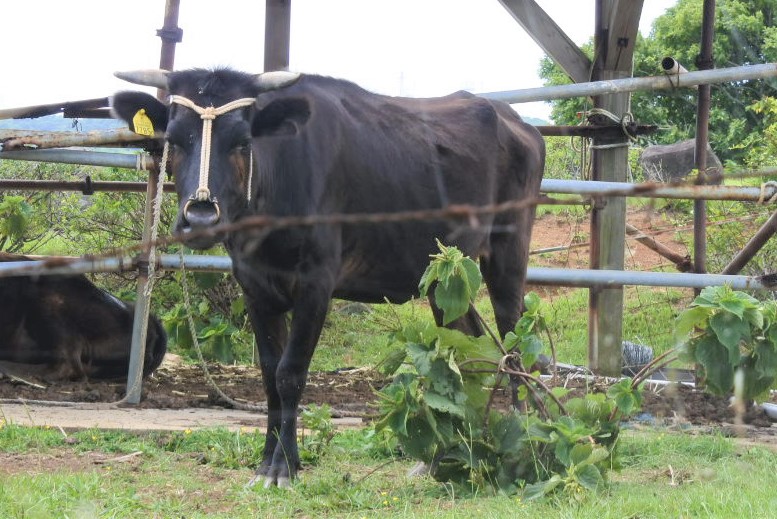
Mishima cattle in Mi-shima Island, Yamaguchi prefecture. One of two Japanese original cattle breeds that are never cross-bred with Western cattle.
Photo: LT sfm, CC BY-SA 3.0, via Wikimedia Commons

The Mishima cattle

Mishima cattle are small and black, sturdy and docile, with short horns. They were kept for ploughing the island's steep fields and for hauling. They are close to the ancestral type from which the Japanese Black was developed. The herd is small, a hundred or so animals, and is cared for by islanders with public support.

Island farming

The island's farmers grow rice, vegetables and fruit, and the cattle graze small pastures by the sea. Mishima bulls have also been crossed with Holstein cows to raise beef cattle on the mainland, a way to give the native cattle a wider role while the pure herd is kept on the island.

A trail idea for Mishima

  1. Hagi The old castle town on the mainland, where ferries leave for Mishima.
  2. Mishima port The island's harbour and village.
  3. Island pastures Small grazing fields above the sea.
About this page

Written by the EveryCow desk with AI assistance. Background: "Mishima cattle" on Wikipedia. Fair dates, markets and visiting rules change; check locally before travelling, and keep a respectful distance from working animals. If something is wrong, tell us.

The weekly digest

Every Monday: seven cattle breeds you may not know, the cattle days of the week ahead, and one product explained step by step.