Pasture and transhumance: the breeds
The climb to summer pasture, the decorated return in autumn, and the great droving routes.
Transhumance is the seasonal movement of herds between pastures: up to the mountains in summer and down to the valleys in winter, or north with the rains and south in the dry season. It is one of the oldest ways of keeping cattle and still shapes life in the Alps, the Pyrenees, the Sahel, the Himalaya and Central Asia. In 2019 UNESCO recognised transhumance in the Alps and the Mediterranean as part of the intangible heritage of humanity, and more countries joined the listing in 2023.
Up the mountain and back
In the Alps the herd goes up in June, sometimes in stages, through middle pastures to the high alp, and comes down again in September. Herders stay on the alp all summer, milking, making butter and cheese, and moving the cattle from one grazing area to the next. The return to the valley is a festival in many villages, with flowers and bells for the herd and food, music and markets for people. Pyrenean and Carpathian villages keep similar customs.
The Sahel and the Niger
Across the Sahel, Fulani herders move zebu herds north into the grasslands at the start of the rains and south toward rivers and farmland in the dry season. The routes are long and old, and depend on agreements with farmers along the way. At Diafarabé in Mali, herders bring their cattle back across the Niger at the end of the rains in a crossing with contests, poetry and celebration, known as the Yaaral and Degal.
Droving routes
Before railways and lorries, cattle walked to market. In Spain, the cañadas reales, the royal drove roads, were protected for centuries for the movement of livestock, and some are still walked each year. In Britain, Scottish drovers walked cattle south to English markets. In the United States, trail drives took Texas cattle north to the railheads of Kansas. In Australia, drovers took herds along stock routes such as the Canning Stock Route in the Western Desert.
The Himalaya
In the Himalaya, many herding families move between winter villages and summer pastures. The Brokpa of Merak and Sakteng in eastern Bhutan move their yak and cattle between high and low pastures through the year. In Ladakh, herders on the Changthang move yak with sheep and goats across the plateau. Lower in the hills, farming families take cattle to forest pastures for the monsoon and bring them back to the village before winter.
Worth knowing
- Alpabzug and désalpe: The return from the alp in Switzerland and Austria
- Yaaral and Degal: The cattle crossing of the Niger at Diafarabé
- Cañadas reales: The old drove roads of Spain
- Chisholm Trail: Texas cattle drives to Kansas
- Canning Stock Route: Droving route across the Western Australian desert
- Brokpa herders: Yak and cattle herders of eastern Bhutan
Sources and further reading
Original text by the EveryCow desk, written with AI assistance and checked against the sources above. Customs are described as tradition, not as advice. If we have something wrong, tell us.
Pasture and transhumance on EveryCow
The breeds written up so far, best known first.
 🇫🇷 France and 2 moreBlonde d'Aquitaine
A big wheat-coated beef breed from south-west France, born of three old draught linesTaurine · Beef
🇫🇷 France and 2 moreBlonde d'Aquitaine
A big wheat-coated beef breed from south-west France, born of three old draught linesTaurine · Beef
 🇭🇷 Croatia and 5 moreBuša
A little mountain cow of the Balkans with short horns, kept for milk, meat and workTaurine · Triple-purpose · Disease-resistant
🇭🇷 Croatia and 5 moreBuša
A little mountain cow of the Balkans with short horns, kept for milk, meat and workTaurine · Triple-purpose · Disease-resistant
 🇫🇷 FranceSalersrace de Salers
A large dual-purpose breed from the Cantal mountains of France, red or black with lyre-shaped horns.Taurine · Dual-purpose · Docile
🇫🇷 FranceSalersrace de Salers
A large dual-purpose breed from the Cantal mountains of France, red or black with lyre-shaped horns.Taurine · Dual-purpose · Docile
 🇨🇭 SwitzerlandHérens
A small black or red Swiss alpine breed kept for cow fighting and mountain grazing.Taurine · Sport · Quick and strong
🇨🇭 SwitzerlandHérens
A small black or red Swiss alpine breed kept for cow fighting and mountain grazing.Taurine · Sport · Quick and strong
 🇮🇹 ItalyAosta Black PiedValdostana Pezzata Nera
A short-horned, black-pied dual-purpose breed from the Aosta Valley in ItalyTaurine · Dual-purpose · Thrifty foragers
🇮🇹 ItalyAosta Black PiedValdostana Pezzata Nera
A short-horned, black-pied dual-purpose breed from the Aosta Valley in ItalyTaurine · Dual-purpose · Thrifty foragers
 🇫🇷 FranceCorse
A small tan cow from Corsica, once the island's plough ox, now reared free-range for beefTaurine · Beef · Thrifty foragers
🇫🇷 FranceCorse
A small tan cow from Corsica, once the island's plough ox, now reared free-range for beefTaurine · Beef · Thrifty foragers
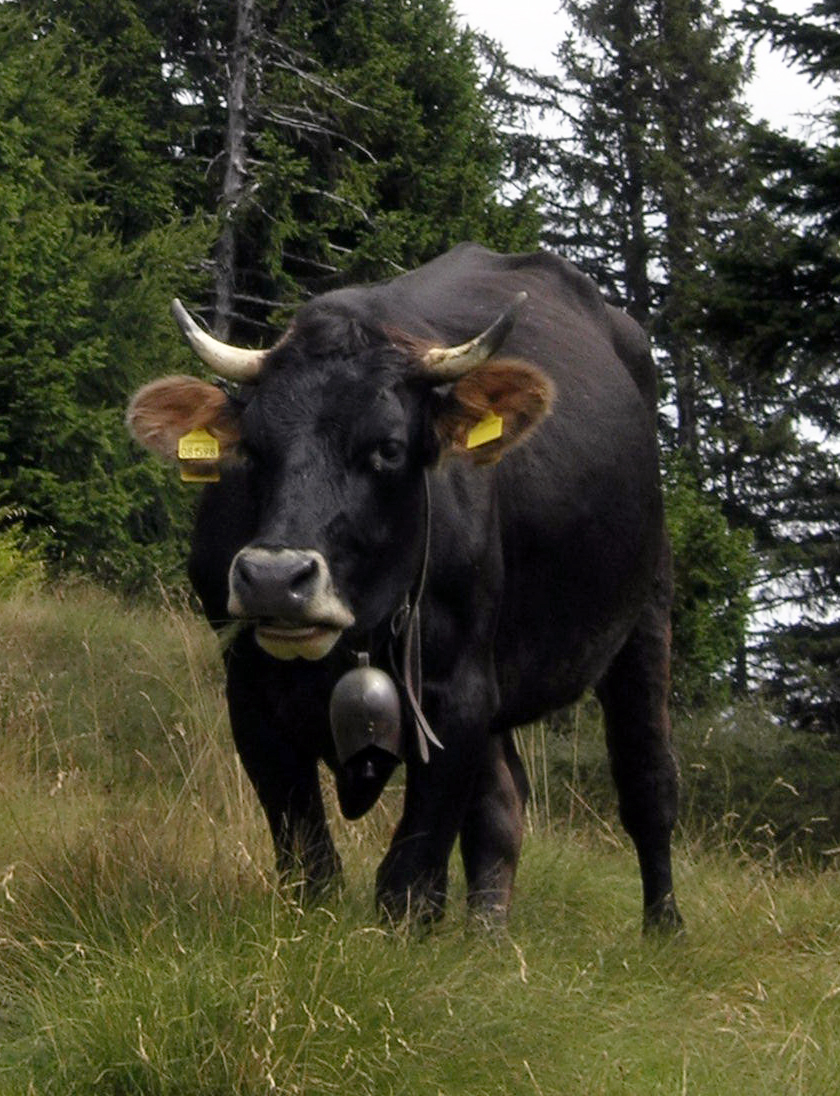 🇮🇹 ItalyRendena
A dual-purpose Alpine breed from the Val Rendena in Trentino, chestnut to near-black.Taurine · Dual-purpose
🇮🇹 ItalyRendena
A dual-purpose Alpine breed from the Val Rendena in Trentino, chestnut to near-black.Taurine · Dual-purpose
Photo credits on this page
The small pictures above come from Wikimedia Commons under free licences. Some are cropped to fit.
- Buša: P.Cikovac, CC BY-SA 4.0, source
- Aosta Black Pied: Lohen11, CC BY-SA 3.0, source
- Hérens: Joe Byrne, CC BY-SA 4.0, source
- Blonde d'Aquitaine: Myrabella, CC BY-SA 3.0, source
- Corse: luiginter, CC BY 2.0, source
- Salers: B.navez, CC BY-SA 3.0, source
- Rendena: User:Rendena, CC0, source