Dung, hide and horn
Dung cakes (upla and gobar fuel)
Cattle dung mixed with straw, patted into rounds by hand and sun-dried as fuel for the village hearth.
Across rural South Asia, cattle dung is mixed with straw or husk, patted into flat rounds by hand and slapped onto walls or laid in rows to dry in the sun. The dried cakes, called upla, kande, gosse or goitha, burn slowly with a steady heat. They fuel clay stoves for slow cooking, heat milk, warm homes in winter and feed sacred fires.
What goes in
- Fresh cattle dung862%, Collected from the shed each morning.
- Straw or husk215%, Binds the cake and helps it burn.
- Sun and wind323%, Several days of drying.
Rough parts by weight. The ring shows each input's share of the product.
Made step by step
Each drawing shows the operation for that step. Quantities and timings differ from house to house and herd to herd; this is one traditional way, in outline.
Step 1: Milk Collect fresh dung from the cattle shed. Step 2: Shape Mix it with chopped straw or husk. Step 3: Shape Pat it into flat rounds and slap them onto a wall or lay them on the ground. Step 4: Dry Leave them in the sun, turning once, until dry and hard. Step 5: Serve Stack them in a covered pile and use them as fuel. Finished Dung cakes (upla and gobar fuel), by share.
Made by hand
Making dung cakes is usually the work of women, done in the morning after the cattle are tended. Cakes are pressed with the palm, and the finger marks are often visible. Dried cakes are stacked in dome or hut-shaped piles, called bitaura in parts of northern India, sealed with a dung plaster against the rain. Some are decorated with patterns.
Fire and festival
Dung cakes keep a gentle fire that is valued for simmering milk and cooking dal. They are part of the Holika bonfire on the eve of Holi, and in some regions small dung garlands are made for it. They feed havan fires and cremation fires in some places. Smoke from dung and wood stoves indoors is a public concern, and cleaner cooking gas has spread widely.
Where it is used
The breeds behind it
 HarianaCommon village breed of Haryana and Uttar Pradesh.
 TharparkarDesert breed of the Thar villages.
 GangatiriBreed of the eastern Ganga plain.
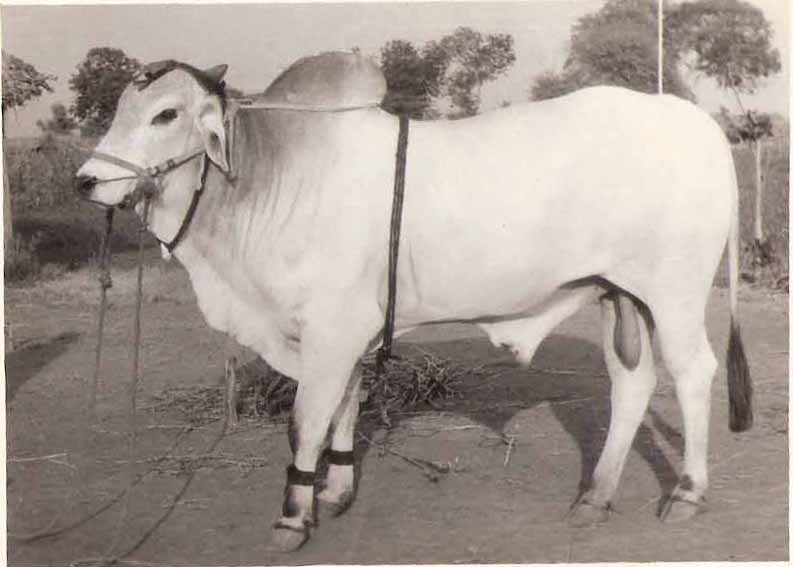 OngoleLarge draught breed of Andhra Pradesh.
Also part of it, and being written: Nagori (Draught breed of the Nagaur district of Rajasthan.).
More on EveryCow
No breeds here yet. New pages are added every day.
Sources and further reading
Original text and drawings by the EveryCow desk, written with AI assistance and checked against the sources above. The shares are a rough, illustrative ratio, not a recipe: every family and dairy makes it differently. If we have something wrong, tell us.
Photo credits on this page
The small pictures above come from Wikimedia Commons under free licences. Some are cropped to fit.
- Tharparkar: Pavanaja, CC BY-SA 3.0, source
- Gangatiri: Pavanaja, CC BY-SA 3.0, source
- Ongole: DMR Sekhar, CC BY-SA 3.0, source
- Hariana: Pavanaja, CC BY-SA 3.0, source