Milk and cream
Syllabub
Cream whipped with sweet wine, sugar and lemon into a soft froth, a dessert of Tudor to Georgian England.
Syllabub is cream whisked with sugar, lemon and sweet white wine or sherry until it holds soft peaks, then served in small glasses. It was a popular English dessert from the sixteenth to the nineteenth century. Early versions were frothy drinks of milk and wine, and some old recipes describe milking the cow straight into a bowl of sweetened wine.
What goes in
- Double cream857%, Whipped to soft peaks.
- Sweet wine or sherry321%, Steeped with lemon.
- Sugar214%, Dissolved in the wine.
- Lemon17%, Zest and juice.
Rough parts by weight. The ring shows each input's share of the product.
Made step by step
Each drawing shows the operation for that step. Quantities and timings differ from house to house and herd to herd; this is one traditional way, in outline.
Step 1: Set Steep lemon zest and juice in the wine with sugar. Step 2: Strain Strain the wine and add it to the cream. Step 3: Churn Whisk until the cream holds soft peaks. Step 4: Serve Spoon into small glasses and chill before serving. Finished Syllabub, by share.
From milk to cream
The earliest syllabubs were drinks: warm milk poured, or milked, from a height into cider, ale or wine, so that a curd formed on top with liquid below. Later cooks made whipt syllabub from cream, which stood up in the glass. Special syllabub glasses with a spout or a wide bowl were made to serve them.
Revival
Syllabub faded in the Victorian period as other desserts took over, but it was revived in the twentieth century by cooks interested in old English food. The breeds of the era, such as the Longhorn of the Midlands and the Gloucester of the Severn vale, are now rare and kept by enthusiasts.
Where it is used
The breeds behind it
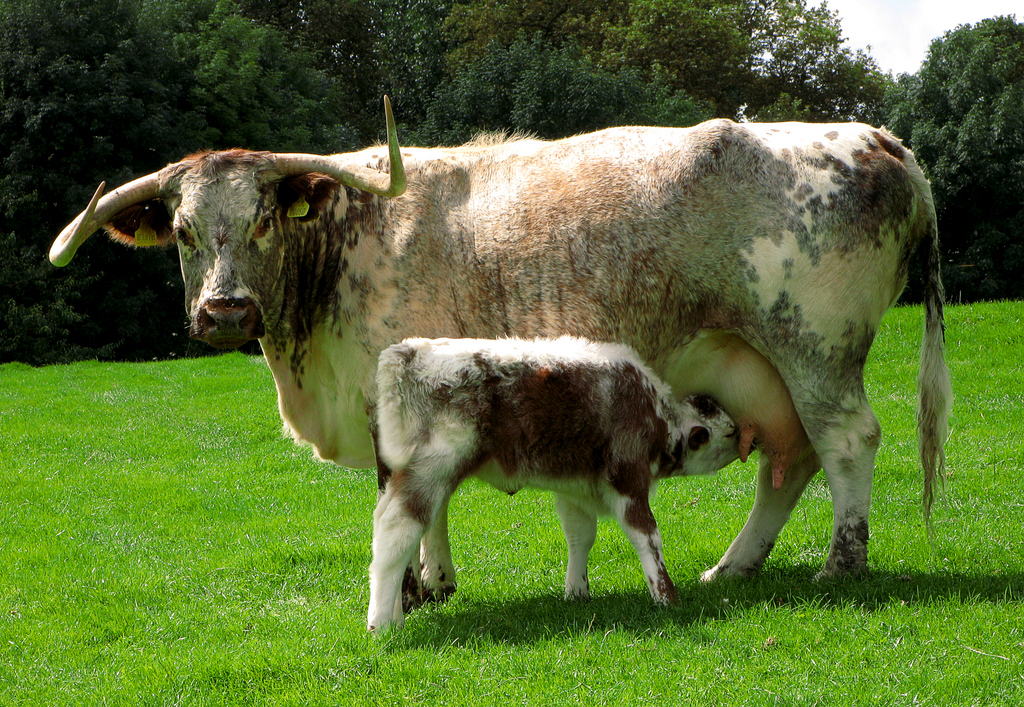
Also part of it, and being written: Old Gloucester (Old dairy breed of the Severn vale.), Dairy Shorthorn (Spread through English dairies from the late eighteenth century.).
More on EveryCow
No breeds here yet. New pages are added every day.
Sources and further reading
Original text and drawings by the EveryCow desk, written with AI assistance and checked against the sources above. The shares are a rough, illustrative ratio, not a recipe: every family and dairy makes it differently. If we have something wrong, tell us.
Photo credits on this page
The small pictures above come from Wikimedia Commons under free licences. Some are cropped to fit.
- English Longhorn: Dave, CC BY-SA 2.0, source