
Hanwoo
In its own language: 한우
A small, brown taurine breed from Korea, once used for work and now prized for its premium beef.
The Hanwoo is a small, horned cattle breed native to the Korean peninsula. Historically kept as a draft animal for mountain farming, it is now raised primarily for its high-quality meat. The breed belongs to the northern taurine lineage and shares genetic roots with Japanese Black cattle.
- Small brown taurine breed native to Korea
- Formerly used for draught work in mountains
- Now raised mainly for premium beef
- Herd book established in 1968
- Population reached 2.67 million in 2014
What do Hanwoo cattle look like?
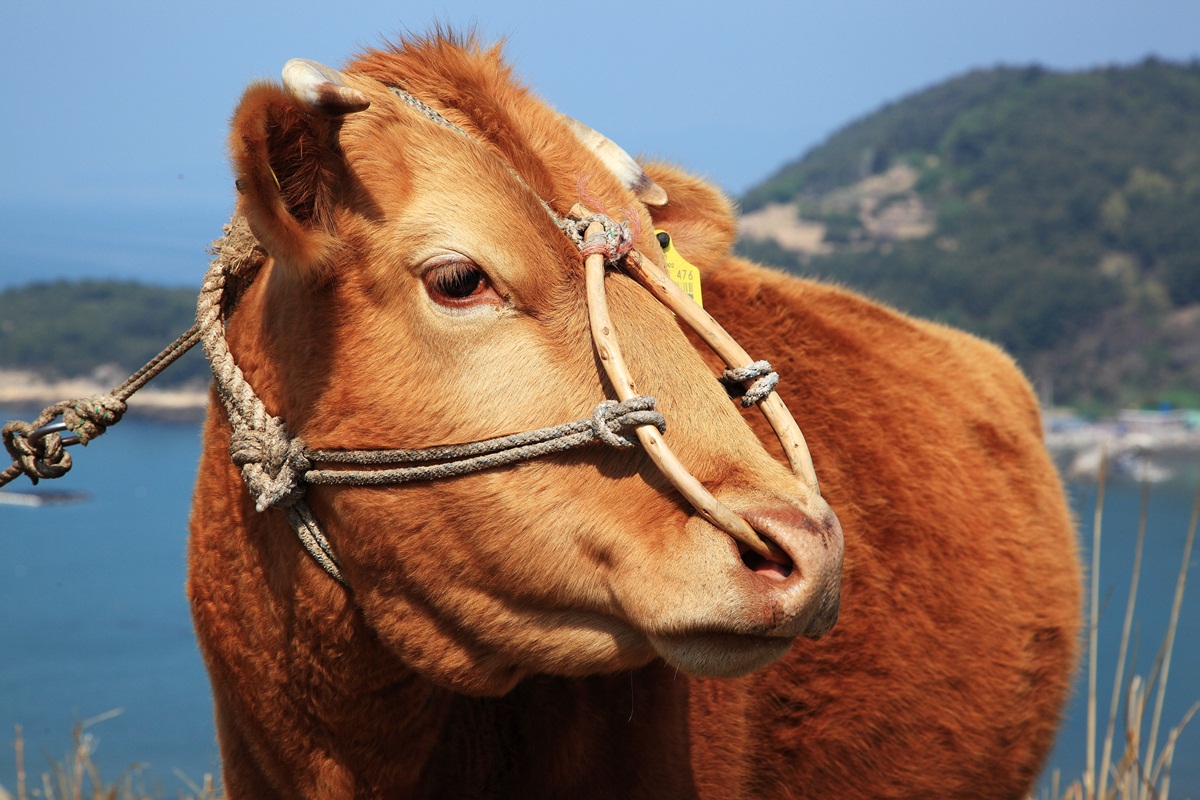
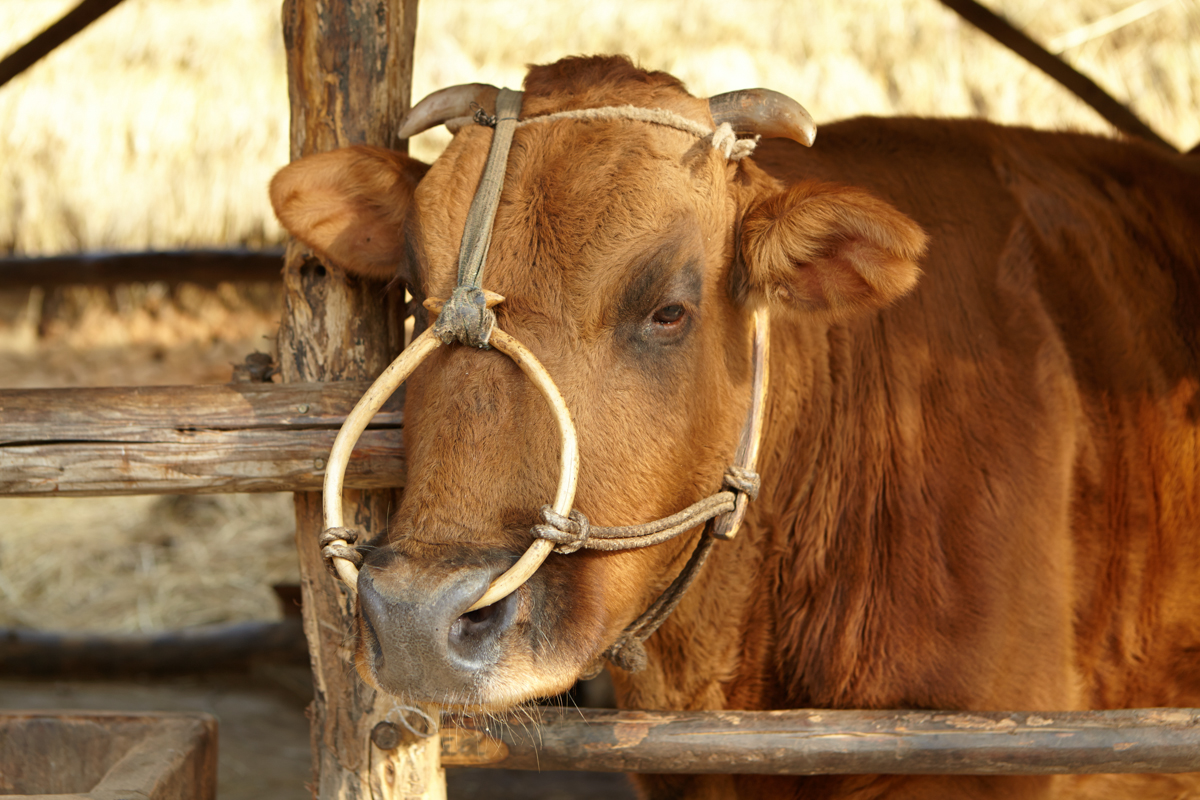
The Hanwoo is a small breed of domestic cattle native to Korea. Both cows and bulls carry horns and wear a brown coat. A rare white variant exists but remains uncommon. Cows stand around 117 centimetres tall and weigh roughly 355 kilograms. Bulls are slightly larger, reaching 124 centimetres and 466 kilograms. The animals have well-developed forelimbs suited for their original role in agriculture. They produce little milk, yielding just over 400 litres over 170 days. Their small size and sturdy build reflect centuries of selection for work in difficult terrain.
Where does the Hanwoo come from?
No single origin story explains the Hanwoo. Genetic studies place it within the northern taurine lineage, without zebu influence. It shares ancestry with Japanese Black and Yanbian cattle, though millennia of separate breeding created distinct differences. Early records show selective breeding for over five thousand years. The breed likely developed alongside Korean agricultural practices, adapting to local conditions rather than arriving from a single external source.
What the Hanwoo is known for
Hanwoo cattle are known for strong maternal instincts and docile temperament. They were originally bred for draught work, with body shapes adapted to Korea’s mountainous landscapes. Today, they are valued for meat quality rather than labour. The breed shows resilience, having survived severe disease outbreaks that decimated herds in the seventeenth century. Modern farmers appreciate their ability to thrive on rice straw, a common roughage in the region.
How the Hanwoo is bred and kept
A herd book was established in 1968 to track purebred lines. Farmers select for traits that enhance meat palatability and chewiness. The white variant, first bred in 2009, is maintained separately in some registries. Breeding programs focus on preserving the taurine lineage while improving yield. The breed has faced population collapses due to war and disease, requiring careful management to recover numbers.
Hanwoo, drawn
What the Hanwoo is kept for
The primary use of Hanwoo is beef production. The meat is considered premium in Korean cuisine, preferred for its freshness and texture over imported substitutes. Historically, the cattle served as working animals for transport and farming. They are also used in traditional dishes and as gifts for special occasions. Hoengseong County markets its Hanwoo beef as a top-tier product, leveraging the breed’s reputation for quality.
The land and climate of the Hanwoo
Hanwoo cattle are suited to temperate climates and mountainous regions. They thrive on rice straw, which forms the main part of their diet. The breed’s history includes adaptation to rugged terrain, making it well-suited to Korea’s varied landscape. While originally widespread, modern farming concentrates them in areas like Hoengseong County, where conditions support efficient beef production.
Who keeps the Hanwoo
The Hanwoo is kept by Korean farmers and ranchers. Historically, it was essential to rural communities for ploughing fields and transporting goods. During the Joseon era, the royal court managed cattle populations closely, especially after disease outbreaks. Today, private farms and agricultural cooperatives maintain herds, with some regions branding their beef for national distribution.
At a glance: where it belongs
Land and climate
Faith and tradition
Celebrations


Faith and ritual
In ancient times, Hanwoo cattle were sometimes sacrificed in religious ceremonies. They held cultural significance beyond their economic value. The breed’s importance in Korean society led to protective laws during crises, such as the ban on slaughter after rinderpest outbreaks. This reflects a deep-seated respect for cattle in traditional Korean life.
The Hanwoo at fairs and festivals
Hanwoo beef is central to holiday meals and special celebrations in Korea. It is often given as a gift during festivals or significant life events. The breed’s association with premium quality makes it a staple for festive dining. No specific cattle fairs or races are mentioned, but its role in culinary traditions marks its presence in social gatherings.
Custom and folk tradition
Korean farmers have bred Hanwoo for over five thousand years, shaping it through selective practices. The breed’s history includes periods of near-extinction due to war and disease, followed by recovery efforts. Traditional feeding methods rely on locally available resources like rice straw. The cattle’s integration into daily life underscores their role as both workers and providers.
Keeping Hanwoo cattle
Cattle are fed rice straw as their principal roughage. Calving is supported by the breed’s good maternal qualities. Health management became critical after historical rinderpest outbreaks, leading to strict controls on slaughter and importation. Modern care focuses on maintaining breed purity and meat quality through structured breeding programs.
Numbers, conservation and the herd book
The population collapsed from 1.74 million in 1940 to 393,000 by 1950. Recovery efforts led to 1.24 million head in 2003 and 2.67 million by 2014. The FAO listed the breed as not at risk in 2007. The herd book, established in 1968, helps monitor these numbers. Export and spread remain limited, with most animals kept within Korea.
Questions people ask about Hanwoo
Where does the Hanwoo come from?
The Hanwoo is native to the Korean peninsula. It belongs to the northern taurine lineage and shares genetic roots with Japanese Black cattle. Its origins trace back over five thousand years of selective breeding in Korea.
What is the Hanwoo kept for today?
It is raised primarily for beef. The meat is considered premium in Korean cuisine, valued for its freshness and texture. Historically, it was used as a draft animal for farming and transport.
How large are Hanwoo cattle?
They are a small breed. Cows stand about 117 centimetres tall and weigh 355 kilograms. Bulls are slightly larger, reaching 124 centimetres and 466 kilograms.
Is the Hanwoo endangered?
No. The FAO listed the breed as not at risk in 2007. The population recovered significantly after mid-century declines, reaching 2.67 million head by 2014.
What do Hanwoo cattle look like?
They have a brown coat and are horned in both sexes. A rare white variant exists but is uncommon. The cows have good maternal qualities and produce little milk.
Good reading and sources
- Hanwoo on WikipediaEncyclopedia
- More photos on Wikimedia CommonsPhotos and video
- Wikidata recordOpen data
The facts on this page come from the Wikipedia article "Hanwoo", written by its contributors and used under the CC BY-SA 4.0 licence, and from its Wikidata record (CC0). EveryCow rewrote the text in its own words, with AI assistance, and compares every page with the article to make sure no passage is copied. It may be reused under the same CC BY-SA 4.0 licence with a link back.
It may contain mistakes. Sizes, colours and customs differ from one herd, valley or breeder to the next. Folk beliefs are described as tradition, never as advice. If something is wrong, tell us. Last refreshed 2026-10-16.
Its cousins elsewhere
All beef breeds 🇨🇭 Switzerland and 5 moreSimmental
A large dual-purpose breed from the Swiss Simme valley, red and white with strong growth rates.Taurine · Dual-purpose · Docile
🇨🇭 Switzerland and 5 moreSimmental
A large dual-purpose breed from the Swiss Simme valley, red and white with strong growth rates.Taurine · Dual-purpose · Docile
 🇺🇸 United StatesGuernsey
A fawn dairy breed from Guernsey, its milk tinted gold by beta-caroteneTaurine · Dairy · Docile
🇺🇸 United StatesGuernsey
A fawn dairy breed from Guernsey, its milk tinted gold by beta-caroteneTaurine · Dairy · Docile
 🇿🇦 South Africa and 2 moreAfrikaner
A Sanga-type breed from South Africa, deep red with long horns, kept for beef and draught work.Sanga · Beef · Heat-tolerant
🇿🇦 South Africa and 2 moreAfrikaner
A Sanga-type breed from South Africa, deep red with long horns, kept for beef and draught work.Sanga · Beef · Heat-tolerant
 🇫🇷 FranceSalersrace de Salers
A large dual-purpose breed from the Cantal mountains of France, red or black with lyre-shaped horns.Taurine · Dual-purpose · Docile
🇫🇷 FranceSalersrace de Salers
A large dual-purpose breed from the Cantal mountains of France, red or black with lyre-shaped horns.Taurine · Dual-purpose · Docile