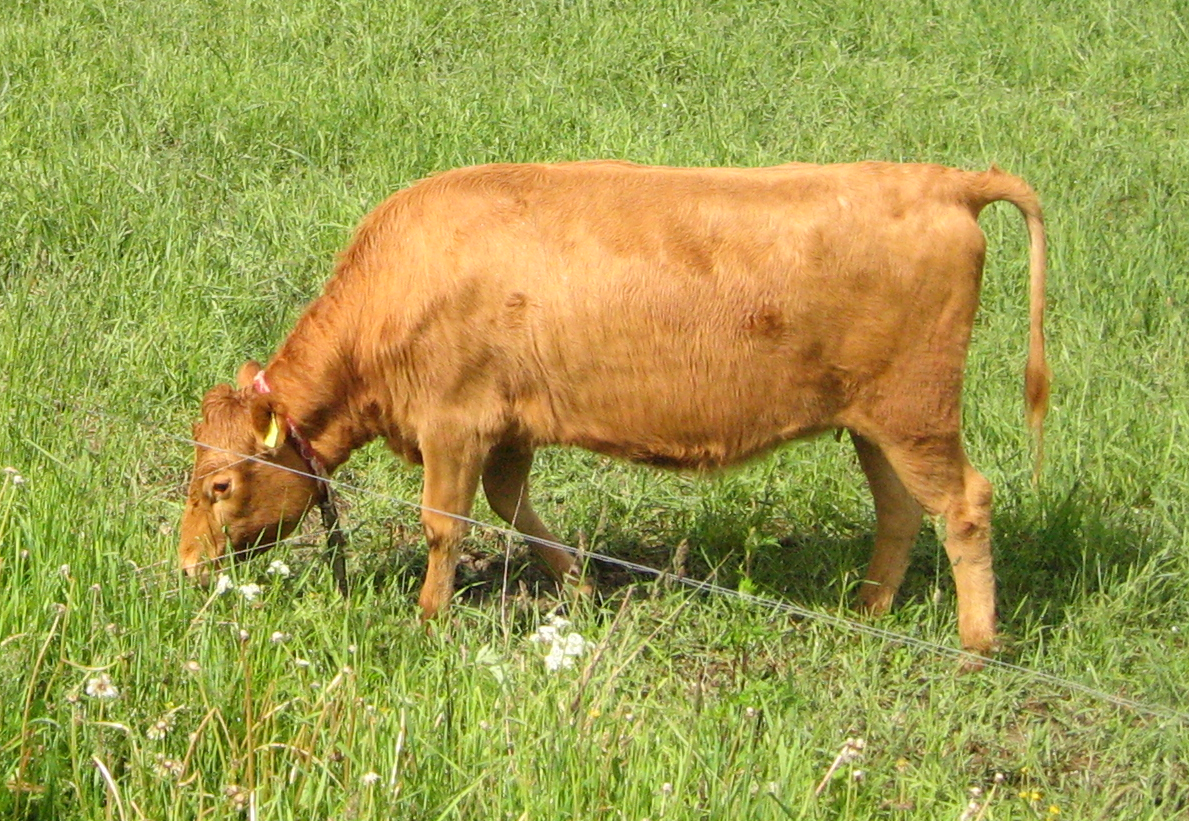
Western Finncattle
A red, hornless dual-purpose breed from western Finland, kept for milk and beef
Western Finncattle are a dual-purpose breed from western Finland, kept for both dairy and beef. The animals are usually red and polled, meaning naturally hornless, and cows give about 6,100 kg of milk in a lactation, testing 4.4 per cent fat and 3.5 per cent protein.
- A dual-purpose breed from western Finland, kept for milk and beef
- Usually red and polled, meaning naturally hornless
- Cows give about 6,100 kg of milk in a lactation
- The milk tests 4.4 per cent fat and 3.5 per cent protein
- Classed as a landrace within the Finncattle group
What do Western Finncattle cattle look like?
Western Finncattle are a breed of domestic cattle from western Finland. The coat is usually red, and the breed is polled, which means the animals are naturally hornless. The cattle are kept as a dual-purpose breed: the cows are milked, and the same population supplies beef. A cow gives about 6,100 kg of milk in a lactation, testing 4.4 per cent fat and 3.5 per cent protein. The breed is counted as a landrace within the Finncattle group, the native cattle of Finland.
Where does the Western Finncattle come from?
Western Finncattle come from western Finland, and the breed name itself records that home district. The cattle belong to the Finncattle group, the native stock of the country, and are classed as a landrace, a population adapted to local conditions rather than one fixed by a single herd or a strict show standard. On western Finnish farms they are kept for dairy and beef production, so a herd is expected to serve two markets rather than one.
What the Western Finncattle is known for
Western Finncattle are known for two visible things, a red coat and natural hornlessness, and for their milk. A cow gives around 6,100 kg in a lactation, with 4.4 per cent butterfat and 3.5 per cent protein. The breed is dual purpose, so a herd supplies the dairy and the beef trade rather than a single product.
Western Finncattle, drawn
What the Western Finncattle is kept for
The breed has two jobs. Cows are milked, and a lactation yields roughly 6,100 kg with 4.4 per cent fat and 3.5 per cent protein, so the milk carries a good share of butterfat. The same herds are used for beef production, which is why Western Finncattle are called a dual-purpose breed rather than a dairy breed alone. They are one of the Finnish native cattle types, kept on ordinary farms in the west of the country for milk and for meat.
The land and climate of the Western Finncattle
Western Finncattle belong to western Finland, in the north of Europe. The breed is a landrace of that district, shaped by conditions there rather than by a breeding programme somewhere else. Farms in the west of the country are its home ground, and the cattle are kept there for milk and for beef. The breed name itself records the region it comes from.
At a glance: where it belongs
Land and climate
From the Western Finncattle
Questions people ask about Western Finncattle
Where does the Western Finncattle come from?
It comes from western Finland, the district that gives the breed its name. It belongs to the Finncattle group, the native cattle of the country, and is classed as a landrace, a locally adapted population rather than a type fixed by one herd.
What is the Western Finncattle kept for?
It is a dual-purpose breed, so herds are kept for dairy and beef production. Cows are milked, and the same animals supply meat. A lactation gives about 6,100 kg of milk, with 4.4 per cent fat and 3.5 per cent protein.
What do Western Finncattle look like?
The cattle are usually red in colour and polled, which is the cattle term for naturally hornless. Those are the two features the breed is described by, alongside the milk figures of its cows.
How much milk does a Western Finncattle cow give?
About 6,100 kg in a lactation. The milk tests 4.4 per cent fat and 3.5 per cent protein. Those are the figures given for the breed, and the fat level is a good part of what the cattle are known for.
Do Western Finncattle have horns?
No. The breed is polled, the farming word for naturally hornless, so the animals do not grow horns. The coat is usually red as well.
Good reading and sources
- Western Finncattle on WikipediaEncyclopedia
- More photos on Wikimedia CommonsPhotos and video
- Wikidata recordOpen data
The facts on this page come from the Wikipedia article "Western Finncattle", written by its contributors and used under the CC BY-SA 4.0 licence, and from its Wikidata record (CC0). EveryCow rewrote the text in its own words, with AI assistance, and compares every page with the article to make sure no passage is copied. It may be reused under the same CC BY-SA 4.0 licence with a link back.
It may contain mistakes. Sizes, colours and customs differ from one herd, valley or breeder to the next. Folk beliefs are described as tradition, never as advice. If something is wrong, tell us. Last refreshed 2026-10-16.
Its cousins elsewhere
All dairy breeds 🇮🇳 India and 3 moreNelore
A large humped beef breed from India, now dominant in Brazil and known for heat tolerance and parasite resistance.Zebu · Beef · Heat-tolerant
🇮🇳 India and 3 moreNelore
A large humped beef breed from India, now dominant in Brazil and known for heat tolerance and parasite resistance.Zebu · Beef · Heat-tolerant
 🇯🇵 JapanJapanese Polled無角和種
A small black Japanese beef breed, hornless in both sexesTaurine · Beef · Polled
🇯🇵 JapanJapanese Polled無角和種
A small black Japanese beef breed, hornless in both sexesTaurine · Beef · Polled
 🇺🇸 United States and 5 moreSenepol
A polled red beef breed from St Croix, built for heat and insectsTaurine · Beef · Heat-tolerant
🇺🇸 United States and 5 moreSenepol
A polled red beef breed from St Croix, built for heat and insectsTaurine · Beef · Heat-tolerant
 🇺🇸 United States and 5 moreBrangus
A black polled beef breed from the United States, combining Angus meat quality with Brahman heat tolerance.Composite · Beef · Heat-tolerant
🇺🇸 United States and 5 moreBrangus
A black polled beef breed from the United States, combining Angus meat quality with Brahman heat tolerance.Composite · Beef · Heat-tolerant