
Yak
In its own language: གཡག་
A shaggy, cold-hardy highland bovine kept across the Himalayas and Tibetan Plateau
The domestic yak is a stocky, shaggy bovine originating in the Tibetan Plateau and Central Asian highlands, recognisable by its drooping fleece, humped shoulders and curved horns. Herders keep these sturdy animals for their rich milk, lean meat, coarse wool and fuel, as well as for pack transport and pulling ploughs.
- Cannot moo, communicating instead through distinctive grunts and high squeaks.
- Adapted to thin air with large lungs, an enlarged heart and lifetime foetal haemoglobin.
- Yields milk for butter tea and hard cheeses like chhurpi, while dung provides crucial fuel.
- Crosses with domestic cattle produce sterile males known as dzo and fertile females called dzomo.
What do Yak cattle look like?
Yaks have deep-chested, powerful bodies supported by short legs and rounded hooves split for climbing. Over their frame hangs a thick outer coat of coarse hair, underlain by dense wool along the flanks, chest and thighs. This long fleece often droops close to the earth on mature males, forming an insulating fringe. Their tails resemble those of horses rather than the tufted tails of common cattle. Both sexes carry a shoulder hump, which is noticeably taller on bulls. Cows stand between 105 and 117 centimetres tall and weigh 225 to 255 kilograms, while bulls reach 111 to 138 centimetres and 350 to 585 kilograms. Both carry smooth, dark horns. Those of the bull span 48 to 99 centimetres, sweeping outward before bending backwards, whereas cows grow shorter, more upright horns between 27 and 64 centimetres. Rather than lowing, yaks communicate through short grunts and high squeaks.
Where does the Yak come from?
The domestic yak descends from the wild yak, Bos mutus. Evolutionary lines split from common cattle between one and five million years ago. Fossil records of extinct relatives, including Bos baikalensis found in eastern Russia, suggest ancestral yak forms may have provided the pathway for bison ancestors moving into the Americas. Physical remains confirm domestic herds were maintained at least 2,500 years ago. Linguistic studies tracking vocabulary in Tibetic and Gyalrongic tongues imply that selective breeding and crossing with cattle had already taken place long before those speech communities separated several millennia past.
What the Yak is known for
Built for freezing altitudes, yaks possess enlarged hearts, spacious lungs, and persistent foetal haemoglobin that binds oxygen efficiently in thin air. Subcutaneous fat keeps in warmth, whilst tiny udders, small ears and furry scrotal sacs limit heat loss. Because they barely sweat, warmth stresses them quickly, and temperatures above 15 °C cause overheating. Their stomach system includes an oversized rumen, allowing them to thrive on harsh grasses and sedges while eating just one per cent of their body mass each day, a third of what common cattle need.
How the Yak is bred and kept
Herders across Nepal, Tibet and Mongolia regularly cross yaks with humped and humpless cattle. This mating produces the sterile male dzo and the fertile female dzomo, with crosses recorded in Chinese writings for over two millennia. Second-generation calves show lower performance and are generally fattened for beef. In Nepal, the small Lulu cattle carry genetic markers from taurine, zebu and yak ancestors. Controlled research into breeding and husbandry takes place at a specialised farm in Nyukmadung, run by India's national yak research centre in Dirang at an elevation of 2,750 metres. Gestation spans 257 to 270 days, typically yielding one calf every two years.
Yak, drawn
What the Yak is kept for
Pastoralists rely on the yak as a versatile work and dairy beast. Their rich milk is churned into butter for tea, used as lamp oil, or pressed into hard cheeses such as chhurpi in Nepal and byaslag in Mongolia. Dried dung serves as indispensable fuel in treeless alpine environments. Strong and sure-footed, yaks haul heavy loads over rugged passes and pull farm ploughs, though their strict refusal to eat grain limits them to routes with standing grass. Outside Asia, ranchers cross them with beef cattle to produce lean meat and harvest fine downy wool.
The land and climate of the Yak
Indigenous to the harsh heights of the Tibetan Plateau, the Himalayas and the Pamir Mountains, yaks are native to Tajikistan, Nepal, Pakistan, India and Mongolia. They thrive on barren, windswept grasslands and sedge pastures at high elevations. Because they do not sweat effectively, they are ill-suited to warm lowlands and can suffer severe distress in mild climates exceeding 15 °C.
Who keeps the Yak
Highland communities, including Balti and Tibetic groups, have depended on these shaggy beasts for thousands of years. Mountain farmers and regional traders rely on them as pack animals to traverse steep alpine trails, while trekking parties and mountaineering expeditions hire them to haul equipment through high mountain passes. The survival of traditional pastoralists on cold, treeless plateaus has long rested on the animal's fuel, fibre, transport and sustenance.
At a glance: where it belongs
Land and climate
Peoples
Faith and tradition
Celebrations


Faith and ritual
Yak products hold deep symbolic value in mountain Buddhist traditions. Monks and devotees mould yak butter into ornate sculptures for sacred festivals, and burn it in temple lamps. In Tibetan funeral practice, a yak is traditionally chosen to transport the dead to charnel grounds for sky burials. Once this final duty is accomplished, custom dictates that the animal must be released to live in freedom.
The Yak at fairs and festivals
Festive gatherings across Tibet and the Karakorum feature fast-paced yak racing. In Nepal, an annual gathering involves drawing fresh blood from a living yak's neck through a small cut that is afterwards healed, a practice believed to cure ailments such as gastritis, jaundice and fatigue. Modern entertainments have also emerged, including yak polo in Gilgit-Baltistan and ski towing in Manali, where an eager animal charges down a snowy slope toward a bucket of feed, hoisting a skier upward.
Custom and folk tradition
Centuries of herding lore surround the yak across remote mountain ridges. Trekking drovers know the animal will starve if grain is offered, making them completely reliant on seasonal grazing along the way. During the summer rut, bulls engage in earthy rituals reminiscent of bison, scraping earth, bellowing, and wallowing in dry dust marked with dung and urine before locking horns in dominance clashes.
Keeping Yak cattle
Calving cows seek out secluded spots, delivering a single newborn that can stand and walk within ten minutes. Calves nurse for roughly twelve months before independence. Because yaks reject grain feed, caretakers must provide adequate access to natural pasture grasses, herbs and sedges.
Numbers, conservation and the herd book
Primary populations remain concentrated across the Himalayan arc, the Tibetan Plateau, Central Asia and Mongolia. Outside its native range, small commercial and farm herds have been established in North America, New Zealand and parts of Europe. Breeders in Canada and the United States maintain these animals primarily for producing fine fleece and hybridising with domestic cattle to produce lean beef.
From the Yak
Questions people ask about Yak
Where does the yak come from?
The yak was domesticated in the high regions of Central Asia, notably the Tibetan Plateau and the Himalayas. Today, herds are kept across Mongolia, Nepal, India, Pakistan, Tajikistan and neighbouring highlands, with small numbers exported to North America and Europe.
What is the yak kept for?
Herders keep yaks as triple-purpose animals for rich milk, lean meat, coarse wool and pack draught. Their dung provides vital heating fuel on treeless plains, and they are also used in traditional mountain racing and modern winter sports.
How is the yak adapted to extreme cold and altitude?
Yaks have enlarged lungs and hearts, along with blood that retains foetal haemoglobin to carry oxygen in thin air. A thick fat layer, dense underwool and small, hairy extremities prevent heat loss, though they easily overheat above 15 °C.
Can yaks breed with domestic cattle?
Yes, crossing yaks with humped or humpless cattle has been practised for thousands of years. The resulting cross produces sterile males known as dzo and fertile females called dzomo, which are valued for meat and milk production.
Good reading and sources
- Encyclopaedia BritannicaArticle
- 2 YAK BREEDSFAO, Article
- Festival to drink Yak blood begins in NepalHindustan Times, Article
- Yak on WikipediaEncyclopedia
- More photos on Wikimedia CommonsPhotos and video
- Wikidata recordOpen data
The facts on this page come from the Wikipedia article "Yak", written by its contributors and used under the CC BY-SA 4.0 licence, and from its Wikidata record (CC0). EveryCow rewrote the text in its own words, with AI assistance, and compares every page with the article to make sure no passage is copied. It may be reused under the same CC BY-SA 4.0 licence with a link back.
It may contain mistakes. Sizes, colours and customs differ from one herd, valley or breeder to the next. Folk beliefs are described as tradition, never as advice. If something is wrong, tell us. Last refreshed 2026-10-16.


Its cousins elsewhere
All triple-purpose breeds 🇬🇧 United Kingdom and 2 moreAyrshire
Red-and-white dairy cattle from south-west Scotland, hardy, long-lived and easy calversTaurine · Dairy · Easy calving
🇬🇧 United Kingdom and 2 moreAyrshire
Red-and-white dairy cattle from south-west Scotland, hardy, long-lived and easy calversTaurine · Dairy · Easy calving
 🇦🇹 Austria and 1 moreTyrol GreyTiroler Grauvieh
An alpine dual-purpose breed of the Tyrol, milked and fattenedTaurine · Dual-purpose · Cold-hardy
🇦🇹 Austria and 1 moreTyrol GreyTiroler Grauvieh
An alpine dual-purpose breed of the Tyrol, milked and fattenedTaurine · Dual-purpose · Cold-hardy
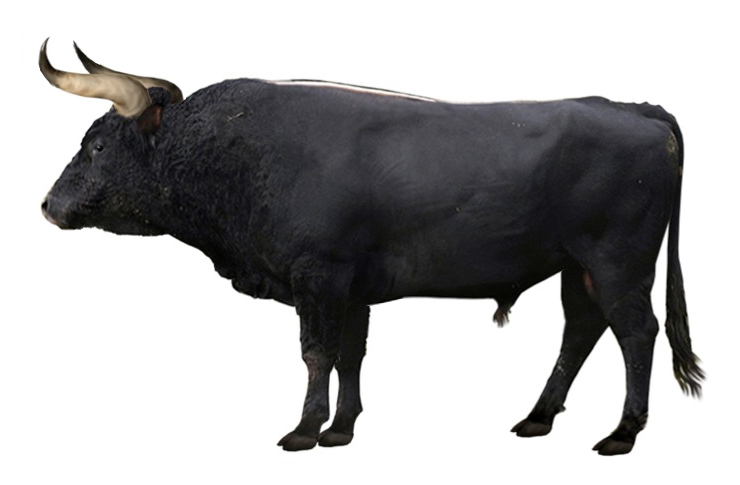 🇵🇱 Poland and 5 moreAurochs
The wild ancestor of all domestic cattle, extinct since 1627Wild · Long-horned
🇵🇱 Poland and 5 moreAurochs
The wild ancestor of all domestic cattle, extinct since 1627Wild · Long-horned
 🇨🇭 Switzerland and 5 moreSimmental
A large dual-purpose breed from the Swiss Simme valley, red and white with strong growth rates.Taurine · Dual-purpose · Docile
🇨🇭 Switzerland and 5 moreSimmental
A large dual-purpose breed from the Swiss Simme valley, red and white with strong growth rates.Taurine · Dual-purpose · Docile