Breeds of Bali
The island that gave its name to Bali cattle, domestic banteng that plough rice terraces and are kept pure by local rule.
Breeds of this place
Best time: April to October, the dry season.
Bali is known for temples and rice terraces, and for its cattle, which descend from the wild banteng of Southeast Asia rather than the aurochs. Bali cattle are graceful, deer-like animals, the cows golden-red and the bulls darkening to near black, both with white stockings and a white patch on the rump. The island keeps other breeds out to protect their purity.
Domestic banteng
Bali cattle were domesticated from the banteng, probably in Java or Bali, thousands of years ago. They are fertile, hardy on poor feed and do well in the heat. From Bali they have been taken to other Indonesian islands, to Malaysia and to northern Australia, where a feral herd lives on the Cobourg Peninsula. A disease named after the island's Jembrana regency affects them, and vets work to control it.
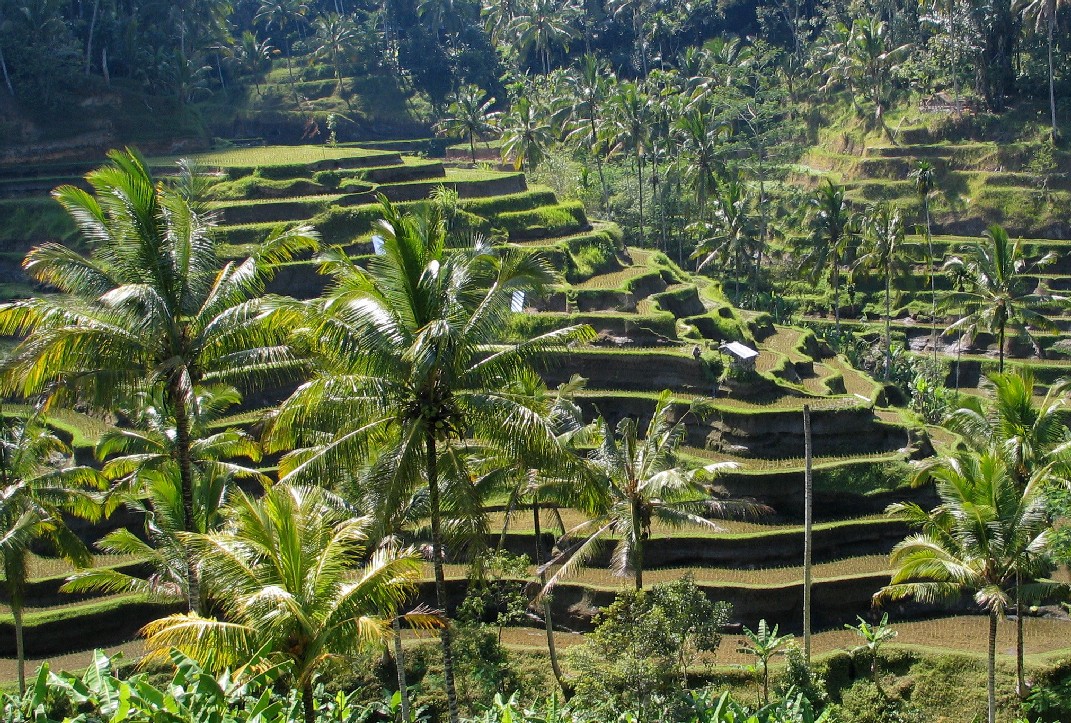
Cattle in the rice terraces
Bali's farmers have long used cattle to plough and trample wet rice fields, within the subak system of shared water channels and temples. Cattle are tethered by the roads to graze, and their dung returns to the fields. Most farms keep only one or two animals, raised as a store of savings to be sold when money is needed.
A trail idea for Bali
- Jatiluwih rice terraces Terraces of the subak system, recognised by UNESCO.
- Village fields Watch cattle graze along the field edges in the late afternoon.
- West Bali National Park Forest and savanna in the west of the island.
Written by the EveryCow desk with AI assistance. Background: "Bali" on Wikipedia. Fair dates, markets and visiting rules change; check locally before travelling, and keep a respectful distance from working animals. If something is wrong, tell us.

Photo credits on this page
The small pictures above come from Wikimedia Commons under free licences. Some are cropped to fit.
- Banteng: Magalhães, Public domain, source