Cold north: its breeds
Yakutian, Icelandic and the northern Fjall cattle: long winters, short summers.
In the far north, cattle face long, dark winters, deep cold and a short summer of fast-growing grass. Breeds that live there are often small, hairy and thrifty, and spend much of the year indoors. The Yakutian cattle of Siberia are the hardiest of them, living outside at temperatures that would kill most cattle. Iceland's cattle have been kept apart for over a thousand years, and the Nordic countries keep old native breeds such as the Swedish Mountain cattle and the Finncattle.
Yakutian cattle
The Sakha people of Yakutia in northeast Siberia kept a small native breed through winters where temperatures drop below minus 40 degrees and lower. Yakutian cattle have a thick coat, a compact body, small udders covered in hair, and a low metabolic rate. They spend the worst of the winter in log barns called khoton, often attached to the family's house, and graze the river meadows in summer. The breed nearly vanished in the twentieth century and survives in small herds.
Iceland and the Nordic breeds
Icelandic cattle descend from animals brought by Norse settlers in the ninth and tenth centuries, and the island has kept out other cattle for most of its history. They come in many colours, are often polled, and are kept mostly indoors through the winter. In Sweden and Norway, the white, polled Fjäll or mountain cattle grazed forest and fell pastures from summer farms, the fäbod or seter, where milk was made into butter and cheese. Finland keeps three native breeds: Eastern, Northern and Western Finncattle.
Russia and the White Sea
The Kholmogory breed was developed in the Arkhangelsk region near the White Sea, one of the old dairy breeds of Russia. Black and white, it was improved over centuries and later crossed with Holstein cattle. Farther south, cattle in the northern forest zone of Russia and the Baltic states have been bred for long indoor winters on hay and short summers on meadow.
Northern Scotland
Highland cattle, from the Scottish Highlands and islands, are the best-known cold-hardy breed of Britain. Their long double coat sheds rain and snow, and they can winter outdoors on rough hill grazing. The Highland Cattle Society was founded in 1884 and published its first herd book in 1885. The breed has since spread to Scandinavia, Canada and the Alps, and it is often used to graze rough ground for conservation.
Worth knowing
- Yakutian cattle: Hardy native cattle of Sakha, Siberia
- Icelandic cattle: Kept apart since the Norse settlement
- Swedish Mountain cattle: White polled Fjäll cattle
- Eastern Finncattle: One of Finland's three native breeds
- Kholmogory: Old dairy breed of the White Sea
- Highland cattle: Long-coated cattle of the Scottish Highlands
Good to know
- Plan a long indoor season, with enough hay or silage for six months or more.
- Keep water from freezing; cattle drink less and eat less when water is icy.
- Give dry bedding and shelter from wind rather than heavy heating.
Sources and further reading
Original text by the EveryCow desk, written with AI assistance and checked against the sources above. Customs are described as tradition, not as advice. If we have something wrong, tell us.
Cold north on EveryCow
The breeds written up so far, best known first.
 🇸🇪 SwedenFjällSvensk fjällras
A polled, mostly white dairy cow from the Swedish mountains, hardy on thin grazing.Taurine · Dairy · Polled
🇸🇪 SwedenFjällSvensk fjällras
A polled, mostly white dairy cow from the Swedish mountains, hardy on thin grazing.Taurine · Dairy · Polled
 🇮🇸 IcelandIcelandicíslenskur nautgripur
A small, mostly polled dairy breed isolated in Iceland for a thousand yearsTaurine · Dairy · Polled
🇮🇸 IcelandIcelandicíslenskur nautgripur
A small, mostly polled dairy breed isolated in Iceland for a thousand yearsTaurine · Dairy · Polled
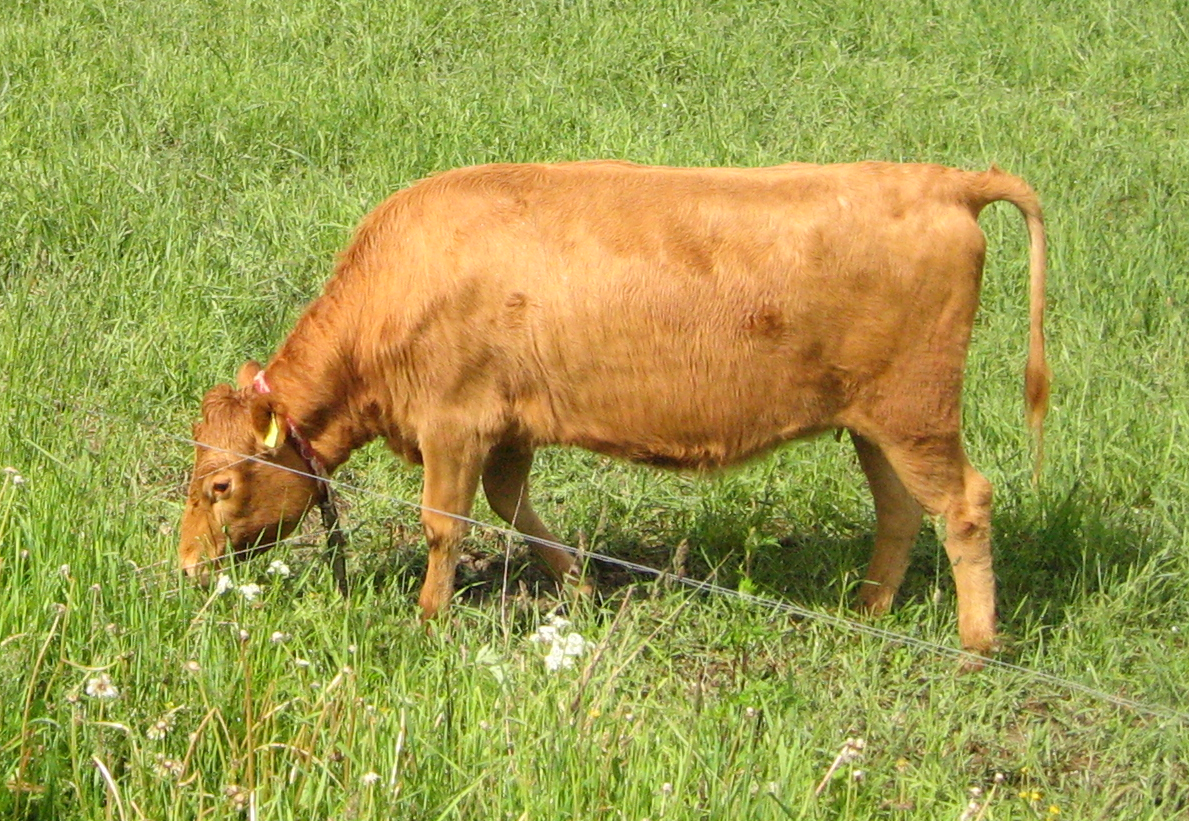 🇫🇮 FinlandWestern Finncattle
A red, hornless dual-purpose breed from western Finland, kept for milk and beefTaurine · Dairy · Polled
🇫🇮 FinlandWestern Finncattle
A red, hornless dual-purpose breed from western Finland, kept for milk and beefTaurine · Dairy · Polled
 🇫🇮 FinlandFinncattle
Small, hornless Finnish dairy cattle in three types: red, white and red-and-whiteTaurine · Dairy · Polled
🇫🇮 FinlandFinncattle
Small, hornless Finnish dairy cattle in three types: red, white and red-and-whiteTaurine · Dairy · Polled
Photo credits on this page
The small pictures above come from Wikimedia Commons under free licences. Some are cropped to fit.
- Icelandic: Christian Bickel (user Fingalo ), CC BY-SA 2.0 de, source
- Fjäll: Yvonne Zimmermann, CC BY-SA 3.0 de, source
- Finncattle: Eero Järnefelt, Public domain, source
- Western Finncattle: MPorciusCato (cropped by Pitke ), CC BY-SA 3.0, source