
Finncattle
Small, hornless Finnish dairy cattle in three types: red, white and red-and-white
Finncattle is a group of three closely related Finnish dairy breeds, all small and naturally hornless. They are red, white, or a mix of the two, graze forest pasture in Finland, and give milk with more fat and protein than other Finnish dairy breeds, though in smaller amounts.
- Finncattle covers three related Finnish breeds: Eastern, Northern and Western
- Western Finncattle are red, the largest type and the best milkers of the three
- Eastern and Northern Finncattle are endangered, with about 300 animals each
- All Finncattle are small, naturally hornless and able to graze forest pasture
- Registered Finncattle cows fell from nearly 60,000 in 1960 to about 2,500 in 2005
What do Finncattle cattle look like?
Finncattle is not a single breed but a group of three related Finnish types: Eastern, Northern and Western. All are small, and none grows horns naturally, so dehorning is not needed. Their coats tell them apart. Western animals are red and are the biggest of the group; Northern ones are white; Eastern ones carry red and white together. The three also differ in how much milk they give, and Western cows produce the most. The group is classed as a dairy animal, though a few animals live in petting zoos or are kept as pets.
Where does the Finncattle come from?
These cattle come from Finland, where the three types were first set apart as breeds around the start of the 1900s. Dairy farmers later turned to imported breeds, and native numbers fell sharply. In the second half of that century the three studbooks were combined into one, and the Western type was picked as the standard for the joined breed. The three stayed visibly different all the same, and today they are treated as separate breeds even though they share a single studbook.
What the Finncattle is known for
Farmers who know other dairy breeds often find Finncattle hard to read. The animals are curious and headstrong, and when they get more feed than usual they put on flesh instead of giving more milk. Against that, they live long, breed readily and cope well with Finnish weather and grazing. Their milk carries more fat and protein than the milk of other dairy breeds kept in Finland, though the total quantity is clearly smaller.
How the Finncattle is bred and kept
Breeding work started late and has always been small in scale. After the Second World War, farmers brought in modern dairy breeds from abroad, and native stock shrank quickly. A handful of sires were used heavily, so many Western animals share one 1960s bull, Opari SSS 13088, in their ancestry, and inbreeding worries breeders who keep returning to the same top-rated bulls. Western Finncattle can still be selected for milk quality and yield. For the endangered Eastern and Northern types, the aim is instead to hold on to the genetic variety that remains.
Finncattle, drawn
What the Finncattle is kept for
These cattle are kept above all for milk. Their milk is richer in fat and protein than the milk of other dairy breeds in Finland, but each cow gives less of it. That trade-off is central to the group. Western cows, the most numerous of the three, give the highest yield. Outside commercial dairying, a number of Finncattle live in petting zoos, and some are kept simply as pets, which suits their small size.
The land and climate of the Finncattle
Finncattle are suited to Finland's own climate and conditions. They can be grazed in woodland, on forest pasture, rather than only on improved grassland, and they hold up well through the northern year. That hardiness is one reason the breeds lasted so long on small farms.
Who keeps the Finncattle
Private breeders have shaped these cattle for generations, often favouring a small number of highly rated bulls. The Finnish artist and celebrity Miina Äkkijyrkkä is the best-known voice for the group. She keeps and breeds Finncattle herself and is especially attached to the Eastern type, acting as a spokesperson for the breed as a whole. Beyond such advocates, the animals stay largely in the hands of individual farmers.
At a glance: where it belongs
Land and climate

Keeping Finncattle cattle
Feeding is straightforward but should not be generous: extra rations go to fat rather than to milk. Forest grazing works well, and the cattle are long-lived and fertile, so herds need little help at calving. Because they are naturally hornless, there is no need to dehorn them. Their curious, wilful temperament means a handler used to calmer dairy breeds should take time with them.
Numbers, conservation and the herd book
Records show how fast the group fell away. In 1960, close to 60,000 Finncattle cows were registered; ten years later the figure was 7,000, and by 2005 only about 2,500. Eastern and Northern Finncattle are the rarest, each with roughly 300 animals, and both are listed as endangered. Western Finncattle are the most common of the three and lead in milk output. All three share a single studbook, and the Western type stands as its official standard.
From the Finncattle
Questions people ask about Finncattle
Where does Finncattle come from?
Finland. The three types were separated as breeds at the turn of the 1900s and have been kept there since. Imported dairy breeds later took over much of Finnish milk production, and the native cattle dwindled, though Eastern, Northern and Western Finncattle all survive today.
What are Finncattle kept for?
Mainly milk. Their milk has more fat and protein than other Finnish dairy breeds, but the cows give less of it. A few animals are kept in petting zoos or as pets, and the endangered types are also bred to keep their gene pools wide.
What do the three types look like?
All are small and naturally hornless. The Western type is the biggest and is red. Northern Finncattle are white. Eastern Finncattle carry both colours, red and white. They also differ from one another in how much milk they produce.
How many Finncattle are left?
Numbers are low. About 2,500 cows were recorded in 2005, down from nearly 60,000 in 1960. The Eastern and Northern types are endangered, each with roughly 300 head. Western Finncattle are the most numerous and the highest yielding of the three.
Are Finncattle difficult to handle?
They can be. Breeders describe them as curious and wilful, and they tend to put on weight rather than give more milk when fed extra, which surprises farmers used to other dairy breeds. Against that, they live long, calve easily and do well on forest pasture.
Good reading and sources
- Finncattle on WikipediaEncyclopedia
- More photos on Wikimedia CommonsPhotos and video
- Wikidata recordOpen data
The facts on this page come from the Wikipedia article "Finncattle", written by its contributors and used under the CC BY-SA 4.0 licence, and from its Wikidata record (CC0). EveryCow rewrote the text in its own words, with AI assistance, and compares every page with the article to make sure no passage is copied. It may be reused under the same CC BY-SA 4.0 licence with a link back.
It may contain mistakes. Sizes, colours and customs differ from one herd, valley or breeder to the next. Folk beliefs are described as tradition, never as advice. If something is wrong, tell us. Last refreshed 2026-10-16.
More from Finland
All the breeds of Finland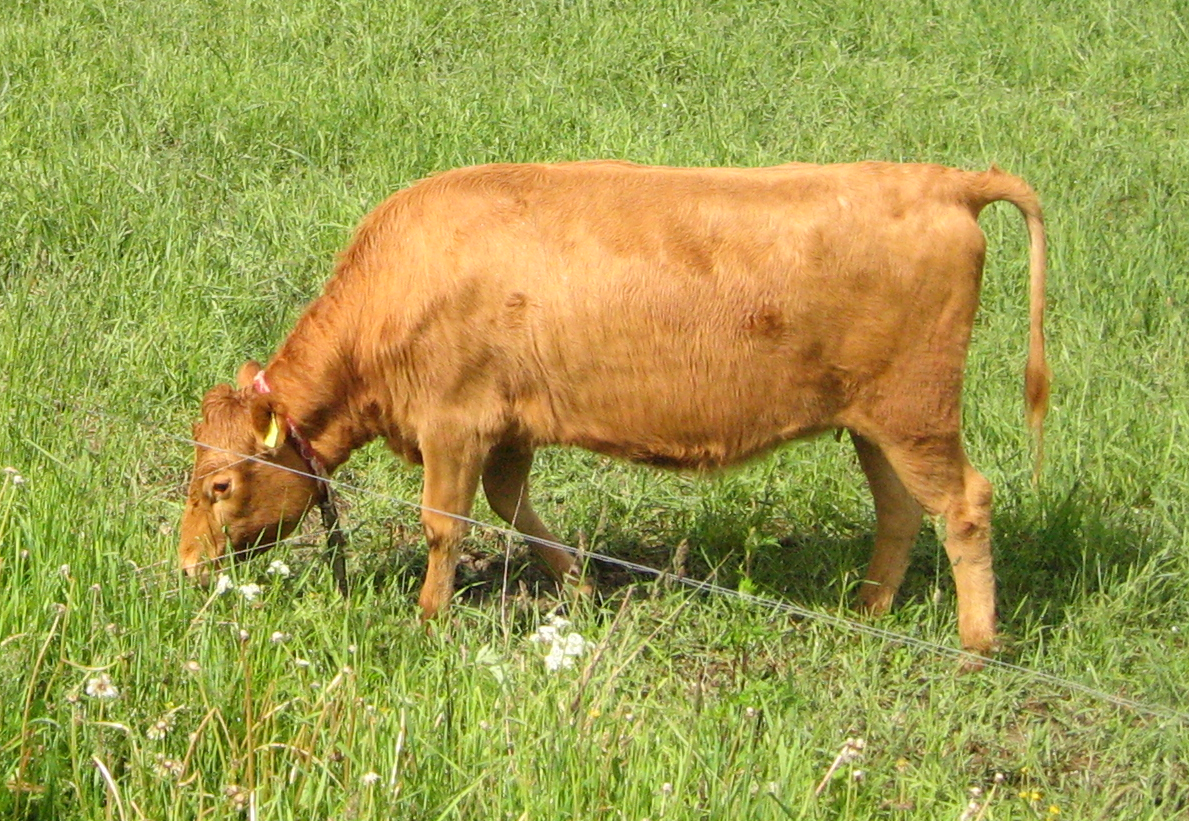 🇫🇮 FinlandWestern Finncattle
A red, hornless dual-purpose breed from western Finland, kept for milk and beefTaurine · Dairy · Polled
🇫🇮 FinlandWestern Finncattle
A red, hornless dual-purpose breed from western Finland, kept for milk and beefTaurine · Dairy · Polled
 🇫🇮 FinlandEastern Finncattleitäsuomenkarja
A dual-purpose Finncattle landrace from eastern Finland, also called kyyttöTaurine · Dairy
🇫🇮 FinlandEastern Finncattleitäsuomenkarja
A dual-purpose Finncattle landrace from eastern Finland, also called kyyttöTaurine · Dairy
 🇫🇮 FinlandFinnish AyrshireSuomen Ayrshire
Finland's most numerous dairy breed, red and white, from Scottish Ayrshire stockTaurine · Dairy · Rich milk
🇫🇮 FinlandFinnish AyrshireSuomen Ayrshire
Finland's most numerous dairy breed, red and white, from Scottish Ayrshire stockTaurine · Dairy · Rich milk
 🇫🇮 FinlandNorthern Finncattle
A polled white landrace from Finland, kept for both milk and beefTaurine · Dual-purpose · Polled
🇫🇮 FinlandNorthern Finncattle
A polled white landrace from Finland, kept for both milk and beefTaurine · Dual-purpose · Polled
Its cousins elsewhere
All dairy breeds 🇲🇳 Mongolia and 4 moreYakགཡག་
A shaggy, cold-hardy highland bovine kept across the Himalayas and Tibetan PlateauYak · Triple-purpose · Cold-hardy
🇦🇺 AustraliaSquare Meater
A compact polled Australian beef breed, silver or grey, from Murray Grey stockTaurine · Beef · Polled
🇦🇺 AustraliaIllawarra Shorthorn
A large red Australian dairy breed, horned, docile and long-livedTaurine · Dairy · Docile
🇲🇳 Mongolia and 4 moreYakགཡག་
A shaggy, cold-hardy highland bovine kept across the Himalayas and Tibetan PlateauYak · Triple-purpose · Cold-hardy
🇦🇺 AustraliaSquare Meater
A compact polled Australian beef breed, silver or grey, from Murray Grey stockTaurine · Beef · Polled
🇦🇺 AustraliaIllawarra Shorthorn
A large red Australian dairy breed, horned, docile and long-livedTaurine · Dairy · Docile
 🇨🇳 China and 2 moreWild yak
A massive, shaggy wild bovine native to the high plateaux and peaks of the HimalayasYak · Beef · Cold-hardy
🇨🇳 China and 2 moreWild yak
A massive, shaggy wild bovine native to the high plateaux and peaks of the HimalayasYak · Beef · Cold-hardy