Dairy breeds
Holstein Friesian, Jersey, Gir, Sahiwal and Red Sindhi: bred first of all for milk.
Dairy breeds are bred first of all for milk. A good dairy cow turns grass, fodder and grain into milk rather than muscle, so she tends to be lean and angular, with a large, well-attached udder and a long working life in the parlour. The Holstein Friesian dominates high-yield herds across the world, while Jersey, Guernsey and Ayrshire are kept for richer milk. In South Asia, Gir, Sahiwal, Red Sindhi and Rathi are the great milking zebu, valued for milk in heat that would trouble most European cows.
What makes a dairy cow
Breeders of dairy cattle select for yield, for the fat and protein in the milk, for an udder that holds up over many lactations, and for fertility, since a cow must calve to milk. The type is often called angular or wedge-shaped: fine bone, little flesh over the ribs, a deep body for a large rumen. Milk recording, where each cow's yield is weighed and sampled every month, began in Denmark in the 1890s and spread through the dairy world. It is the backbone of modern breeding, joined in recent decades by genomic testing of young bulls.
The black-and-white world
The Holstein Friesian came from the lowlands of North Holland and Friesland and was developed for very high yields in North America. It is now the most numerous dairy breed in the world, and in many countries most of the national herd is Holstein or Holstein-cross. Its milk is plentiful and comparatively low in fat. The Jersey, a small fawn cow from the Channel Island of the same name, gives less milk with much more butterfat, and the Brown Swiss, Ayrshire, Guernsey and the red breeds of Scandinavia fill the space between.
The milking zebu of South Asia
India is the largest milk producer in the world, and its own breeds are a large part of the story. Gir from the hills of Saurashtra, Sahiwal from the Punjab, Red Sindhi from Sindh and Rathi from the Bikaner country of Rajasthan are the best-known milking zebu. They give less milk than a Holstein in a cool climate, but they cope with heat, ticks and poor feed. Gir and Sahiwal went abroad to found dairy herds in Brazil, Kenya, Australia and the Caribbean, and Gir is a parent of Brazil's Girolando.
Crosses and the tropics
Across the tropics, dairy farmers have long crossed European bulls onto local zebu cows to combine yield with hardiness. India's Karan Fries and Frieswal, Brazil's Girolando, the Australian Milking Zebu and the Jamaica Hope were all bred this way. The balance is delicate: too much European blood and the cow struggles in the heat, too little and the yield falls. In India, national programmes now also support pure indigenous breeds, alongside crossbreds, to keep the native lines in use.
Worth knowing
- Holstein Friesian: The most numerous dairy breed in the world, bred for volume
- Jersey: Small island cow with milk high in butterfat
- Gir: Milking zebu of Saurashtra, taken to Brazil in large numbers
- Sahiwal: Red-brown milking zebu of the Punjab, kept from Kenya to Australia
- Red Sindhi: Compact deep-red dairy zebu from Sindh
- Brown Swiss: Alpine dairy cow known for long life and cheese milk
- Ayrshire: Red-and-white dairy breed from south-west Scotland
- Rathi: Desert milking zebu of the Bikaner region of Rajasthan
Good to know
- A dairy cow needs to be milked on a steady schedule, usually twice a day, every day of her lactation.
- High-yielding cows need more feed and water than their size suggests; a lactating cow can drink well over 50 litres a day.
- Shade and water matter in hot weather, even for heat-tolerant zebu.
- Most cows are dried off for six to eight weeks before the next calf.
Sources and further reading
- Dairy cattle on Wikipedia
- Holstein Friesian, Wikipedia
- Gyr cattle, Wikipedia
- Sahiwal cattle, Wikipedia
- Cattle, Encyclopaedia Britannica
Original text by the EveryCow desk, written with AI assistance and checked against the sources above. Customs are described as tradition, not as advice. If we have something wrong, tell us.
Dairy on EveryCow
The breeds written up so far, best known first.
 🇵🇰 Pakistan and 5 moreZebu
Humped, heat-tolerant cattle of South Asia, kept for milk, meat, work and ridingZebu · Dairy · Heat-tolerant
🇵🇰 Pakistan and 5 moreZebu
Humped, heat-tolerant cattle of South Asia, kept for milk, meat, work and ridingZebu · Dairy · Heat-tolerant
 🇵🇰 Pakistan and 4 moreSahiwal
A heat-tolerant zebu from the Punjab, kept for milk, meat and draught workZebu · Dairy · Heat-tolerant
🇵🇰 Pakistan and 4 moreSahiwal
A heat-tolerant zebu from the Punjab, kept for milk, meat and draught workZebu · Dairy · Heat-tolerant
 🇮🇳 India and 1 moreGir
A humped dairy breed from Gujarat, red and white with long drooping ears and a domed foreheadZebu · Dairy · Heat-tolerant
🇮🇳 India and 1 moreGir
A humped dairy breed from Gujarat, red and white with long drooping ears and a domed foreheadZebu · Dairy · Heat-tolerant
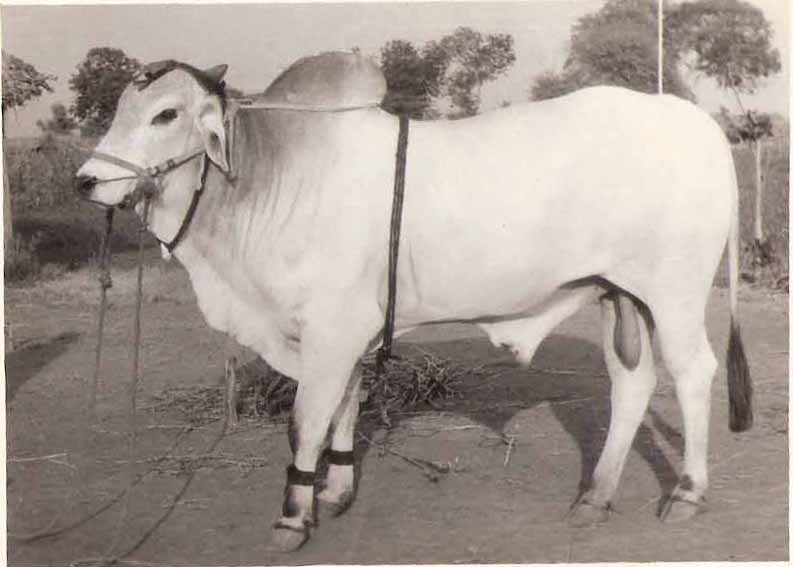 🇮🇳 India and 5 moreOngole
A short-horned zebu breed from Andhra Pradesh, white with dark markings, used for work and milk.Zebu · Draught · Heat-tolerant
🇮🇳 India and 5 moreOngole
A short-horned zebu breed from Andhra Pradesh, white with dark markings, used for work and milk.Zebu · Draught · Heat-tolerant
 🇵🇰 Pakistan and 3 moreRed Sindhi
A humped dairy zebu from Sindh in Pakistan, deep red, with short curved hornsZebu · Dairy · Heat-tolerant
🇵🇰 Pakistan and 3 moreRed Sindhi
A humped dairy zebu from Sindh in Pakistan, deep red, with short curved hornsZebu · Dairy · Heat-tolerant
 🇿🇦 South Africa and 2 moreAfrikaner
A Sanga-type breed from South Africa, deep red with long horns, kept for beef and draught work.Sanga · Beef · Heat-tolerant
🇿🇦 South Africa and 2 moreAfrikaner
A Sanga-type breed from South Africa, deep red with long horns, kept for beef and draught work.Sanga · Beef · Heat-tolerant
 🇫🇷 France and 2 moreAbondance
A red and white dairy breed from the French Alps, kept for milk and mountain grazing.Taurine · Dairy · Heat-tolerant
🇫🇷 France and 2 moreAbondance
A red and white dairy breed from the French Alps, kept for milk and mountain grazing.Taurine · Dairy · Heat-tolerant
 🇮🇳 India and 2 moreKankrej
A grey zebu from the dry Rann of Kutch, kept for milk and for work oxenZebu · Dual-purpose · Heat-tolerant
🇮🇳 India and 2 moreKankrej
A grey zebu from the dry Rann of Kutch, kept for milk and for work oxenZebu · Dual-purpose · Heat-tolerant
 🇪🇸 SpainMenorquina
A red, hornless dairy breed from the Spanish island of Menorca, prized for Mahón cheese production.Taurine · Dairy · Disease-resistant
🇪🇸 SpainMenorquina
A red, hornless dairy breed from the Spanish island of Menorca, prized for Mahón cheese production.Taurine · Dairy · Disease-resistant
 🇮🇳 IndiaRathiराठी
A brown and white dairy breed from the Thar Desert of Rajasthan, kept by nomadic Rath herders.Zebu · Dairy · Heat-tolerant
🇮🇳 IndiaRathiराठी
A brown and white dairy breed from the Thar Desert of Rajasthan, kept by nomadic Rath herders.Zebu · Dairy · Heat-tolerant
 🇪🇹 Ethiopia and 1 moreAbigar
A hardy sanga breed of western Ethiopia and Sudan, kept for milk and beefSanga · Dairy · Heat-tolerant
🇪🇹 Ethiopia and 1 moreAbigar
A hardy sanga breed of western Ethiopia and Sudan, kept for milk and beefSanga · Dairy · Heat-tolerant
 🇮🇳 IndiaJavariಜವಾರಿ
A medium-built dual-purpose zebu from Kalyana-Karnataka, gentle and heat-tolerantZebu · Dairy · Heat-tolerant
🇮🇳 IndiaJavariಜವಾರಿ
A medium-built dual-purpose zebu from Kalyana-Karnataka, gentle and heat-tolerantZebu · Dairy · Heat-tolerant
Photo credits on this page
The small pictures above come from Wikimedia Commons under free licences. Some are cropped to fit.
- Menorquina: Discasto, CC BY-SA 4.0, source
- Kankrej: Pavanaja, CC BY-SA 3.0, source
- Abigar: Bertramz, CC BY-SA 3.0, source
- Abondance: Walpole, CC BY-SA 3.0, source
- Gir: Pavanaja, CC BY-SA 3.0, source
- Sahiwal: Harvinder Chandigarh, CC BY-SA 4.0, source
- Afrikaner: Amada44, Public domain, source
- Ongole: DMR Sekhar, CC BY-SA 3.0, source
- Rathi: Pavanaja, CC BY-SA 3.0, source
- Zebu: A. J. T. Johnsingh, WWF-India and NCF, CC BY-SA 4.0, source
- Red Sindhi: LunaticFringe97, CC BY-SA 4.0, source
- Javari: Pavanaja, CC BY-SA 3.0, source