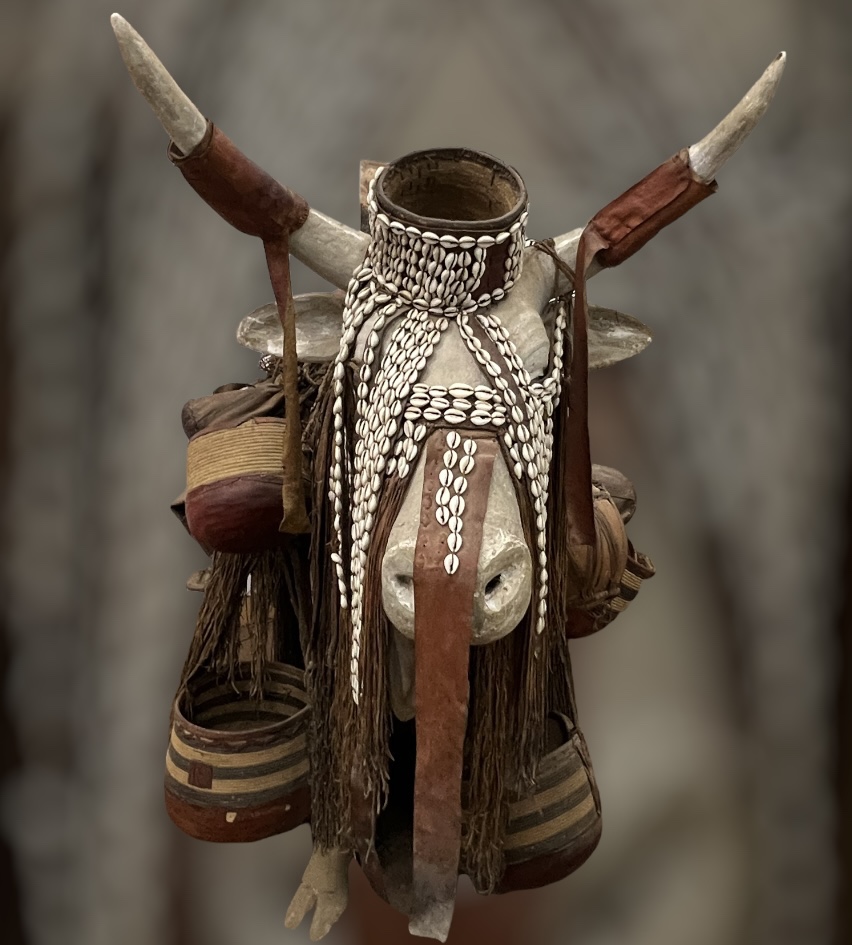
Baggara
A short-horned zebu of Sudan and Chad, lean and hardy, kept for beef
Baggara cattle are a short-horned zebu breed of eastern Africa, native to Sudan and kept by Baggara herders in western Sudan and central Chad. Leaner in build than the Boran kept in Kenya and Ethiopia, they are reared mainly for beef and do well in hot, dry grazing such as the dry Sahel.
- Named after the Baggara herders of western Sudan and central Chad
- Baggara means cattle people in the Shuwa Arabic they speak
- A shorthorned zebu of eastern Africa, smaller than the Boran
- Kept mainly for beef rather than milk
- Improved by projects of the Sudanese Department of Agriculture
What do Baggara cattle look like?
Baggara cattle are a zebu breed, carrying the shoulder hump and short horns that mark the shorthorned zebu group of eastern Africa. Their bodies are leaner and narrower than those of the Boran kept in Kenya and Ethiopia, which gives them a light, rangy look rather than a heavy one. They are a native Sudanese breed, and cows and bulls share the same slim shape. The breed's worth lies in that frame: a thrifty animal that can walk and graze dry rangeland without heavy feeding. Herders keep them for meat, not milk.
Where does the Baggara come from?
Baggara cattle take their name from the people who keep them, the Baggara of western Sudan and central Chad. In the Shuwa Arabic these herders speak, Baggara means cattle people, so the herd animals and their owners share one word. The breed belongs to the shorthorned zebu group of eastern Africa, a wide family of humped cattle found across the region. Its best-known relatives within Sudan are the Butana and Kenana of the Nile Valley. Those two are dairy breeds, fed and watered far more generously, while the Baggara is the beef animal of the drier country.
What the Baggara is known for
The Baggara is known for coping where rain is scarce and heat is constant. It performs well in hot, dry farming and grazing systems, including the dry Sahel on the southern edge of the Sahara. Set beside the Nile Valley dairy cattle, it gets by on less food and less water, and that thrift lets herders keep stock in country which would not carry heavier breeds. Owners choose breeding animals for endurance, a light frame and the ability to raise a calf on thin grazing.
How the Baggara is bred and kept
The breed is being improved through projects run by the Sudanese Department of Agriculture, which work with its existing strengths rather than replacing them. Baggara cattle are range animals. They walk out to grazing and water instead of being housed, and owners pick breeding stock for hardiness, a slim frame and the ability to rear a calf on thin pasture. Selection happens within the herd, among cattle already suited to hot, dry country.
Baggara, drawn
What the Baggara is kept for
Meat is what the Baggara is kept for. Families in western Sudan and central Chad rear the cattle to sell as beef, and an animal that holds condition on dry grazing suits that trade. This is not a dairy breed. Sudan's milk cattle are the Butana and Kenana of the Nile Valley, whose yields come with far heavier demands for feed and water. Being light and mobile, Baggara cattle fit the older pattern of walking herds to whatever grazing the season offers.
The land and climate of the Baggara
These cattle live in the hot, dry belt of eastern Africa, in farming and grazing systems where rainfall is low and unreliable. The dry Sahel is the setting in which the breed is said to perform well. Heat and sparse grazing are the conditions that shaped it, and the light body and modest needs that come with that history are what carry it through dry spells.
Who keeps the Baggara
The Baggara people, who live in western Sudan and central Chad, are the keepers of this breed. In their language, Shuwa Arabic, Baggara means cattle people, so the herders and their animals carry the same name. Cattle keeping is central to how these communities live, and beef is the main reason the herd is reared. The breed belongs to these people in a way few breeds do: the cattle are named after the herders, rather than the herders after the cattle.
At a glance: where it belongs
Land and climate
Peoples
Custom and folk tradition
By tradition the breed and its keepers share one word. Baggara means cattle people in Shuwa Arabic, the language of the herders of western Sudan and central Chad, and the cattle are named for the people rather than the reverse. Herding life in this dry belt turns around the herd, and the breed's standing comes from that long association between the Baggara and their beef cattle.
Numbers, conservation and the herd book
The Baggara is kept by herding families in western Sudan and central Chad, and improvement work on the breed is carried out by projects of the Sudanese Department of Agriculture. Those programmes are meant to raise the breed's performance while keeping its fit with hot, dry country. It stands alongside the Nile Valley's Butana and Kenana among Sudan's cattle, though those two are dairy animals and the Baggara is kept for beef.
Questions people ask about Baggara
Where do Baggara cattle come from?
They are a native Sudanese breed, kept by Baggara herding people in western Sudan and central Chad. The breed belongs to the shorthorned zebu group of eastern Africa.
What are Baggara cattle kept for?
Beef. Families in western Sudan and central Chad rear them to sell as meat, and the breed's ability to do well in hot, dry grazing suits that work. Sudan's dairy cattle are the Nile Valley breeds, Butana and Kenana.
How does it compare with other Sudanese cattle?
It is the beef animal of the dry belt, leaner and narrower in build than the Boran. The Nile Valley's Butana and Kenana are dairy cattle, and they are heavier feeders and drinkers than the dry-country herds.
What does the name Baggara mean?
In Shuwa Arabic, the language of the herders who keep these cattle, Baggara means cattle people. The breed is named after those people rather than the people after the cattle.
How well does it handle heat and dry weather?
The breed is known for adapting to hot, dry farming and grazing systems, including the dry Sahel, and it performs well there. That hardiness is why Sudanese agricultural projects are working to improve it.
Good reading and sources
The facts on this page come from the Wikipedia article "Baggara cattle", written by its contributors and used under the CC BY-SA 4.0 licence, and from its Wikidata record (CC0). EveryCow rewrote the text in its own words, with AI assistance, and compares every page with the article to make sure no passage is copied. It may be reused under the same CC BY-SA 4.0 licence with a link back.
It may contain mistakes. Sizes, colours and customs differ from one herd, valley or breeder to the next. Folk beliefs are described as tradition, never as advice. If something is wrong, tell us. Last refreshed 2026-10-16.
More from Sudan
All the breeds of Sudan 🇪🇹 Ethiopia and 1 moreAbigar
A hardy sanga breed of western Ethiopia and Sudan, kept for milk and beefSanga · Dairy · Heat-tolerant
🇪🇹 Ethiopia and 1 moreAbigar
A hardy sanga breed of western Ethiopia and Sudan, kept for milk and beefSanga · Dairy · Heat-tolerant
 🇸🇩 Sudan and 4 moreSanga cattle
The umbrella name for native African cattle, mixing humpless taurine and zebu bloodTaurine · Disease-resistant
🇸🇩 SudanButana and Kenana
Sudan's milk zebu: the deep red Butana and the Kenana that whitens with ageZebu · Dairy
🇸🇩 Sudan and 4 moreSanga cattle
The umbrella name for native African cattle, mixing humpless taurine and zebu bloodTaurine · Disease-resistant
🇸🇩 SudanButana and Kenana
Sudan's milk zebu: the deep red Butana and the Kenana that whitens with ageZebu · Dairy
Its cousins elsewhere
All beef breeds 🇵🇰 Pakistan and 5 moreZebu
Humped, heat-tolerant cattle of South Asia, kept for milk, meat, work and ridingZebu · Dairy · Heat-tolerant
🇧🇷 BrazilPantaneiro
A small Criollo breed of Brazil's Pantanal wetlands, now endangeredTaurine · Heat-tolerant
🇵🇰 Pakistan and 5 moreZebu
Humped, heat-tolerant cattle of South Asia, kept for milk, meat, work and ridingZebu · Dairy · Heat-tolerant
🇧🇷 BrazilPantaneiro
A small Criollo breed of Brazil's Pantanal wetlands, now endangeredTaurine · Heat-tolerant
 🇺🇸 United States and 5 moreBrahman
An American beef breed with a hump and grey or red coat, bred from Indian zebu cattleComposite · Beef · Heat-tolerant
🇺🇸 United States and 5 moreBrahman
An American beef breed with a hump and grey or red coat, bred from Indian zebu cattleComposite · Beef · Heat-tolerant
 🇺🇸 United StatesTexas Longhorn
American beef cattle, once feral on Texas ranges, with horn spreads beyond 2.4 mTaurine · Beef · Heat-tolerant
🇺🇸 United StatesTexas Longhorn
American beef cattle, once feral on Texas ranges, with horn spreads beyond 2.4 mTaurine · Beef · Heat-tolerant