Butana and Kenana
Sudan's milk zebu: the deep red Butana and the Kenana that whitens with age
The Butana and Kenana are short-horned zebu of eastern Africa, unusual among the region's cattle in being kept for milk. The Butana comes from the region east of Khartoum in central Sudan; the Kenana lives to its south, between the Blue Nile and the White Nile, and changes from deep red to white with age.
- Both belong to the short-horned zebu group of eastern Africa.
- The Butana is deep red; the Kenana is red as a calf and white as an adult.
- They are dairy breeds, rare among the zebu of Africa.
- A research site at Atbarah works to protect and improve the Butana.
- Among zebu dairy breeds they rank second, level with the Red Sindhi.
What do Butana and Kenana cattle look like?
The Butana and the Kenana are two related zebu cattle of central Sudan. Both belong to the short-horned zebu group of eastern Africa, and both are milk breeds, which sets them apart from most other cattle of the region. The Butana is deep red all over, close in looks to the Red Sindhi of the Indian subcontinent, though a little smaller than the Sahiwal. The Kenana is born the same deep red and loses that colour as it grows, ending up white. Size, shape and milk yield are much the same in both breeds, and much the same as in the Red Sindhi. In build they follow the zebu pattern, with a hump over the shoulders and short horns.
Where does the Butana and Kenana come from?
The Butana takes its name from the Butana region, which lies east of Khartoum in central Sudan, where the breed is kept. South of that, mainly in the country between the Blue Nile and the White Nile, stands the Kenana, which is thought to have come from the Butana. Zebu cattle were carried from India to Sudan in medieval times, more than a thousand years ago, and the stock behind the Red Sindhi was probably a leading part of that movement. It is likely that those animals helped form the Butana, and it is striking that the two breeds should still look so alike after so long.
What the Butana and Kenana is known for
What the Butana and the Kenana are known for is milk. Most other zebu breeds of Africa are kept for other purposes; these two are dairy animals, and they are counted the leading milk cattle of the continent. Breeders put them second among the zebu dairy breeds of the world, level with the Red Sindhi and behind only the Sahiwal. The Kenana's habit of losing its red coat and turning white with age marks it out from its northern neighbour.
How the Butana and Kenana is bred and kept
Zebu blood lies behind both breeds. The Butana in particular is linked to cattle moved from India to Sudan many centuries ago, and the Kenana is thought to descend from the Butana rather than from a separate import. The agriculture department in Sudan runs a research site at Atbarah whose task is to protect the Butana breed and improve it. Because the two breeds are so close in size, shape and milk, they are treated together by anyone working with them, and the Butana region of central Sudan is where the northern breed is found.
Butana and Kenana, drawn
What the Butana and Kenana is kept for
Milk is the reason these cattle are kept. Both the Butana and the Kenana yield milk in a way that matches the Red Sindhi, and that puts them ahead of every other breed in Africa for dairying. Among the zebu breeds of the world they share second place with the Red Sindhi, while the Sahiwal of India and Pakistan holds first. Their worth lies in the dairy shed, and the attention given to the Butana at Atbarah is aimed at that strength. Size, shape and yield run together in both breeds.
The land and climate of the Butana and Kenana
The Butana breed is tied to the Butana region, the country east of Khartoum in central Sudan. The Kenana is kept a little further south, mainly on the land between the Blue Nile and the White Nile. Both fall within the short-horned zebu group of eastern Africa, the cattle of that part of the continent. Atbarah, where the Butana is studied, lies in the same stretch of Sudan as the breed itself.
Questions people ask about Butana and Kenana
Where do these cattle come from?
The Butana belongs to the Butana region east of Khartoum, in central Sudan. The Kenana is kept just to the south of it, mainly on the land lying between the Blue Nile and the White Nile.
What are they kept for?
They are dairy cattle. Most other zebu breeds of Africa, such as the Boran and the Baggara, are not milk breeds, so the Butana and Kenana stand out as the continent's leading dairy cattle.
How do they compare with the Red Sindhi?
Very closely. In size, shape and milk yield the two Sudanese breeds almost match the Red Sindhi of the Indian subcontinent, and a Butana is nearly impossible to tell apart from that breed.
What colour are they?
The Butana stays deep red throughout its life. A Kenana calf is the same deep red, but the colour fades as the animal grows and adults are white.
Why are they unusual among zebu cattle?
Most zebu breeds of the region are not dairy animals, but these two are, and they are counted among the best milk breeds of the zebu world. They share second place with the Red Sindhi, behind the Sahiwal.
Good reading and sources
The facts on this page come from the Wikipedia article "Butana and Kenana cattle", written by its contributors and used under the CC BY-SA 4.0 licence, and from its Wikidata record (CC0). EveryCow rewrote the text in its own words, with AI assistance, and compares every page with the article to make sure no passage is copied. It may be reused under the same CC BY-SA 4.0 licence with a link back.
It may contain mistakes. Sizes, colours and customs differ from one herd, valley or breeder to the next. Folk beliefs are described as tradition, never as advice. If something is wrong, tell us. Last refreshed 2026-10-16.
More from Sudan
All the breeds of Sudan 🇪🇹 Ethiopia and 1 moreAbigar
A hardy sanga breed of western Ethiopia and Sudan, kept for milk and beefSanga · Dairy · Heat-tolerant
🇪🇹 Ethiopia and 1 moreAbigar
A hardy sanga breed of western Ethiopia and Sudan, kept for milk and beefSanga · Dairy · Heat-tolerant
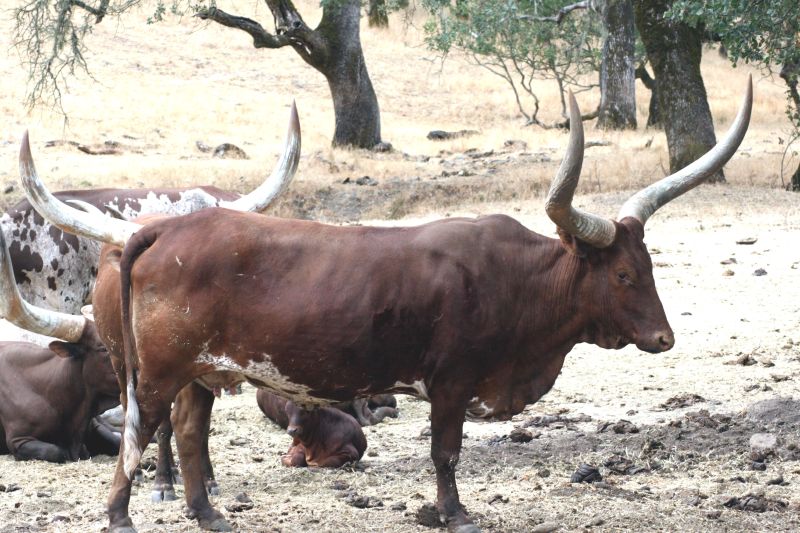 🇸🇩 Sudan and 4 moreSanga cattle
The umbrella name for native African cattle, mixing humpless taurine and zebu bloodTaurine · Disease-resistant
🇸🇩 Sudan and 4 moreSanga cattle
The umbrella name for native African cattle, mixing humpless taurine and zebu bloodTaurine · Disease-resistant
 🇸🇩 Sudan and 1 moreBaggara
A short-horned zebu of Sudan and Chad, lean and hardy, kept for beefZebu · Beef · Heat-tolerant
🇸🇩 Sudan and 1 moreBaggara
A short-horned zebu of Sudan and Chad, lean and hardy, kept for beefZebu · Beef · Heat-tolerant
Its cousins elsewhere
All dairy breeds 🇲🇳 MongoliaDzoམཛོ་
A yak-cow hybrid from Tibet and Mongolia, bigger than either parentYak · Dairy
🇲🇳 MongoliaDzoམཛོ་
A yak-cow hybrid from Tibet and Mongolia, bigger than either parentYak · Dairy
 🇵🇰 Pakistan and 5 moreZebu
Humped, heat-tolerant cattle of South Asia, kept for milk, meat, work and ridingZebu · Dairy · Heat-tolerant
🇵🇰 Pakistan and 5 moreZebu
Humped, heat-tolerant cattle of South Asia, kept for milk, meat, work and ridingZebu · Dairy · Heat-tolerant
 🇮🇳 India and 4 moreGayal
A semi-domesticated bovine of the Eastern Himalayas, kept for meat, milk and ceremonyMithun · Beef
🇮🇳 India and 4 moreGayal
A semi-domesticated bovine of the Eastern Himalayas, kept for meat, milk and ceremonyMithun · Beef
 🇳🇱 Netherlands and 3 moreHolstein Friesian
A black and white dairy breed kept worldwide, with red and white lines tooTaurine · Dairy
🇳🇱 Netherlands and 3 moreHolstein Friesian
A black and white dairy breed kept worldwide, with red and white lines tooTaurine · Dairy