
Polish Red
In its own language: Polska czerwona
A red Polish breed kept for both milk and beef
The Polish Red, called Polska czerwona in Polish, is a dual-purpose breed from Poland, kept for milk and beef. It was formed towards the end of the 1800s by crossing red cattle brought in from Sweden, Denmark and Germany with local red Polish strains, and its cows average about 500 kg and give around 4000 kg of milk a year.
- A dual-purpose breed from Poland, kept for milk and for beef
- Cows average about 500 kg and stand around 128 cm at the withers
- Bulls average about 770 kg and reach roughly 139 cm
- A cow gives about 4000 kg of milk a year, with 4 to 4.5 per cent fat
- Formed towards the end of the 1800s from local red stock and imported red cattle
What do Polish Red cattle look like?
The Polish Red, known at home as Polska czerwona, is a dual-purpose breed, meaning it is kept for milk and meat together. Its coat is red, which is where the name comes from. Cows are moderate animals, averaging about 500 kg and standing some 128 cm at the withers, the bony ridge between the shoulders. Bulls are much heavier, around 770 kg, and slightly taller at about 139 cm. A cow of this breed is expected to give about 4000 kg of milk in a year.
Where does the Polish Red come from?
The Polish Red as it is known today was put together towards the end of the 1800s. Breeders took cattle of the red type from Sweden, Denmark and Germany and mated them with the red cattle already kept in Poland, which existed in several local strains. The result was a breed carrying blood from outside the country as well as from within it. It is therefore a made breed rather than an old local population with a single home valley, and the Polish name, Polska czerwona, simply describes its colour.
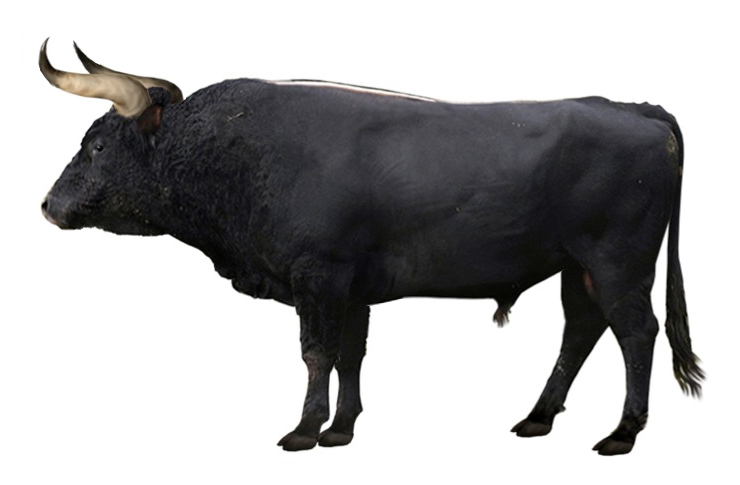
Polish Red, drawn
What the Polish Red is kept for
The breed is classed as dual-purpose, so a herd is expected to give both milk and meat. A cow yields roughly 4000 kg of milk over a year, and the fat in that milk runs at about 4 to 4.5 per cent, which is on the fuller side. Young stock can be reared for beef, and the heavier bulls, around 770 kg, suit that side of the enterprise. The cows are the smaller half of the breed, weighing about 500 kg.
From the Polish Red
Questions people ask about Polish Red
Where does the Polish Red come from?
It comes from Poland, where red cattle had long been kept in several local strains. Towards the end of the 1800s, breeders crossed those with red cattle brought in from Sweden, Denmark and Germany, and the breed as it is known today came out of that mixing.
What is the Polish Red kept for?
It is a dual-purpose breed, which means both milk and meat. A cow gives around 4000 kg of milk in a year, with a fat content of about 4 to 4.5 per cent, and the heavier bulls, roughly 770 kg, add the beef side.
How big is a Polish Red?
Cows weigh about 500 kg and stand some 128 cm at the withers, the ridge between the shoulders. Bulls are larger, averaging about 770 kg and about 139 cm. Both are averages, so animals can run above or below them.
How much milk does a Polish Red cow give?
Roughly 4000 kg of milk a year, and the fat content of that milk is given as about 4 to 4.5 per cent. Because the breed is classed as dual-purpose, the cows are also expected to rear calves that can go for beef.
What colour is a Polish Red?
The coat is red, and that is what gives the breed its name; in Polish it is called Polska czerwona. The red cattle brought in from Sweden, Denmark and Germany in the 1800s were of that colour, and so were the local Polish strains they were mated with.
Good reading and sources
- Polish Red on WikipediaEncyclopedia
- More photos on Wikimedia CommonsPhotos and video
- Wikidata recordOpen data
The facts on this page come from the Wikipedia article "Polish Red", written by its contributors and used under the CC BY-SA 4.0 licence, and from its Wikidata record (CC0). EveryCow rewrote the text in its own words, with AI assistance, and compares every page with the article to make sure no passage is copied. It may be reused under the same CC BY-SA 4.0 licence with a link back.
It may contain mistakes. Sizes, colours and customs differ from one herd, valley or breeder to the next. Folk beliefs are described as tradition, never as advice. If something is wrong, tell us. Last refreshed 2026-10-16.

Its cousins elsewhere
All dual-purpose breeds 🇮🇳 IndiaHarianaहरियाना
A medium to large dual-purpose zebu from Haryana, white to grey with short horns.Zebu · Dual-purpose · Disease-resistant
🇮🇳 IndiaHarianaहरियाना
A medium to large dual-purpose zebu from Haryana, white to grey with short horns.Zebu · Dual-purpose · Disease-resistant
 🇵🇰 Pakistan and 1 moreTharparkarٿرپارڪر
A hardy zebu breed from the Thar Desert, white to grey with a firm hump, kept for milk and work.Zebu · Dual-purpose · Heat-tolerant
🇵🇰 Pakistan and 1 moreTharparkarٿرپارڪر
A hardy zebu breed from the Thar Desert, white to grey with a firm hump, kept for milk and work.Zebu · Dual-purpose · Heat-tolerant
 🇮🇳 IndiaDeoni
A horned draught breed from Maharashtra, kept for work and milkZebu · Dual-purpose
🇮🇳 IndiaDeoni
A horned draught breed from Maharashtra, kept for work and milkZebu · Dual-purpose