
German Black Pied
A dairy breed of the North Sea coast, black and white, smaller than the Holstein
The German Black Pied is a dairy breed from the North Sea coastland of northern Germany and the Netherlands. Its coat is black and white, and it is smaller and gives less milk than the Holstein Friesian, while being more fertile and longer lived; the old unmixed stock survives mainly as a reserve.
- Black pied became the usual colour on the North Sea coast after about 1750
- The breed's first breeding company was set up at East Frisia in 1878
- West German herds were crossed with Holstein Friesian from 1958
- The unaltered type was kept in East Germany as a breeding reserve
- Smaller and lower yielding than the Holstein, but more fertile and longer lived
What do German Black Pied cattle look like?
The German Black Pied is a dairy breed of the low-lying coastland beside the North Sea. Its coat is black and white, the pied pattern that became the usual one in those districts after 1750, though plain red cattle and red and white cattle also occur. The animals stand smaller than the Holstein Friesian and give less milk, while being more fertile and longer lived. Cows and bulls carry the same markings. The breed was shaped for milk rather than for beef, and the black and white herds of Germany today descend largely from crosses with the Holstein Friesian.
Where does the German Black Pied come from?
Cattle of many colours were kept on the North Sea coast, in the Netherlands and in northern Germany, until well into the eighteenth century. From about 1750 the black pied kind became the common type there. The breed's earliest breeding company was set up in East Frisia in 1878. East Frisia and East Prussia, land now in Russia, Lithuania and Poland, were its two chief centres, and from them it spread across the rest of northern and central Germany. West German breeders began putting Holstein Friesian bulls to it in 1958, and by the 1960s the crossbred animals were dominant, which is how the German black and white came about. In East Germany a three-way crossing with Jersey and Holstein Friesian, proposed by Schönmuth in 1963, produced the German Black Pied Dairy breed.
What the German Black Pied is known for
The old Black Pied is a modest-sized dairy cow. It does not match the Holstein Friesian for milk, but the breed is noted as more fertile and as living longer. A comparison looked at bulls of this breed beside Fleckvieh bulls, studying muscle growth and how the feed energy was used. On the same rations the Fleckvieh animals grew faster, their carcases carried less fat, particularly the fat inside the abdomen, and they could be slaughtered sooner. The Black Pied's strengths lay in breeding and in long life, not in rapid growth.
How the German Black Pied is bred and kept
Organised breeding began in 1878, when a company was founded at East Frisia. East Frisia and East Prussia served as the main centres, and stock from them was taken across northern and central Germany. From 1958 West German herds were crossed with Holstein Friesians, and within a few years the crossbred cattle were the common ones. East Germany also crossed its stock, using Jersey and Holstein Friesian, on a plan set out by Schönmuth in 1963. The unaltered type was held there as a reserve, and a few breeders in the Netherlands and West Germany kept it as well.
German Black Pied, drawn
What the German Black Pied is kept for
Milk is what the breed is kept for. Yield is lower than the Holstein Friesian's, the chief drawback where dairying is run commercially, and fertility together with a long working life is what is noted in its favour. Beef was examined in the comparison with Fleckvieh bulls: the Black Pied grew more slowly, had a larger share of fat in the carcase, especially in the abdomen, and reached slaughter weight later. In today's herds the old type has little commercial place; it is kept in small numbers as a reserve and by breeders who want it preserved.
The land and climate of the German Black Pied
The breed belongs to the flat coastal districts of the North Sea, in northern Germany and the Netherlands, and it later spread through northern and central Germany. This is temperate lowland, largely grass and farmland, and the cattle were kept there as dairy stock on grass and on crops grown alongside. The black pied colouring and the dairy build were formed in that coastal setting, and the breed's long history belongs to the farms of that plain.
At a glance: where it belongs
Land and climate

Numbers, conservation and the herd book
The breed's story is one of rise and replacement. A breeding company was founded at East Frisia in 1878, and from East Frisia and East Prussia the cattle spread through northern and central Germany. After 1958 West German breeders crossed them with Holstein Friesians, and by the 1960s the crossbred animals were the ordinary stock, so that the black and white herds of Germany today descend from that mixing. The older form survived in East Germany as a store of breeding material, and small numbers were kept by private breeders in the Netherlands and West Germany.
From the German Black Pied
Questions people ask about German Black Pied
Where does the German Black Pied come from?
It comes from the North Sea coastal districts of northern Germany and the Netherlands. Cattle of mixed colours were kept there until well into the eighteenth century, and from about 1750 the black and white pattern became the usual one. Its two chief early centres were East Frisia and East Prussia.
What is the German Black Pied kept for?
It is a dairy breed, kept for milk. Yields are lower than the Holstein Friesian's, and its noted qualities are fertility and length of life. Beef was studied in a comparison with Fleckvieh bulls, where the Black Pied grew more slowly and carried more fat in the carcase.
How does it differ from the Holstein Friesian?
It is smaller and gives less milk, but it is more fertile and lives longer. The two are linked by history: West German breeders crossed the Black Pied with the Holstein Friesian from 1958, and within a few years the crossbred cattle had become the dominant black and white stock in Germany.
What became of the original, unmixed type?
It was kept in East Germany as a reserve of breeding stock, and a few breeders in the Netherlands and West Germany maintained it too. East Germany had also crossed the breed with Jersey and Holstein Friesian to create the German Black Pied Dairy breed, a plan put forward by Schönmuth in 1963.
What did the Fleckvieh comparison show?
Bulls of the two breeds were compared for muscle growth and for the way they used feed energy. The Fleckvieh bulls grew faster, their carcases had less fat, especially inside the abdomen, and they could be slaughtered earlier on the same diet.
Good reading and sources
- German Black Pied on WikipediaEncyclopedia
- More photos on Wikimedia CommonsPhotos and video
- Wikidata recordOpen data
The facts on this page come from the Wikipedia article "German Black Pied", written by its contributors and used under the CC BY-SA 4.0 licence, and from its Wikidata record (CC0). EveryCow rewrote the text in its own words, with AI assistance, and compares every page with the article to make sure no passage is copied. It may be reused under the same CC BY-SA 4.0 licence with a link back.
It may contain mistakes. Sizes, colours and customs differ from one herd, valley or breeder to the next. Folk beliefs are described as tradition, never as advice. If something is wrong, tell us. Last refreshed 2026-10-16.
More from Germany
All the breeds of Germany 🇨🇭 Switzerland and 5 moreBraunvieh
A large Alpine brown dairy breed from Switzerland, known for its strength and high milk yield.Taurine · Dairy · Rich milk
🇨🇭 Switzerland and 5 moreBraunvieh
A large Alpine brown dairy breed from Switzerland, known for its strength and high milk yield.Taurine · Dairy · Rich milk
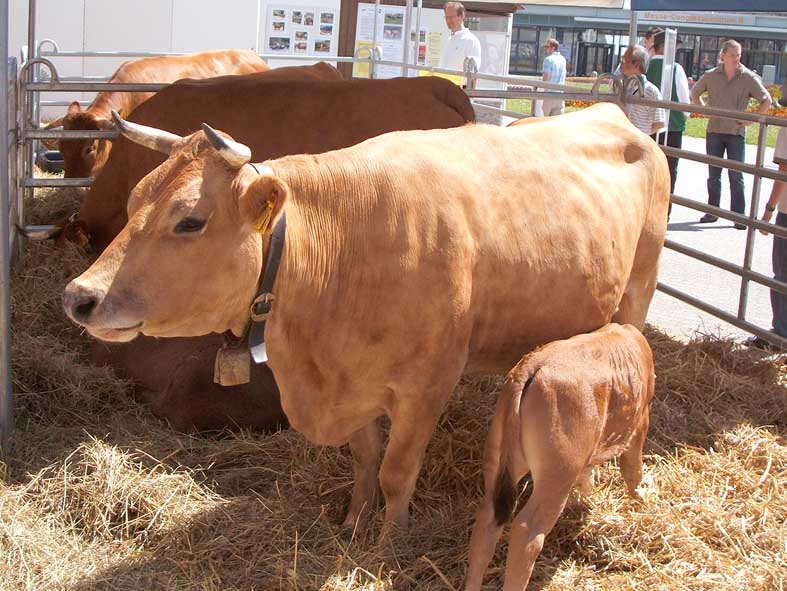 🇩🇪 Germany and 1 moreMurnau-Werdenfels
A long-lived brown dairy breed of the Bavarian uplands, milk and beefTaurine · Dairy · Long-lived
🇩🇪 Germany and 1 moreMurnau-Werdenfels
A long-lived brown dairy breed of the Bavarian uplands, milk and beefTaurine · Dairy · Long-lived
 🇩🇪 Germany and 2 moreTaurus cattle
Long-legged cross-bred cattle bred in Germany to stand in for the extinct aurochsComposite · Grazing
🇩🇪 Germany and 2 moreTaurus cattle
Long-legged cross-bred cattle bred in Germany to stand in for the extinct aurochsComposite · Grazing
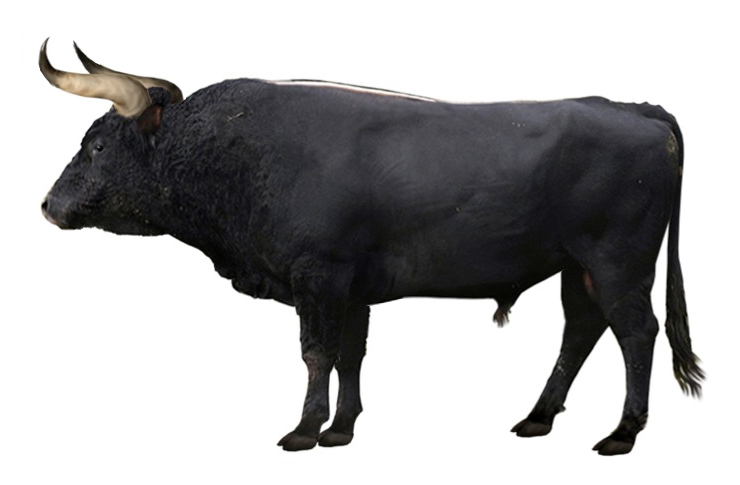 🇵🇱 Poland and 5 moreAurochs
The wild ancestor of all domestic cattle, extinct since 1627Wild · Long-horned
🇵🇱 Poland and 5 moreAurochs
The wild ancestor of all domestic cattle, extinct since 1627Wild · Long-horned
Its cousins elsewhere
All dairy breeds 🇲🇳 Mongolia and 4 moreYakགཡག་
A shaggy, cold-hardy highland bovine kept across the Himalayas and Tibetan PlateauYak · Triple-purpose · Cold-hardy
🇲🇳 Mongolia and 4 moreYakགཡག་
A shaggy, cold-hardy highland bovine kept across the Himalayas and Tibetan PlateauYak · Triple-purpose · Cold-hardy
 🇰🇷 South Korea and 1 moreHanwoo한우
A small, brown taurine breed from Korea, once used for work and now prized for its premium beef.Taurine · Beef · Docile
🇰🇷 South Korea and 1 moreHanwoo한우
A small, brown taurine breed from Korea, once used for work and now prized for its premium beef.Taurine · Beef · Docile
 🇿🇦 South Africa and 2 moreAfrikaner
A Sanga-type breed from South Africa, deep red with long horns, kept for beef and draught work.Sanga · Beef · Heat-tolerant
🇿🇦 South Africa and 2 moreAfrikaner
A Sanga-type breed from South Africa, deep red with long horns, kept for beef and draught work.Sanga · Beef · Heat-tolerant
 🇮🇳 IndiaHallikarಹಳ್ಳಿಕಾರ್
A draught breed from Karnataka, India, known for strength and the ability of both oxen and cows to plough.Zebu · Draught · Docile
🇮🇳 IndiaHallikarಹಳ್ಳಿಕಾರ್
A draught breed from Karnataka, India, known for strength and the ability of both oxen and cows to plough.Zebu · Draught · Docile