Polled breeds
Naturally hornless: Angus, Red Poll, Galloway and the polled lines of other breeds.
Polled cattle are naturally hornless. The trait is controlled by a dominant gene, so a polled bull with two copies will sire hornless calves even from horned cows. Several British breeds are polled by nature: the Aberdeen Angus, the Red Poll and the Galloway, along with the Murray Grey of Australia and the Japanese Polled among the Wagyu breeds. Polled lines have also been bred within horned breeds such as the Hereford, Shorthorn and Simmental. Almost all Indian breeds are horned, and their horns are often painted and decorated at festivals.
The polled gene
Polledness in cattle is inherited in a simple way. A single gene with a dominant polled form means that one copy is enough for an animal to grow no horns. Animals with one copy can still pass on the horned form, so two polled parents can occasionally have a horned calf. Some cattle grow scurs, small loose horn-like growths, which are controlled by a separate gene. Breeders can now test for these genes directly.
Why farmers want it
Horned cattle can injure each other and their handlers, and they need more space at a feed barrier. For this reason, many dairy and beef calves in modern farming have their horn buds removed when they are young. Breeding polled cattle removes the need for this, which many people see as a welfare gain. As a result, polled lines have spread in breeds such as Holstein, Simmental and Limousin.
Horns in India
In South Asia, horns are part of a breed's identity. Breeds are often described by their horns, from the lyre horns of the Kankrej to the backward-curving horns of the Hallikar. At festivals such as Mattu Pongal and Pola, the horns of cattle are painted and capped. Polled cattle are rare in India, and the horns are generally left in place.
Worth knowing
- Aberdeen Angus: Black, naturally hornless beef breed of Scotland
- Red Poll: English red breed named for being polled
- Galloway: Polled, double-coated breed of south-west Scotland
- Murray Grey: Polled grey Australian breed
- Polled Hereford: Hornless line of the Hereford
- Japanese Polled: Hornless Wagyu breed
- Brangus: Polled composite of Angus and Brahman
Sources and further reading
- Polled livestock on Wikipedia
- Aberdeen Angus, Wikipedia
- Red Poll, Wikipedia
- Livestock dehorning, Wikipedia
Original text by the EveryCow desk, written with AI assistance and checked against the sources above. Customs are described as tradition, not as advice. If we have something wrong, tell us.
Polled on EveryCow
The breeds written up so far, best known first.
 🇬🇧 United Kingdom and 4 moreGalloway
A polled black beef breed from south-west Scotland with a thick double coatTaurine · Beef · Cold-hardy
🇬🇧 United Kingdom and 4 moreGalloway
A polled black beef breed from south-west Scotland with a thick double coatTaurine · Beef · Cold-hardy
 🇬🇧 United Kingdom and 5 moreBelted Galloway
A polled Scottish beef breed with a distinctive white belt around its black body.Taurine · Beef · Cold-hardy
🇬🇧 United Kingdom and 5 moreBelted Galloway
A polled Scottish beef breed with a distinctive white belt around its black body.Taurine · Beef · Cold-hardy
 🇸🇪 SwedenFjällSvensk fjällras
A polled, mostly white dairy cow from the Swedish mountains, hardy on thin grazing.Taurine · Dairy · Polled
🇸🇪 SwedenFjällSvensk fjällras
A polled, mostly white dairy cow from the Swedish mountains, hardy on thin grazing.Taurine · Dairy · Polled
 🇮🇸 IcelandIcelandicíslenskur nautgripur
A small, mostly polled dairy breed isolated in Iceland for a thousand yearsTaurine · Dairy · Polled
🇮🇸 IcelandIcelandicíslenskur nautgripur
A small, mostly polled dairy breed isolated in Iceland for a thousand yearsTaurine · Dairy · Polled
 🇺🇸 United States and 5 moreSenepol
A polled red beef breed from St Croix, built for heat and insectsTaurine · Beef · Heat-tolerant
🇺🇸 United States and 5 moreSenepol
A polled red beef breed from St Croix, built for heat and insectsTaurine · Beef · Heat-tolerant
 🇯🇵 JapanJapanese Polled無角和種
A small black Japanese beef breed, hornless in both sexesTaurine · Beef · Polled
🇯🇵 JapanJapanese Polled無角和種
A small black Japanese beef breed, hornless in both sexesTaurine · Beef · Polled
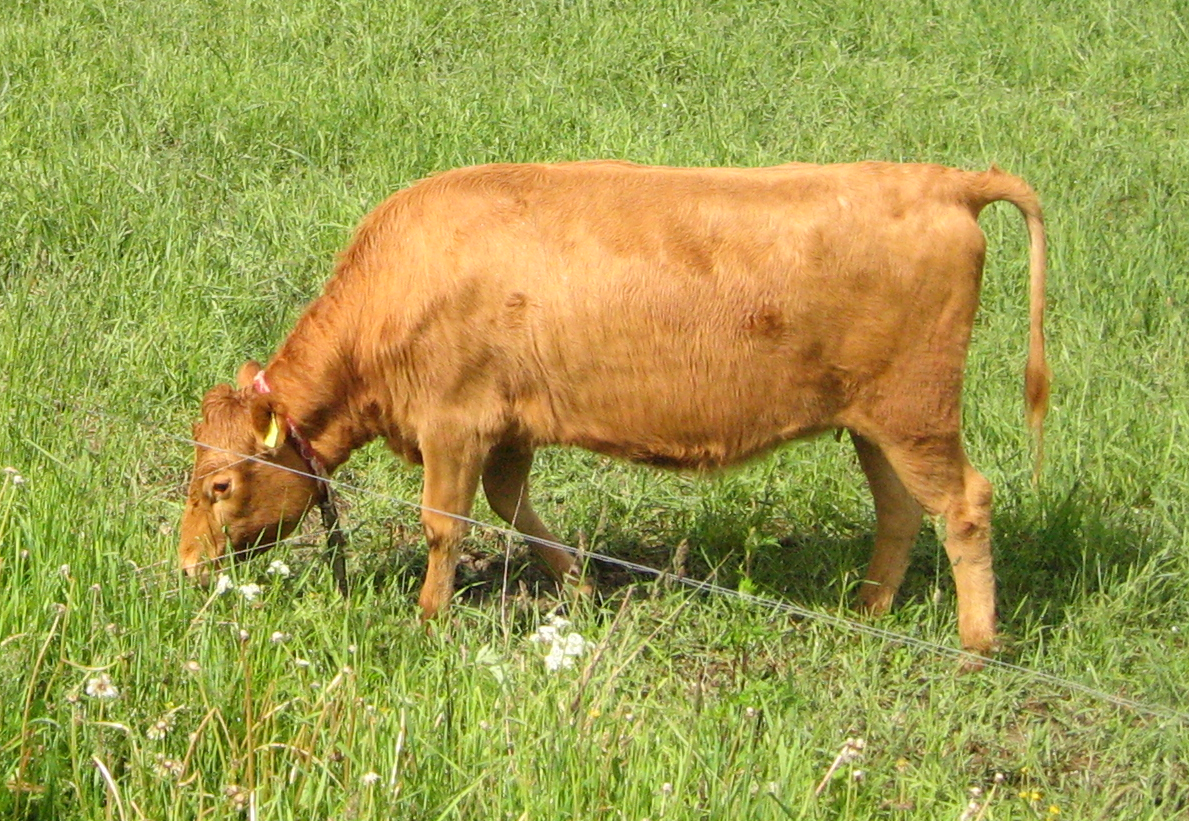 🇫🇮 FinlandWestern Finncattle
A red, hornless dual-purpose breed from western Finland, kept for milk and beefTaurine · Dairy · Polled
🇪🇪 EstoniaEstonian nativeeesti maatõug
A polled dairy breed from Estonia, yellow-brown to red, with a herdbook since 1914Taurine · Dairy · Polled
🇫🇮 FinlandWestern Finncattle
A red, hornless dual-purpose breed from western Finland, kept for milk and beefTaurine · Dairy · Polled
🇪🇪 EstoniaEstonian nativeeesti maatõug
A polled dairy breed from Estonia, yellow-brown to red, with a herdbook since 1914Taurine · Dairy · Polled
 🇧🇷 BrazilGuzerá
A Brazilian humped breed from Kankrej and Crioulo stock, usually grey or whiteZebu · Beef · Polled
🇧🇷 BrazilGuzerá
A Brazilian humped breed from Kankrej and Crioulo stock, usually grey or whiteZebu · Beef · Polled
 🇸🇪 SwedenSwedish Red PolledRödkulla
A hornless red Swedish cow kept for milk and meat, once reduced to about 20 animals.Taurine · Dual-purpose · Polled
🇸🇪 SwedenSwedish Red PolledRödkulla
A hornless red Swedish cow kept for milk and meat, once reduced to about 20 animals.Taurine · Dual-purpose · Polled
 🇬🇧 United Kingdom and 3 moreRed Poll
A naturally hornless red English breed, kept for milk and beefTaurine · Dual-purpose · Polled
🇬🇧 United Kingdom and 3 moreRed Poll
A naturally hornless red English breed, kept for milk and beefTaurine · Dual-purpose · Polled
 🇮🇪 IrelandIrish MoiledBó Maol
A rare hornless Irish breed, red with a white back stripe, used for milk and beefTaurine · Dual-purpose · Polled
🇮🇪 IrelandIrish MoiledBó Maol
A rare hornless Irish breed, red with a white back stripe, used for milk and beefTaurine · Dual-purpose · Polled
 🇸🇪 SwedenBohuskulla
A rare, hornless Swedish mountain breed, usually black or brown and often colour-sidedTaurine · Heritage · Quick and strong
🇸🇪 SwedenBohuskulla
A rare, hornless Swedish mountain breed, usually black or brown and often colour-sidedTaurine · Heritage · Quick and strong
Photo credits on this page
The small pictures above come from Wikimedia Commons under free licences. Some are cropped to fit.
- Swedish Red Polled: Ankara, CC BY-SA 3.0, source
- Belted Galloway: Jamain, CC BY-SA 3.0, source
- Japanese Polled: JIRCAS Library, CC BY 2.0, source
- Guzerá: Jose Reynaldo da Fonseca, CC BY-SA 3.0, source
- Bohuskulla: Bengt Oberger, CC BY-SA 4.0, source
- Western Finncattle: MPorciusCato (cropped by Pitke ), CC BY-SA 3.0, source
- Senepol: Buenoperez, Public domain, source
- Icelandic: Christian Bickel (user Fingalo ), CC BY-SA 2.0 de, source
- Irish Moiled: No machine-readable author provided. Malcolm Morley~commonswiki assume, Public domain, source
- Red Poll: Poinciana, CC BY-SA 3.0, source
- Fjäll: Yvonne Zimmermann, CC BY-SA 3.0 de, source
- Galloway: GerardM, CC BY-SA 3.0, source