Monday
Shiva's day for many Hindus, when Nandi the bull is honoured at the temple door, and market day at Bati in Ethiopia.
Monday belongs to cattle in two very different settings. For many Hindus it is Somvar, the day of Shiva, whose mount and gatekeeper is the bull Nandi, and temple visits on Monday often begin at Nandi's statue. In the Horn of Africa, Monday is market day at Bati, on the edge of the Ethiopian highlands, where herders bring cattle and camels to one of the largest livestock markets in the country.
Somvar and Nandi
In Shiva temples across India and Nepal, a statue of Nandi, usually a seated white humped bull, faces the shrine, and devotees often stop to touch him or whisper a wish in his ear before going in. Monday is the day most widely kept for Shiva, especially through the monsoon month of Shravan, with a fast and an offering of milk poured over the lingam. Some temples keep a living bull dedicated to the god, and in many villages a decorated bull led from house to house collects gifts in his name. These are matters of devotion, kept differently from family to family.
The Monday market at Bati
Bati lies where the Ethiopian highlands fall away to the Afar lowlands of the Rift Valley, and its Monday market has long been a meeting point for Amhara and Oromo farmers and Afar herders. Thousands of people come each week with cattle, camels, goats, grain, salt and household goods, and the livestock trade on the slope above the town is the heart of the day. Prices are settled by hand and by long discussion. Markets like this, held on a fixed day each week, are the main way animals change hands across much of rural Africa and Asia.
Traditions
- Somvar vrat: A Monday fast for Shiva, often broken with milk foods.
- Nandi darshan: Stopping at the bull's statue before entering a Shiva temple.
- Bati Monday market: A weekly cattle and camel market on the edge of the Rift Valley.
The breeds
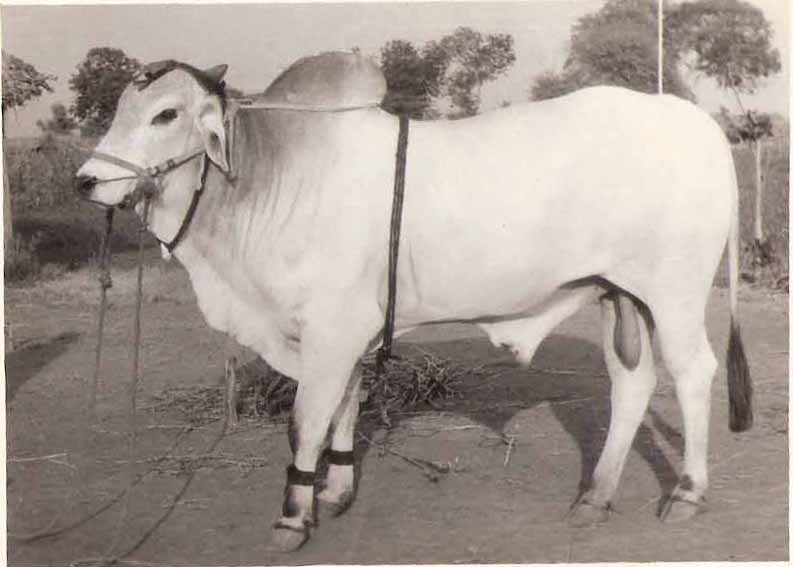

Also part of it, and being written: Pulikulam (Kept as temple bulls by some villages of southern Tamil Nadu.), Boran cattle (The pastoral zebu of southern Ethiopia and northern Kenya.).
Sources and further reading
Written by the EveryCow desk with AI assistance. Customs differ by community and family, and are described here as tradition, not instruction. If this is your tradition and we have it wrong, tell us.
Photo credits on this page
The small pictures above come from Wikimedia Commons under free licences. Some are cropped to fit.
- Ongole: DMR Sekhar, CC BY-SA 3.0, source
- Zebu: A. J. T. Johnsingh, WWF-India and NCF, CC BY-SA 4.0, source