
Dangi
In its own language: डांगी
An indigenous draught breed from the Dangs hills whose skin oil copes with heavy rain
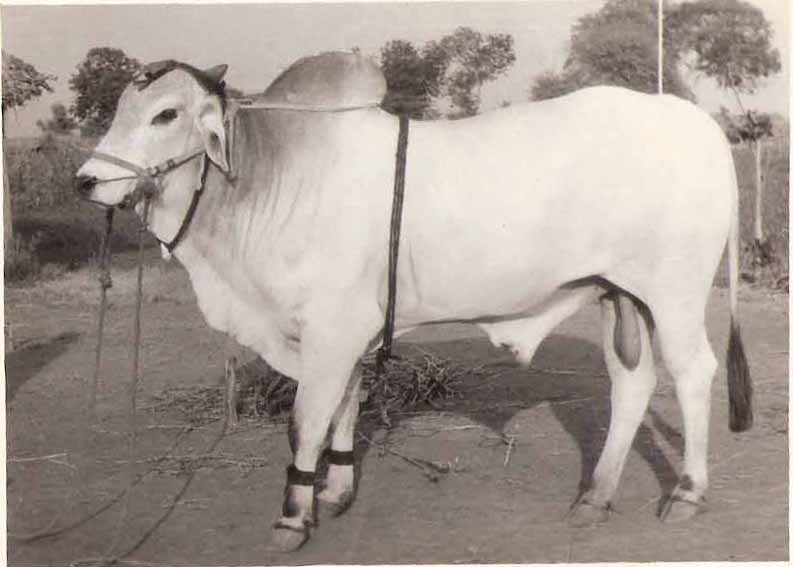
The Dangi is an indigenous breed of cattle from the hilly tracts of the Dangs in Maharashtra, India, kept above all for draught work. It is a medium to large animal, and its skin secretes an oil that lets it tolerate heavy rain.
- An indigenous breed of India, from the hilly tracts of the Dangs in Maharashtra
- Its home districts are Nashik and Ahmednagar, also written Ahilyanagar
- A very good draught breed, kept for pulling and ploughing
- Its skin secretes an oily element that lets it tolerate heavy rain
- Medium to large in body size; the Marathi name is डांगी
What do Dangi cattle look like?
The Dangi is an indigenous breed of cattle from India, found in the hilly tracts of the Dangs in Maharashtra. It is a medium to large animal in body size, and it is classed as a draught breed: an animal kept for pulling carts, ploughs and loads. Its skin produces an oily element, and that oil is what allows the breed to get through heavy rainfall. It is described as a very good draught breed, and it is known for adapting to places where the rain is heavy. In Marathi the breed is called डांगी.
Where does the Dangi come from?
The Dangi is an indigenous breed of India, which means it developed in the country rather than being brought in from outside. Its name comes from its home: the hilly tracts of the Dangs, which lie across the Nashik and Ahmednagar districts of Maharashtra. Ahmednagar is also written Ahilyanagar. In Marathi, the language of that state, the breed is written डांगी. It is kept as a draught animal in the districts where it is found.
What the Dangi is known for
The breed's reputation rests on two things: work and wet weather. It is called a very good draught breed, meaning it pulls well. It is also known for adapting to areas of heavy rainfall, the kind of country found in its home districts. The oil in its skin is the physical reason given for that tolerance: the secretion keeps the coat and hide in condition when the rain is constant.
Dangi, drawn
What the Dangi is kept for
The Dangi is kept for draught. It is a working animal, described as a very good draught breed, and its task is the ploughing and hauling of the farming year in its home districts. That is the use its oily skin serves: the breed was shaped in country where heavy rain is the rule, and it holds up in that weather, so the work can go on. Its value is measured in the strength of the beast.
The land and climate of the Dangi
The home of the Dangi is the hilly country of the Dangs, in the Nashik and Ahmednagar districts of Maharashtra. This is a wet part of India, and heavy rainfall is the weather the breed is known to handle. Two things help it there. The land is hilly, which suits a sturdy draught animal, and the skin gives out an oily element that lets the breed tolerate heavy rain.
At a glance: where it belongs
Land and climate

Questions people ask about Dangi
Where does the Dangi come from?
It is an indigenous breed of India. Its home is the hilly tracts of the Dangs, which lie across the Nashik and Ahmednagar districts of Maharashtra; Ahmednagar is also written Ahilyanagar. The breed takes its name from that same Dangs country.
What is the Dangi kept for?
It is a draught breed. The Dangi is described as a very good draught animal, used for pulling and for ploughing, and it is known for adapting to areas with heavy rainfall. Its oily skin is what allows it to tolerate that wet weather.
Why is the Dangi suited to wet weather?
The skin of these cattle secretes an oily element. That oil is what enables them to tolerate heavy rains, and the breed is known for its adaptability to areas of heavy rainfall, such as the hilly Dangs country of Maharashtra where it originated.
How big is a Dangi?
Dangi cattle are described as medium to large in body size. That is the description given for the breed, and it fits the animal's role as a working beast that hauls and ploughs in the hilly districts of Maharashtra.
What is the Dangi called in Marathi?
The Marathi name is डांगी. The English name, Dangi, is close to it. The word comes from the Dangs, the hilly tract of Maharashtra where the breed is said to have originated.
Good reading and sources
- Dangi cattle on WikipediaEncyclopedia
- More photos on Wikimedia CommonsPhotos and video
- Wikidata recordOpen data
The facts on this page come from the Wikipedia article "Dangi cattle", written by its contributors and used under the CC BY-SA 4.0 licence, and from its Wikidata record (CC0). EveryCow rewrote the text in its own words, with AI assistance, and compares every page with the article to make sure no passage is copied. It may be reused under the same CC BY-SA 4.0 licence with a link back.
It may contain mistakes. Sizes, colours and customs differ from one herd, valley or breeder to the next. Folk beliefs are described as tradition, never as advice. If something is wrong, tell us. Last refreshed 2026-10-16.
More from India
All the breeds of India 🇵🇰 Pakistan and 5 moreZebu
Humped, heat-tolerant cattle of South Asia, kept for milk, meat, work and ridingZebu · Dairy · Heat-tolerant
🇵🇰 Pakistan and 5 moreZebu
Humped, heat-tolerant cattle of South Asia, kept for milk, meat, work and ridingZebu · Dairy · Heat-tolerant
 🇵🇰 Pakistan and 4 moreSahiwal
A heat-tolerant zebu from the Punjab, kept for milk, meat and draught workZebu · Dairy · Heat-tolerant
🇵🇰 Pakistan and 4 moreSahiwal
A heat-tolerant zebu from the Punjab, kept for milk, meat and draught workZebu · Dairy · Heat-tolerant
 🇮🇳 India and 5 moreOngole
A short-horned zebu breed from Andhra Pradesh, white with dark markings, used for work and milk.Zebu · Draught · Heat-tolerant
🇮🇳 India and 5 moreOngole
A short-horned zebu breed from Andhra Pradesh, white with dark markings, used for work and milk.Zebu · Draught · Heat-tolerant
 🇮🇳 IndiaKhillari
A draft breed from Maharashtra and Karnataka, compact with sweeping horns and grey-white coats.Zebu · Draught · Heat-tolerant
🇮🇳 IndiaKhillari
A draft breed from Maharashtra and Karnataka, compact with sweeping horns and grey-white coats.Zebu · Draught · Heat-tolerant
Its cousins elsewhere
All draught breeds 🇮🇩 Indonesia and 5 moreBantengbanṭéng (Javanese/Sundanese)
A wild Southeast Asian ox; its tame form, Bali cattle, runs feral in northern AustraliaBanteng · Beef · Drought-hardy
🇮🇩 Indonesia and 5 moreBantengbanṭéng (Javanese/Sundanese)
A wild Southeast Asian ox; its tame form, Bali cattle, runs feral in northern AustraliaBanteng · Beef · Drought-hardy
 🇮🇩 Indonesia and 4 moreBali cattle
A small humped breed from Indonesia, descended from wild banteng, kept for meat and plowing.Banteng · Beef · Disease-resistant
🇮🇩 Indonesia and 4 moreBali cattle
A small humped breed from Indonesia, descended from wild banteng, kept for meat and plowing.Banteng · Beef · Disease-resistant
 🇨🇭 Switzerland and 5 moreBraunvieh
A large Alpine brown dairy breed from Switzerland, known for its strength and high milk yield.Taurine · Dairy · Rich milk
🇨🇭 Switzerland and 5 moreBraunvieh
A large Alpine brown dairy breed from Switzerland, known for its strength and high milk yield.Taurine · Dairy · Rich milk
 🇮🇹 Italy and 5 moreChianina
A massive white Italian breed known for beef production and historic draught work in Tuscany.Taurine · Beef · Heat-tolerant
🇮🇹 Italy and 5 moreChianina
A massive white Italian breed known for beef production and historic draught work in Tuscany.Taurine · Beef · Heat-tolerant