
Kenkatha
In its own language: केन्काथा
A small grey and black zebu draught breed from the Ken river country of Bundelkhand
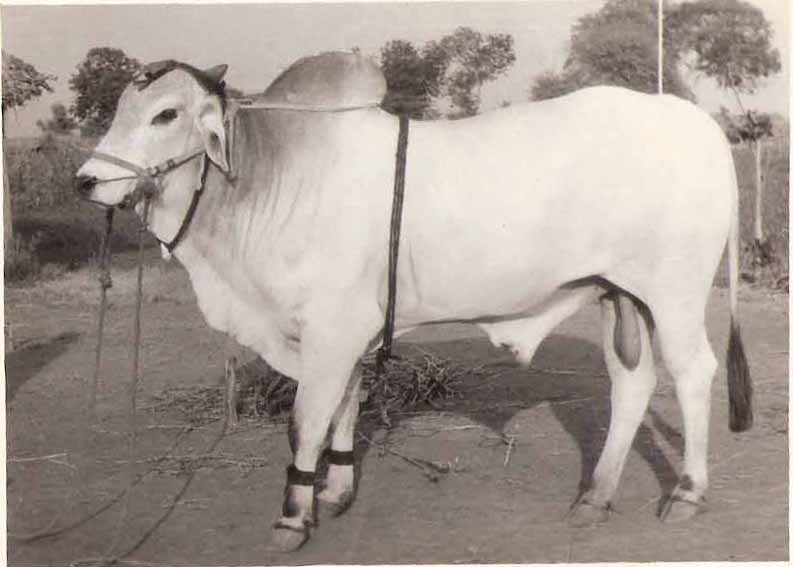
A small, compact zebu breed native to India, from the Bundelkhand provinces along the river Ken and the hilly Vindhyas range. Kenkatha cattle are grey and black, rarely white, and are kept for draught work, valued for surviving harsh conditions on poor quality forage.
- Native to India and also called Kenwariya
- Comes from the Bundelkhand provinces, along the river Ken and the Vindhyas
- Small and compact, with grey and black coats; white is rare
- A zebu breed, so it carries a hump
- Kept for draught work and known for surviving harsh conditions on poor forage
What do Kenkatha cattle look like?
Kenkatha is a small zebu breed from India, which places it among the humped cattle. The animals are compact in build rather than tall and rangy, with a neat, workmanlike frame. Their coats come in various shades of grey and black, and white appears only now and then. The breed is kept for draught, so what matters in its shape is a body that can pull and keep going on little. Its size is modest, which suits the grazing its home country offers.
Where does the Kenkatha come from?
Kenkatha cattle are native to India. The breed comes from the Bundelkhand provinces, in country that runs along the banks of the river Ken and over the hilly range of the Vindhyas, taking in parts of Uttar Pradesh and Madhya Pradesh. Kenwariya is another name for the same cattle, and both names are tied to that home ground. It is a local working breed of a rough, uneven tract, and its history belongs to the farms and tracks of Bundelkhand.
What the Kenkatha is known for
The Kenkatha's reputation rests on toughness. It survives harsh environments and gets by on forage of poor quality, which is the reason it holds on where feed is thin. Its small, compact body fits the same story: there is less animal to feed, and the frame keeps working on modest rations. For a herd on marginal land, a light appetite and a hard constitution are the qualities that matter most.
Kenkatha, drawn
What the Kenkatha is kept for
Kenkatha cattle are kept for draught work. They are yoked as oxen, and the small, compact build is well matched to the job: a handy animal to harness and a cheap one to feed. Because the breed survives harsh conditions and lives on forage of poor quality, it can be kept off land that would not carry a larger beast. That pairing of a working frame with a modest appetite is the breed's value on Bundelkhand farms.
The land and climate of the Kenkatha
The Kenkatha belongs to Bundelkhand, the tract along the banks of the river Ken and across the hilly range of the Vindhyas, reaching through parts of Uttar Pradesh and Madhya Pradesh. It is a demanding sort of country, and the breed is known for surviving harsh environments and for getting by on forage of poor quality. Its hardiness is described in those terms, as cattle for rough and thinly grazed land.

Keeping Kenkatha cattle
The Kenkatha is kept as a low-input working animal. It survives harsh environments and manages on forage of poor quality, which is what a farmer with thin grazing needs. Its compact size keeps feed needs modest.
Questions people ask about Kenkatha
Where does the Kenkatha come from?
It is native to India, from the Bundelkhand provinces. The breed's homeland runs along the banks of the river Ken and across the hilly range of the Vindhyas, taking in parts of Uttar Pradesh and Madhya Pradesh.
What is the Kenkatha kept for?
It is a draught breed, kept as a working animal. The small, compact build suits the yoke, and because it survives harsh environments and lives on poor quality forage, it is a practical choice where grazing is thin.
What do Kenkatha cattle look like?
They are small and compact in build. Their coats come in various shades of grey and black, and white appears only now and then. As a zebu breed they carry a hump.
Is the Kenkatha a hardy breed?
It is known for surviving harsh environments and for getting by on forage of poor quality. That hardiness, together with its modest size and light feed needs, is the main reason farmers keep it.
Does the Kenkatha have another name?
Yes, it is also known as Kenwariya. In Hindi the breed's name is written केन्काथा.
Good reading and sources
- Kenkatha on WikipediaEncyclopedia
- More photos on Wikimedia CommonsPhotos and video
- Wikidata recordOpen data
The facts on this page come from the Wikipedia article "Kenkatha", written by its contributors and used under the CC BY-SA 4.0 licence, and from its Wikidata record (CC0). EveryCow rewrote the text in its own words, with AI assistance, and compares every page with the article to make sure no passage is copied. It may be reused under the same CC BY-SA 4.0 licence with a link back.
It may contain mistakes. Sizes, colours and customs differ from one herd, valley or breeder to the next. Folk beliefs are described as tradition, never as advice. If something is wrong, tell us. Last refreshed 2026-10-16.
More from India
All the breeds of India 🇵🇰 Pakistan and 5 moreZebu
Humped, heat-tolerant cattle of South Asia, kept for milk, meat, work and ridingZebu · Dairy · Heat-tolerant
🇵🇰 Pakistan and 5 moreZebu
Humped, heat-tolerant cattle of South Asia, kept for milk, meat, work and ridingZebu · Dairy · Heat-tolerant
 🇵🇰 Pakistan and 4 moreSahiwal
A heat-tolerant zebu from the Punjab, kept for milk, meat and draught workZebu · Dairy · Heat-tolerant
🇵🇰 Pakistan and 4 moreSahiwal
A heat-tolerant zebu from the Punjab, kept for milk, meat and draught workZebu · Dairy · Heat-tolerant
 🇮🇳 India and 5 moreOngole
A short-horned zebu breed from Andhra Pradesh, white with dark markings, used for work and milk.Zebu · Draught · Heat-tolerant
🇮🇳 India and 5 moreOngole
A short-horned zebu breed from Andhra Pradesh, white with dark markings, used for work and milk.Zebu · Draught · Heat-tolerant
 🇮🇳 IndiaKhillari
A draft breed from Maharashtra and Karnataka, compact with sweeping horns and grey-white coats.Zebu · Draught · Heat-tolerant
🇮🇳 IndiaKhillari
A draft breed from Maharashtra and Karnataka, compact with sweeping horns and grey-white coats.Zebu · Draught · Heat-tolerant
Its cousins elsewhere
All draught breeds 🇲🇳 Mongolia and 4 moreYakགཡག་
A shaggy, cold-hardy highland bovine kept across the Himalayas and Tibetan PlateauYak · Triple-purpose · Cold-hardy
🇲🇳 Mongolia and 4 moreYakགཡག་
A shaggy, cold-hardy highland bovine kept across the Himalayas and Tibetan PlateauYak · Triple-purpose · Cold-hardy
 🇮🇩 Indonesia and 4 moreBali cattle
A small humped breed from Indonesia, descended from wild banteng, kept for meat and plowing.Banteng · Beef · Disease-resistant
🇮🇩 Indonesia and 4 moreBali cattle
A small humped breed from Indonesia, descended from wild banteng, kept for meat and plowing.Banteng · Beef · Disease-resistant
 🇬🇧 United Kingdom and 5 moreHereford
A red and white beef breed from Herefordshire, England, known for its white face and hardiness.Taurine · Beef · Docile
🇬🇧 United Kingdom and 5 moreHereford
A red and white beef breed from Herefordshire, England, known for its white face and hardiness.Taurine · Beef · Docile
 🇺🇸 United States and 5 moreBrahman
An American beef breed with a hump and grey or red coat, bred from Indian zebu cattleComposite · Beef · Heat-tolerant
🇺🇸 United States and 5 moreBrahman
An American beef breed with a hump and grey or red coat, bred from Indian zebu cattleComposite · Beef · Heat-tolerant