
Kherigarh
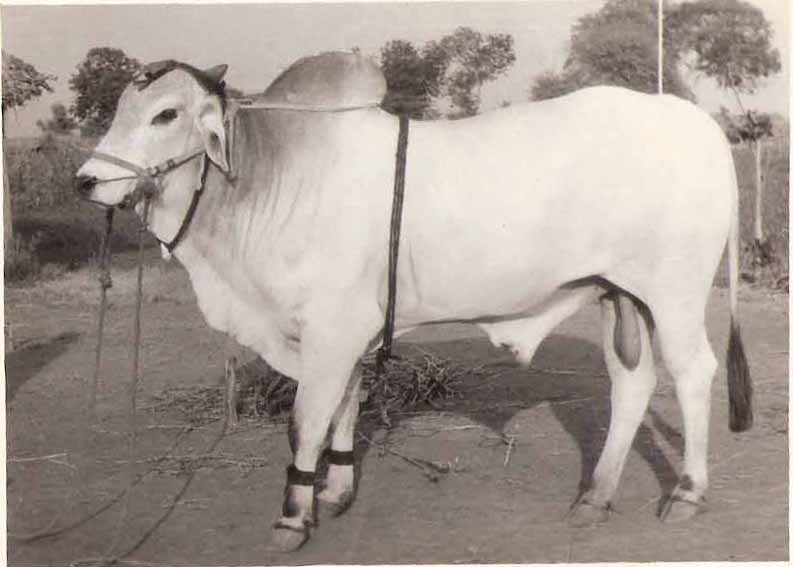
A draught zebu from Lakhimpur Kheri in Uttar Pradesh, India
Kherigarh is an indigenous zebu breed of cattle from India, with its home in the Lakhimpur Kheri district of Uttar Pradesh. It is a draught breed, a close relative of the Malwa breed, and its bulls are used for light draft work.
- An indigenous cattle breed of India, classed as zebu
- Its home is the Lakhimpur Kheri district of Uttar Pradesh
- Closely related to the Malwa breed
- A draught breed: bulls are used for light draft work
What do Kherigarh cattle look like?
Kherigarh is a zebu breed of domestic cattle from India. Zebu cattle are the humped cattle of South Asia; the hump sits over the shoulders and a loose fold of skin called the dewlap hangs beneath the neck. The Kherigarh belongs to that group. It is an indigenous breed, meaning the population developed locally rather than arriving from elsewhere. It is a draught type, kept for work, and its bulls do light draft work. The Malwa breed is a close relative.
Where does the Kherigarh come from?
Kherigarh cattle belong to India. Their home is the Lakhimpur Kheri district of Uttar Pradesh. They are an indigenous breed, meaning the population developed locally in India rather than being introduced. The Kherigarh is a near relative of the Malwa, another Indian cattle breed. The breed is classed as a draught type: its bulls are used for light draft work, pulling loads rather than being kept for their milk.
Kherigarh, drawn
What the Kherigarh is kept for
Kherigarh cattle are a draught breed, kept for work. Draught, also spelled draft, means the animals are used to pull things: a yoke of oxen drawing a plough, a cart or a water lift. The bulls of this breed are the ones used, and their draft work is described as light rather than heavy. Light draft means the work is not heavy: carting and similar tasks. The working role is the one that matters for this breed.

Questions people ask about Kherigarh
Where does the Kherigarh come from?
It comes from India, and its home is the Lakhimpur Kheri district of Uttar Pradesh. It is an indigenous breed, which means the population developed locally in that part of the country rather than being brought in from elsewhere.
What is the Kherigarh kept for?
The Kherigarh is a draught breed, so it is kept for work. Its bulls are used for light draft tasks. Draught means the animals pull loads, such as carts or farm implements, rather than being kept mainly for milk or meat.
Is the Kherigarh a zebu breed?
Yes. It is classed as zebu cattle, the humped cattle of South Asia. Zebu animals carry a hump over the shoulders and a dewlap, the loose fold of skin that hangs under the neck.
Which breed is it related to?
The Malwa breed is named as a close relative of the Kherigarh. Both are Indian cattle, and the Kherigarh is counted among the country's indigenous breeds.
Good reading and sources
- Kherigarh on WikipediaEncyclopedia
- More photos on Wikimedia CommonsPhotos and video
- Wikidata recordOpen data
The facts on this page come from the Wikipedia article "Kherigarh", written by its contributors and used under the CC BY-SA 4.0 licence, and from its Wikidata record (CC0). EveryCow rewrote the text in its own words, with AI assistance, and compares every page with the article to make sure no passage is copied. It may be reused under the same CC BY-SA 4.0 licence with a link back.
It may contain mistakes. Sizes, colours and customs differ from one herd, valley or breeder to the next. Folk beliefs are described as tradition, never as advice. If something is wrong, tell us. Last refreshed 2026-10-16.
More from India
All the breeds of India 🇵🇰 Pakistan and 5 moreZebu
Humped, heat-tolerant cattle of South Asia, kept for milk, meat, work and ridingZebu · Dairy · Heat-tolerant
🇵🇰 Pakistan and 5 moreZebu
Humped, heat-tolerant cattle of South Asia, kept for milk, meat, work and ridingZebu · Dairy · Heat-tolerant
 🇵🇰 Pakistan and 4 moreSahiwal
A heat-tolerant zebu from the Punjab, kept for milk, meat and draught workZebu · Dairy · Heat-tolerant
🇵🇰 Pakistan and 4 moreSahiwal
A heat-tolerant zebu from the Punjab, kept for milk, meat and draught workZebu · Dairy · Heat-tolerant
 🇮🇳 India and 5 moreOngole
A short-horned zebu breed from Andhra Pradesh, white with dark markings, used for work and milk.Zebu · Draught · Heat-tolerant
🇮🇳 India and 5 moreOngole
A short-horned zebu breed from Andhra Pradesh, white with dark markings, used for work and milk.Zebu · Draught · Heat-tolerant
 🇮🇳 IndiaKhillari
A draft breed from Maharashtra and Karnataka, compact with sweeping horns and grey-white coats.Zebu · Draught · Heat-tolerant
🇮🇳 IndiaKhillari
A draft breed from Maharashtra and Karnataka, compact with sweeping horns and grey-white coats.Zebu · Draught · Heat-tolerant
Its cousins elsewhere
All draught breeds 🇮🇩 Indonesia and 5 moreBantengbanṭéng (Javanese/Sundanese)
A wild Southeast Asian ox; its tame form, Bali cattle, runs feral in northern AustraliaBanteng · Beef · Drought-hardy
🇮🇩 Indonesia and 5 moreBantengbanṭéng (Javanese/Sundanese)
A wild Southeast Asian ox; its tame form, Bali cattle, runs feral in northern AustraliaBanteng · Beef · Drought-hardy
 🇮🇩 Indonesia and 4 moreBali cattle
A small humped breed from Indonesia, descended from wild banteng, kept for meat and plowing.Banteng · Beef · Disease-resistant
🇮🇩 Indonesia and 4 moreBali cattle
A small humped breed from Indonesia, descended from wild banteng, kept for meat and plowing.Banteng · Beef · Disease-resistant
 🇨🇭 Switzerland and 5 moreBraunvieh
A large Alpine brown dairy breed from Switzerland, known for its strength and high milk yield.Taurine · Dairy · Rich milk
🇨🇭 Switzerland and 5 moreBraunvieh
A large Alpine brown dairy breed from Switzerland, known for its strength and high milk yield.Taurine · Dairy · Rich milk
 🇮🇹 Italy and 5 moreChianina
A massive white Italian breed known for beef production and historic draught work in Tuscany.Taurine · Beef · Heat-tolerant
🇮🇹 Italy and 5 moreChianina
A massive white Italian breed known for beef production and historic draught work in Tuscany.Taurine · Beef · Heat-tolerant