Philippine Native
A small island zebu of the Philippines, kept for milk, meat and work
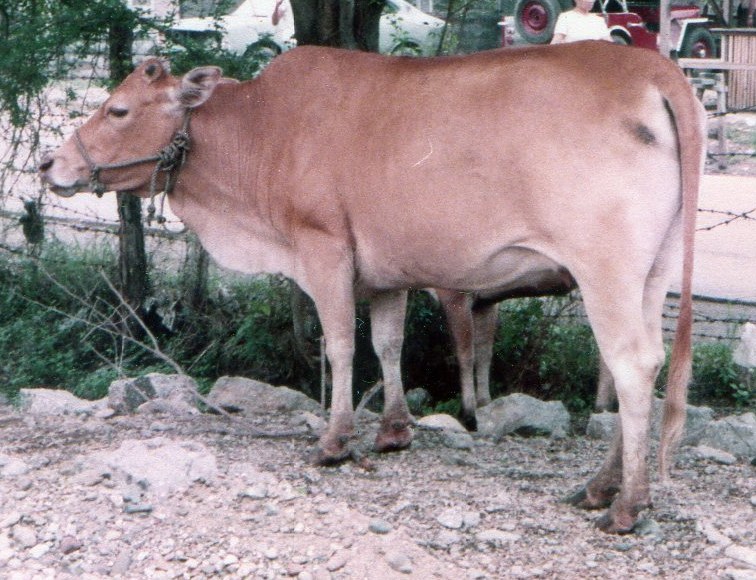
The Philippine Native is a small indigenous zebu of the Philippines, kept for milk, beef and draught work. Cows weigh about 300 kg and bulls about 400 kg; coats run grey, brown and fawn, some animals have white patches, and only the males carry a low hump.
- Mature bulls weigh about 400 kg and mature cows about 300 kg
- Females carry no hump; bulls have a low one
- Coat colours run grey, brown and fawn, with white patches on some animals
- Kept for milk, beef and draught work
- Four types: Ilocos, Batangas, Iloilo and Batanes Black
What do Philippine Native cattle look like?
A small, compact zebu type, one of the lighter cattle of the islands. A grown bull comes in at roughly 400 kg and a grown cow at roughly 300 kg. Grey, brown and fawn coats all occur, and white patches appear on some animals. The sexes differ at the shoulder: cows show no hump whatever, while bulls carry one that sits low. Within the group, four breed types are recognised, each carrying the name of the place it comes from: Ilocos, Batangas, Iloilo and Batanes Black.
Where does the Philippine Native come from?
These cattle are native to the Philippines, and are described either as a single breed or as a set of related breeds. They belong to a national tally of six local cattle, alongside the Batanes Black, the Batangas, the Ilocos in small and large sizes, and the Iloilo. A seventh, the Philamin, no longer exists. Four types are named by area: Ilocos in the northwest of Luzon, Batangas in the southwest of Luzon, Iloilo on Panay Island, and the Batanes Black in the Batanes Islands, which lie between Luzon and Taiwan.
Philippine Native, drawn
What the Philippine Native is kept for
Households keep these cattle for three jobs at once: milk, beef and draught. The animals pull carts and ploughs, and the cows are milked, while surplus stock goes for meat. For the heaviest work the carabao is usually the first choice on Philippine farms, so cattle tend to take lighter loads or to serve mainly as milk and meat animals. The mature bull, at about 400 kg, is solid enough for farm tasks, and the cow at about 300 kg is the milking animal.
The land and climate of the Philippine Native
The breed belongs to the Philippine archipelago, a warm and humid tropical setting. Its four types sit in different corners of the islands: Ilocos in the northwest of Luzon, Batangas in the southwest of Luzon, Iloilo on Panay, and the Batanes Black on the Batanes Islands, which lie between Luzon and Taiwan. Luzon and Panay are the two large islands named among these home areas.
At a glance: where it belongs
Land and climate

Numbers, conservation and the herd book
Six local cattle breeds are recorded for the Philippines: the Philippine Native itself, the Batanes Black, the Batangas, the Ilocos in small and large types, and the Iloilo. A seventh, the Philamin, has gone. The FAO classed this breed as not at risk in 2007, and in 2025 the DAD-IS register gave its status as unknown. The four types are identified with their home provinces, from the northwest of Luzon down to the Batanes Islands.
Questions people ask about Philippine Native
Where does the Philippine Native come from?
It is native to the Philippines and is treated either as one breed or as a group of related breeds. Four types are named for their home areas: Ilocos in northwestern Luzon, Batangas in southwestern Luzon, Iloilo on Panay Island and the Batanes Black in the Batanes Islands.
What is it kept for?
Milk, beef and draught work. These are triple-purpose animals on Philippine farms. The carabao is usually the preferred animal for heavy draught, so the cattle often pull lighter loads or serve mainly as milk and meat stock.
How big is it?
Small. A mature bull weighs roughly 400 kg and a mature cow about 300 kg, which puts them among the lighter cattle of the islands.
Do these cattle have humps?
The bulls do, but only a low one. Cows have none at all. That difference between the sexes is a marked feature of the breed, along with a coat that may be grey, brown or fawn, sometimes with white patches.
Are they at risk?
The FAO classed the breed as not at risk in 2007, while in 2025 the DAD-IS register gave its status as unknown. It is one of six local Philippine cattle breeds; the others are the Batanes Black, Batangas, Ilocos, Iloilo and the extinct Philamin.
Good reading and sources
- Philippine Native on WikipediaEncyclopedia
- More photos on Wikimedia CommonsPhotos and video
- Wikidata recordOpen data
The facts on this page come from the Wikipedia article "Philippine Native", written by its contributors and used under the CC BY-SA 4.0 licence, and from its Wikidata record (CC0). EveryCow rewrote the text in its own words, with AI assistance, and compares every page with the article to make sure no passage is copied. It may be reused under the same CC BY-SA 4.0 licence with a link back.
It may contain mistakes. Sizes, colours and customs differ from one herd, valley or breeder to the next. Folk beliefs are described as tradition, never as advice. If something is wrong, tell us. Last refreshed 2026-10-16.
More from the Philippines
All the breeds of the Philippines 🇮🇩 Indonesia and 4 moreBali cattle
A small humped breed from Indonesia, descended from wild banteng, kept for meat and plowing.Banteng · Beef · Disease-resistant
🇮🇩 Indonesia and 4 moreBali cattle
A small humped breed from Indonesia, descended from wild banteng, kept for meat and plowing.Banteng · Beef · Disease-resistant
 🇮🇳 India and 5 moreOngole
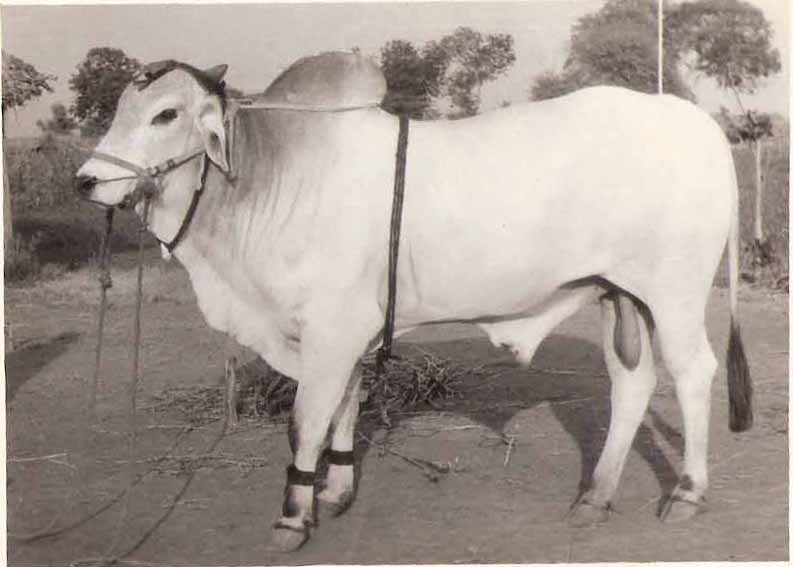
A short-horned zebu breed from Andhra Pradesh, white with dark markings, used for work and milk.Zebu · Draught · Heat-tolerant
🇮🇳 India and 5 moreOngole
A short-horned zebu breed from Andhra Pradesh, white with dark markings, used for work and milk.Zebu · Draught · Heat-tolerant
Its cousins elsewhere
All triple-purpose breeds 🇲🇳 Mongolia and 4 moreYakགཡག་
A shaggy, cold-hardy highland bovine kept across the Himalayas and Tibetan PlateauYak · Triple-purpose · Cold-hardy
🇲🇳 Mongolia and 4 moreYakགཡག་
A shaggy, cold-hardy highland bovine kept across the Himalayas and Tibetan PlateauYak · Triple-purpose · Cold-hardy
 🇦🇹 Austria and 1 morePinzgauer
Chestnut Austrian cattle with a broad white stripe along the back and bellyTaurine · Triple-purpose
🇦🇹 Austria and 1 morePinzgauer
Chestnut Austrian cattle with a broad white stripe along the back and bellyTaurine · Triple-purpose
 🇭🇷 Croatia and 5 moreBuša
A little mountain cow of the Balkans with short horns, kept for milk, meat and workTaurine · Triple-purpose · Disease-resistant
🇭🇷 Croatia and 5 moreBuša
A little mountain cow of the Balkans with short horns, kept for milk, meat and workTaurine · Triple-purpose · Disease-resistant
 🇵🇹 PortugalRamo GrandeRaça Bovina Ramo Grande
A large red-brown cattle breed from Terceira in the Azores, once used for work and milkTaurine · Triple-purpose · Thrifty foragers
🇵🇹 PortugalRamo GrandeRaça Bovina Ramo Grande
A large red-brown cattle breed from Terceira in the Azores, once used for work and milkTaurine · Triple-purpose · Thrifty foragers