Raya
A red and black Sanga ox breed from Tigray, with heavy horns in the males
A Sanga breed of the Tigray Region in Ethiopia, kept above all as a working ox. Its coat is red and black, bulls and oxen grow thick horns of good length along with a hump on the front of the back, and cows carry thin horns of middling size.
- A Sanga breed kept in Ethiopia's Tigray Region, used above all for draught work.
- Coats are red and black; bulls and oxen grow thick horns of good length.
- Cows carry thinner horns of middling size.
- Closely related to Afar cattle, through past cattle raiding by the Raya people.
- Breeders sell only oxen, so the herd does not mix with neighbouring breeds.
What do Raya cattle look like?
Raya cattle are a Sanga breed kept in the Tigray Region of Ethiopia. Their coats are red, black, or a mixture of the two. A bull or a working ox grows thick horns of good length and carries a hump over the front of its back, where the neck meets the chest, as cattle with zebu blood do. Cows are lighter built, with thin horns of middling size. The breed fills three roles, ranked by farmers as work first, then meat, then milk.
Where does the Raya come from?
Ethiopia has long been a meeting point for cattle entering Africa. Herds there stood near the routes taken by Indian and Arabian zebu, and near Near-Eastern and European taurine stock, while pastoral herding brought mixing with West African taurine too. Varied farming country made the region a place of second diversification for livestock. Sanga cattle, the group that includes the Raya, arose in Ethiopia from local long-horned taurine animals crossed with Arabian zebu. A later arrival of Indian zebu produced the Zenga breeds. Raya cattle stand close to Afar cattle, a kinship traced to cattle raiding by the Raya people in the past.
What the Raya is known for
The Raya is a working breed, formed by life in highland croplands where oxen draw the plough. Breeding is more successful in these herds than in the general-purpose Arado cattle of the highlands, which fits the agro-pastoral systems where the breed is kept. Several pressures weigh on it at once: droughts and the loss of ecosystems, cattle plague, war and the spread of towns.
How the Raya is bred and kept
Owners keep their own records of animals in traditional ways and select within the breed rather than bringing in outside blood. They know the sires of their calves and use that knowledge to remove male calves they do not want. Herd owners share a sense of owning the breed together. Only oxen are sold to outsiders, a rule meant to stop mixing with neighbouring breeds and to hold the genetic resource intact. The lowlands suit cattle breeding, with plenty of feed on the rangelands, and pastoral communities there are skilled at controlled, selective mating.
Raya, drawn
What the Raya is kept for
Work comes first. Raya oxen are trained to till fields in the croplands of the highlands, and they are shown at the plough near Mekelle. Meat is the second use and milk the third, so the animal fills three roles, with the plough outranking the pot and the pail. Pulling power, beef and a household milk supply all come from the same herd.
The land and climate of the Raya
The breed belongs to the eastern edge of the north Ethiopian highlands, where small farms grow crops and raise cattle side by side. High land and cropland are its setting, and it is suited to draught work on that ground. Ethiopia's lowlands, by contrast, are good cattle country with abundant feed on the rangelands, and Raya herds graze in agro-pastoral systems that join highland tillage with herding.
Who keeps the Raya
The Raya people give the breed its name and are its main keepers, working as agro-pastoralists who herd cattle and grow crops. Raya breeders are known for traditional ways of telling animals apart, for selecting inside the breed, and for a shared sense of ownership over the herd. They sell oxen and hold the rest back, so the genetic resource stays with the community. Raiding between the Raya and their neighbours in earlier times left a mark on the cattle themselves.
At a glance: where it belongs
Land and climate
Peoples
Custom and folk tradition
Cattle raiding is part of the breed's story: the close kinship between Raya and Afar cattle is put down to raids carried out by the Raya people. Breeders pass on local ways of marking and identifying animals, and decide which young bulls to keep on the basis of what they know about the fathers. Ownership of the breed is treated as a shared matter rather than a private one, and selling is limited to oxen so that the herd keeps its character.
Keeping Raya cattle
Feed is plentiful on the lowland rangelands, and the pastoral communities there are practised at controlled breeding. In the highlands the cattle work the croplands. Breeders cull the male calves they do not want, choosing on the basis of the sire. Cattle plague is named among the pressures on the breed.
Numbers, conservation and the herd book
Raya cattle are spread along the eastern margin of the north Ethiopian highlands, in the Tigray Region. The breed is kept by agro-pastoral communities who select within it and sell only oxen, a practice that guards it from mixing with adjacent breeds. Pressure comes from three directions: war and the growth of towns, cattle plague, and droughts with the destruction of ecosystems. The Sanga group as a whole is one of the major cattle groups of Africa.
From the Raya
Questions people ask about Raya
Where does Raya cattle come from?
From the Tigray Region of Ethiopia, along the eastern margin of the north Ethiopian highlands. The breed belongs to the Sanga group, which arose in Ethiopia when local long-horned taurine cattle were crossed with Arabian zebu.
What is Raya cattle kept for?
Work first, as oxen for tillage in the croplands of the highlands. Meat comes second and milk third, so the breed fills three roles, with the plough taking priority over the pot and the pail.
What does a Raya animal look like?
The coat is red and black. Bulls and oxen have thick horns of good length and a hump over the front of the back, where neck and chest meet. Cows have horns that are thin and of middling size.
Which breeds is it related to?
It is closely related to Afar cattle, a link traced to cattle raiding by the Raya people. Both belong to the Sanga group, a cross of local long-horned taurine cattle with Arabian zebu.
How do Raya breeders manage their herds?
They identify and select animals in traditional ways, cull the male calves they do not want using knowledge of the sire, treat the breed as collectively owned, and sell only oxen to outsiders so the herd avoids mixing with neighbouring breeds.
Good reading and sources
The facts on this page come from the Wikipedia article "Raya cattle", written by its contributors and used under the CC BY-SA 4.0 licence, and from its Wikidata record (CC0). EveryCow rewrote the text in its own words, with AI assistance, and compares every page with the article to make sure no passage is copied. It may be reused under the same CC BY-SA 4.0 licence with a link back.
It may contain mistakes. Sizes, colours and customs differ from one herd, valley or breeder to the next. Folk beliefs are described as tradition, never as advice. If something is wrong, tell us. Last refreshed 2026-10-16.
More from Ethiopia
All the breeds of Ethiopia 🇪🇹 Ethiopia and 1 moreAbigar
A hardy sanga breed of western Ethiopia and Sudan, kept for milk and beefSanga · Dairy · Heat-tolerant
🇪🇹 Ethiopia and 1 moreAbigar
A hardy sanga breed of western Ethiopia and Sudan, kept for milk and beefSanga · Dairy · Heat-tolerant
 🇲🇱 Mali and 5 moreRed Bororo
A red-brown Sanga cattle of the Sahel, with long lyre-shaped hornsSanga · Dairy · Heat-tolerant
🇪🇹 EthiopiaBegayt
A black and white stained Zebu-Sanga breed from Western TigrayZebu · Draught
🇪🇹 EthiopiaFogera
A humped Ethiopian zebu from the Fogera Plain, broad-hoofed for life in the marshes.Zebu · Triple-purpose
🇲🇱 Mali and 5 moreRed Bororo
A red-brown Sanga cattle of the Sahel, with long lyre-shaped hornsSanga · Dairy · Heat-tolerant
🇪🇹 EthiopiaBegayt
A black and white stained Zebu-Sanga breed from Western TigrayZebu · Draught
🇪🇹 EthiopiaFogera
A humped Ethiopian zebu from the Fogera Plain, broad-hoofed for life in the marshes.Zebu · Triple-purpose
Its cousins elsewhere
All draught breeds 🇲🇳 Mongolia and 4 moreYakགཡག་
A shaggy, cold-hardy highland bovine kept across the Himalayas and Tibetan PlateauYak · Triple-purpose · Cold-hardy
🇲🇳 Mongolia and 4 moreYakགཡག་
A shaggy, cold-hardy highland bovine kept across the Himalayas and Tibetan PlateauYak · Triple-purpose · Cold-hardy
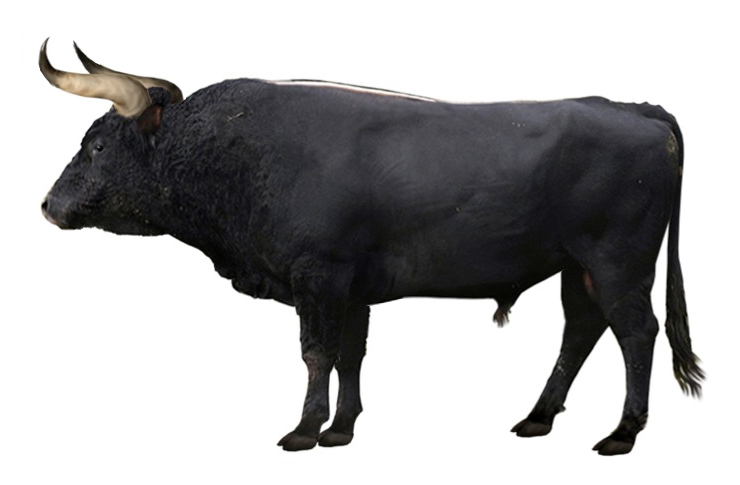 🇵🇱 Poland and 5 moreAurochs
The wild ancestor of all domestic cattle, extinct since 1627Wild · Long-horned
🇵🇱 Poland and 5 moreAurochs
The wild ancestor of all domestic cattle, extinct since 1627Wild · Long-horned
 🇮🇩 Indonesia and 5 moreBantengbanṭéng (Javanese/Sundanese)
A wild Southeast Asian ox; its tame form, Bali cattle, runs feral in northern AustraliaBanteng · Beef · Drought-hardy
🇮🇩 Indonesia and 5 moreBantengbanṭéng (Javanese/Sundanese)
A wild Southeast Asian ox; its tame form, Bali cattle, runs feral in northern AustraliaBanteng · Beef · Drought-hardy
 🇺🇸 United StatesTexas Longhorn
American beef cattle, once feral on Texas ranges, with horn spreads beyond 2.4 mTaurine · Beef · Heat-tolerant
🇺🇸 United StatesTexas Longhorn
American beef cattle, once feral on Texas ranges, with horn spreads beyond 2.4 mTaurine · Beef · Heat-tolerant