Siboney de Cuba
A Cuban dairy cross of Holstein Friesian and zebu, bred for milk since the 1960s
A Cuban dairy breed built from Holstein Friesian and zebu blood, developed from the 1960s and kept for milk. It became the island's main dairy breed by 2003, and animals are also found in Colombia.
- Built from Holstein Friesian and zebu stock in a ratio of five eighths to three eighths
- Developed in Cuba from the 1960s to raise milk output
- Described as Cuba's principal dairy breed in 2003
- Classed as endangered by the FAO in 2007
- Grouped with the Mambi de Cuba and the Caribe as Cebú Lechero
What do Siboney de Cuba cattle look like?
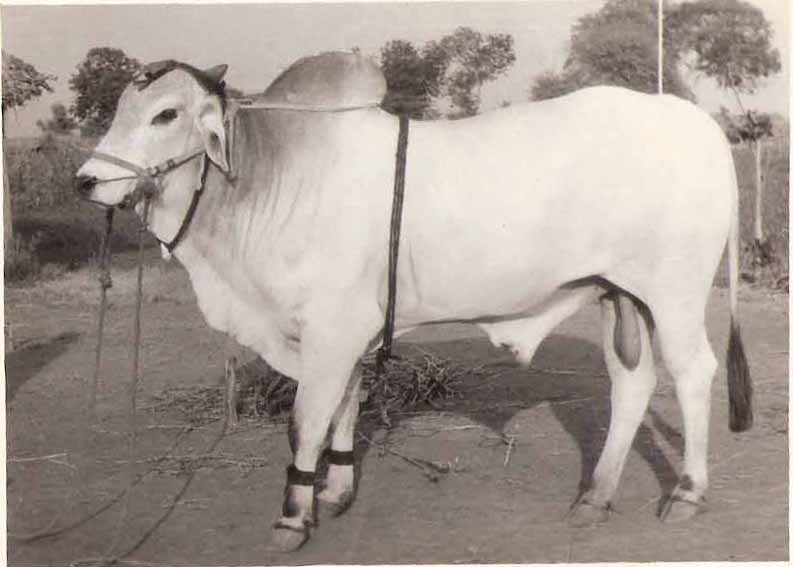
The Siboney de Cuba is a dairy breed raised in Cuba. It comes from a cross between Holstein Friesian cattle, a European dairy breed, and zebu, the humped cattle of tropical Asia. The settled mix is five parts Holstein Friesian to three parts zebu, so the animals carry mainly European dairy blood with a strong zebu element. Because zebu cattle have a hump over the shoulders, the Siboney is a humped dairy type. It belongs, with two other Cuban dairy crosses, to a group called Cebú Lechero. By 2003 it was the leading dairy breed on the island.
Where does the Siboney de Cuba come from?
Work on the breed began in the 1960s. Cuban breeders wanted more milk from their zebu cattle, which coped well with the climate but gave little. Holsteins gave much more, yet were more delicate in tropical conditions. The plan was to take genes from the productive Holstein and work them into the tougher zebu stock, generation after generation, until the balance settled at five eighths Holstein Friesian and three eighths zebu. That breeding work produced the Siboney de Cuba, one of a handful of milk crosses developed in Cuba from European and zebu parents.
What the Siboney de Cuba is known for
Hardiness is the point of the breed. Its zebu side is described as hardy, and that toughness was the quality breeders wanted to keep while lifting milk output. The Holstein side brought yield but also a frailer constitution, so the Siboney sits between the two: more productive than the plain zebu, sturdier than the pure Holstein. The aim throughout was a dairy cow that could hold up in Cuban conditions and still milk well.
How the Siboney de Cuba is bred and kept
The breed was made by repeated crossing rather than by selecting within an old line. Holstein Friesian and zebu parents were combined until the genetic share reached five eighths and three eighths respectively. Two companion hybrids were bred in the same Cuban programme. The Mambi de Cuba is three quarters Holstein Friesian and one quarter zebu. The Caribe is five eighths Holstein Friesian and three eighths Santa Gertrudis. All three are grouped together as Cebú Lechero. Siboney stock is kept in Cuba and also in Colombia.
Siboney de Cuba, drawn
What the Siboney de Cuba is kept for
The Siboney is a milk breed. Its working life is measured in milk, and a report from 1995 gave 2,897 kg from a single lactation. By 2003 the Siboney had become Cuba's principal dairy breed, which shows how widely it was taken up on the island. The crossing programme behind it was aimed at exactly this: better yields from stock that could live in the tropics.
The land and climate of the Siboney de Cuba
Cuba is a tropical island, and the breed was built for that setting. Its zebu ancestors were the cattle that managed heat and local conditions, while Holsteins struggled there. Mixing the two aimed at an animal that could keep milking in a warm climate. Siboney cattle are kept in Cuba, and the breed has also reached Colombia.
At a glance: where it belongs
Land and climate
Numbers, conservation and the herd book
The FAO listed the Siboney as endangered in 2007, while the DAD-IS register recorded its status as unknown in 2024. Its home is Cuba, and it is also found in Colombia. In 2003 it was described as the principal dairy breed of Cuba, which suggests it was then widespread across the island. The breed had no separate standard recorded alongside that description.
Questions people ask about Siboney de Cuba
Where does the Siboney de Cuba come from?
It is Cuban. Breeders on the island began the crossing work in the 1960s, combining Holstein Friesian and zebu cattle. Stock is also kept in Colombia. In 2003 the breed was described as Cuba's principal dairy animal.
What is the Siboney de Cuba kept for?
Milk. The breed exists as a dairy animal, and the whole point of the crossing programme was to raise the milk output of hardy zebu cattle. A report from 1995 put one lactation at 2,897 kg.
What bloodlines make up the Siboney de Cuba?
Five eighths Holstein Friesian and three eighths zebu. The Holstein side supplied milk yield, while the zebu side supplied hardiness in tropical conditions. The proportions were fixed through a breeding programme that started in the 1960s.
Is the Siboney de Cuba a rare breed?
The FAO listed it as endangered in 2007, and in 2024 the DAD-IS register gave its status as unknown. Even so, in 2003 it was the main dairy breed in Cuba.
How does it relate to other Cuban dairy cattle?
It belongs with two other Cuban dairy crosses. The Mambi de Cuba is three quarters Holstein Friesian and one quarter zebu; the Caribe is five eighths Holstein Friesian and three eighths Santa Gertrudis. All three sit together under the name Cebú Lechero.
Good reading and sources
- Siboney de Cuba on WikipediaEncyclopedia
- More photos on Wikimedia CommonsPhotos and video
- Wikidata recordOpen data
The facts on this page come from the Wikipedia article "Siboney de Cuba", written by its contributors and used under the CC BY-SA 4.0 licence, and from its Wikidata record (CC0). EveryCow rewrote the text in its own words, with AI assistance, and compares every page with the article to make sure no passage is copied. It may be reused under the same CC BY-SA 4.0 licence with a link back.
It may contain mistakes. Sizes, colours and customs differ from one herd, valley or breeder to the next. Folk beliefs are described as tradition, never as advice. If something is wrong, tell us. Last refreshed 2026-10-16.
Its cousins elsewhere
All dairy breeds 🇵🇰 Pakistan and 5 moreZebu
Humped, heat-tolerant cattle of South Asia, kept for milk, meat, work and ridingZebu · Dairy · Heat-tolerant
🇵🇰 Pakistan and 5 moreZebu
Humped, heat-tolerant cattle of South Asia, kept for milk, meat, work and ridingZebu · Dairy · Heat-tolerant
 🇲🇳 Mongolia and 4 moreYakགཡག་
A shaggy, cold-hardy highland bovine kept across the Himalayas and Tibetan PlateauYak · Triple-purpose · Cold-hardy
🇲🇳 Mongolia and 4 moreYakགཡག་
A shaggy, cold-hardy highland bovine kept across the Himalayas and Tibetan PlateauYak · Triple-purpose · Cold-hardy
 🇮🇩 Indonesia and 4 moreBali cattle
A small humped breed from Indonesia, descended from wild banteng, kept for meat and plowing.Banteng · Beef · Disease-resistant
🇮🇩 Indonesia and 4 moreBali cattle
A small humped breed from Indonesia, descended from wild banteng, kept for meat and plowing.Banteng · Beef · Disease-resistant
 🇬🇧 United Kingdom and 5 moreHereford
A red and white beef breed from Herefordshire, England, known for its white face and hardiness.Taurine · Beef · Docile
🇬🇧 United Kingdom and 5 moreHereford
A red and white beef breed from Herefordshire, England, known for its white face and hardiness.Taurine · Beef · Docile