
Wild yak
A massive, shaggy wild bovine native to the high plateaux and peaks of the Himalayas
The wild yak is an enormous, cold-adapted wild bovine native to the high mountain plateaux of Central Asia and the Himalayas. Cloaked in thick, dark shaggy hair, it is the wild ancestor of domestic yaks and survives in isolated highland populations.
- Adult bulls can weigh up to 1,200 kilograms and stand up to 205 centimetres at the shoulder.
- Dense underwool and long outer skirts protect herds on alpine plateaux up to 5,500 metres high.
- The species is the direct wild ancestor of all domesticated yaks.
- China and India legally protect the species, which is classified as Vulnerable by the IUCN.
What do Wild yak cattle look like?
The wild yak ranks amongst the biggest living bovids. Bulls possess bulky bodies supported by stout legs and rounded cloven hooves. At the shoulder, full-grown animals measure between 160 and 205 centimetres, reaching weights from 500 to 1,200 kilograms. Females are considerably lighter, weighing roughly one-third of adult bulls and measuring about thirty per cent less overall. A deep, woolly undercoat insulates the chest, haunches, and flanks beneath long, shaggy hair. In males, these lower strands can hang down as a dense skirt touching the ground. Their tails are long and bushy, much like a horse's tail. Most animals wear black or dark brown coats accented by a grey muzzle, though rare golden-brown individuals also occur. The fur extends over sensitive regions to keep out freezing air, leaving cows with a small, hairy udder bearing four teats and bulls with a furred scrotum.
Where does the Wild yak come from?
Ancestors of the wild yak split from early aurochs stock one to five million years ago. Genetic research indicates that their nearest surviving kin are bison. The species is the direct wild forebear of domestic yaks. In prehistoric eras, these animals wandered across southern Siberia, leaving fossil remains inside Denisova Cave and roaming eastwards towards Lake Baikal. Over centuries, they died out in Mongolia, Bhutan, Kazakhstan, and southern Russia. Naturalists believed the animal had disappeared from Nepal by the 1970s, but explorers spotted it again in Humla in 2014. Present-day wild herds inhabit northern Tibet and western Qinghai, with additional isolated pockets living in southern Xinjiang and the high ridges of Ladakh in India.
What the Wild yak is known for
These cattle possess exceptional cold tolerance, enduring mountain blizzards by gathering into tight clusters with young calves sheltered at the middle. Dense breath steams into the frozen air as the animals press together for warmth. Wild yaks are naturally timid beasts that shun contact with people, often galloping across vast distances when disturbed. During the autumn rut or when defending their offspring, however, they can become fiercely aggressive. Bulls often roam alone or wander in bachelor groups of around six. Cow herds, sometimes numbering several hundred head, choose steep, elevated slopes where they can feed safely. They manage to thrive on sparse, fibrous roots and alpine grasses that few other large mammals can utilise.
How the Wild yak is bred and kept
Because these animals are wild, they breed without human management. Cows mate in the summer months and bear a single calf the subsequent spring, usually producing offspring only every second year. Mothers lead their young onto high, rugged mountain faces to graze well above the bulls. Local pastoralists have at times tried to tame and rear young calves alongside domestic herds, but captive wild yaks lose their famed stamina and suffer sore backs under packs. In border pastures, wild bulls occasionally mate with domestic stock or draw tame cows into wild bands.
Wild yak, drawn
At a glance: where it belongs
Land and climate


Questions people ask about Wild yak
Where does the wild yak come from?
The wild yak is native to the Himalayas and Central Asian plateaux, living at altitudes of 3,000 to 5,500 metres. Modern wild populations are found in northern Tibet, western Qinghai, Xinjiang, Ladakh in India, and the Humla district of Nepal.
What is the wild yak kept for?
Wild yaks are completely untamed animals and are not kept on farms or ranches. Nomadic herders historically hunted them for their meat. Past attempts to domesticate wild calves as pack beasts failed because the animals lose their vigour in captivity and develop severe saddle sores.
How do wild yaks survive severe mountain winters?
Wild yaks possess a dense woolly underlayer covered by long hair, small furred udders and scrota, and horse-like tails. During severe storms, herds huddle closely together with young calves protected at the centre, creating dense clouds of rising steam from their collective warm breath.
What natural predators threaten the wild yak?
The primary predator of the wild yak is the Himalayan wolf. Snow leopards, Himalayan black bears, and Himalayan brown bears also target wild yaks in certain alpine regions, preying mainly upon vulnerable calves or weakened adult individuals.
Good reading and sources
- Wild yak on WikipediaEncyclopedia
- More photos on Wikimedia CommonsPhotos and video
- Wikidata recordOpen data
The facts on this page come from the Wikipedia article "Wild yak", written by its contributors and used under the CC BY-SA 4.0 licence, and from its Wikidata record (CC0). EveryCow rewrote the text in its own words, with AI assistance, and compares every page with the article to make sure no passage is copied. It may be reused under the same CC BY-SA 4.0 licence with a link back.
It may contain mistakes. Sizes, colours and customs differ from one herd, valley or breeder to the next. Folk beliefs are described as tradition, never as advice. If something is wrong, tell us. Last refreshed 2026-10-16.
More from China
All the breeds of China 🇵🇰 Pakistan and 5 moreZebu
Humped, heat-tolerant cattle of South Asia, kept for milk, meat, work and ridingZebu · Dairy · Heat-tolerant
🇵🇰 Pakistan and 5 moreZebu
Humped, heat-tolerant cattle of South Asia, kept for milk, meat, work and ridingZebu · Dairy · Heat-tolerant
 🇮🇳 India and 4 moreGayal
A semi-domesticated bovine of the Eastern Himalayas, kept for meat, milk and ceremonyMithun · Beef
🇮🇳 India and 4 moreGayal
A semi-domesticated bovine of the Eastern Himalayas, kept for meat, milk and ceremonyMithun · Beef
 🇮🇳 India and 2 moreIndian aurochs
An extinct wild ancestor of zebu cattle that lived in South Asia until the Stone Age.Wild
🇮🇳 India and 2 moreIndian aurochs
An extinct wild ancestor of zebu cattle that lived in South Asia until the Stone Age.Wild
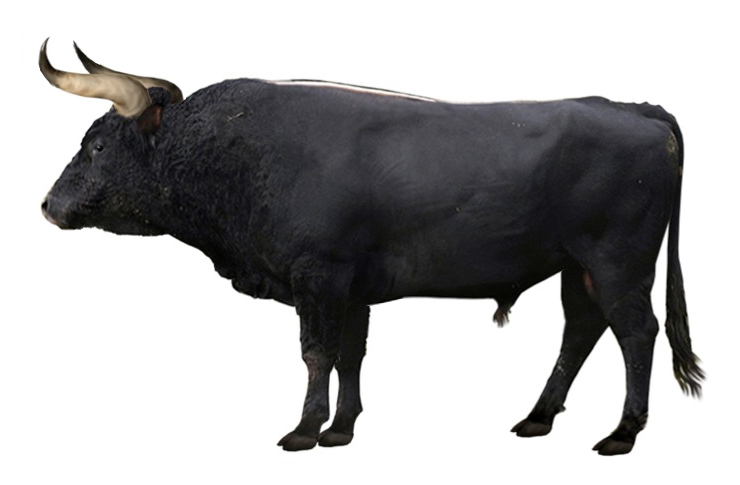 🇵🇱 Poland and 5 moreAurochs
The wild ancestor of all domestic cattle, extinct since 1627Wild · Long-horned
🇵🇱 Poland and 5 moreAurochs
The wild ancestor of all domestic cattle, extinct since 1627Wild · Long-horned
Its cousins elsewhere
All beef breeds 🇳🇱 Netherlands and 5 moreTauros
A breeding-back project building hardy cattle to stand in for the extinct aurochsWild · Grazing · Cold-hardy
🇳🇱 Netherlands and 5 moreTauros
A breeding-back project building hardy cattle to stand in for the extinct aurochsWild · Grazing · Cold-hardy
 🇲🇳 Mongolia and 4 moreYakགཡག་
A shaggy, cold-hardy highland bovine kept across the Himalayas and Tibetan PlateauYak · Triple-purpose · Cold-hardy
🇲🇳 Mongolia and 4 moreYakགཡག་
A shaggy, cold-hardy highland bovine kept across the Himalayas and Tibetan PlateauYak · Triple-purpose · Cold-hardy
 🇬🇧 United Kingdom and 2 moreAyrshire
Red-and-white dairy cattle from south-west Scotland, hardy, long-lived and easy calversTaurine · Dairy · Easy calving
🇬🇧 United Kingdom and 2 moreAyrshire
Red-and-white dairy cattle from south-west Scotland, hardy, long-lived and easy calversTaurine · Dairy · Easy calving
 🇩🇪 Germany and 3 moreHeck
A German type bred in the 1920s to recreate the extinct aurochsTaurine · Grazing · Cold-hardy
🇩🇪 Germany and 3 moreHeck
A German type bred in the 1920s to recreate the extinct aurochsTaurine · Grazing · Cold-hardy