
Amrit Mahal
In its own language: ಅಮೃತ ಮಹಲ್
A draught breed from Karnataka, bred for war and endurance by the Mysore royal household.
The Amrit Mahal is a working cattle breed from the old Mysore state in Karnataka, India. It was developed by the Hallikar community to pull heavy loads and move artillery with great speed and stamina.
- Bred by the Hallikar community for war and transport.
- Head features a central ridge and bulging forehead.
- Poor milk yield makes it a pure draught breed.
- Used by British armies to move artillery in India.
- Managed by royal departments since the 18th century.
What do Amrit Mahal cattle look like?
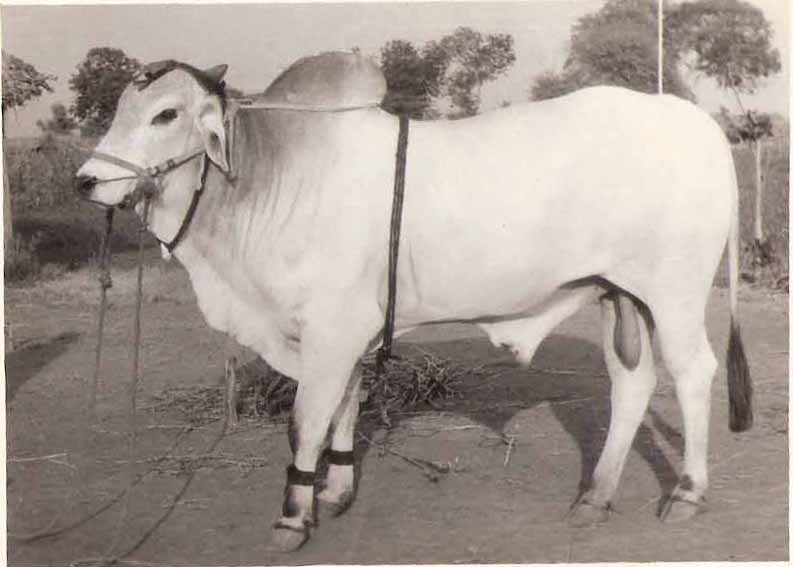
This breed comes from the former Mysore region of Karnataka. The animals have a distinct head shape with a central ridge and a prominent forehead. They were built for strength and quick movement rather than milk production. Cows give very little milk, so farmers keep them primarily as work animals. Bulls are valued for their ability to haul heavy equipment across difficult ground without tiring quickly.
Where does the Amrit Mahal come from?
The Amrit Mahal descends from the Hallikar line, along with related types like Hagalavadi and Chithradurg. The Hallikar people traditionally raised these cattle. During the rule of Chikka Devaraja Wadiyar, a royal unit called Benne chavadi managed cows and bulls for the palace kitchen. Hyder Ali later renamed this group Amrit Mahal. The British noticed the breed's power when it moved guns over long distances during military campaigns in south India.
What the Amrit Mahal is known for
These cattle are famous for lasting a long time and moving fast under load. They can march across rough terrain and carry heavy artillery pieces efficiently. Their temperament suits hard physical labour. Because they produce poor milk yields, they are not kept for dairy. Instead, their value lies in their stamina and speed when pulling carts or ploughing fields.
How the Amrit Mahal is bred and kept
Royal families from Vijayanagara through to the Mysore princes supported breeding efforts. After Tipu Sultan's defeat, the British tried managing the herd but found numbers dropped. In 1813, Captain Harvey took charge of the Kaval pastures to restore quality. By 1870, thousands of cows and hundreds of bulls were under government care. The system closed briefly due to cost but reopened with royal help before returning to the Maharaja in 1883.
Amrit Mahal, drawn
What the Amrit Mahal is kept for
Farmers use Amrit Mahal bullocks for transport and field work. They excel at moving supplies and pulling heavy wagons. The breed was historically used to drag cannons across battlefields. Today, they remain a draught breed suited to agricultural tasks requiring steady power. Milk production is too low to make them useful for dairy farming.
The land and climate of the Amrit Mahal
The breed lives in the tropical climate of Karnataka. Pastures known as kavals were sorted for wet, dry, or cold conditions. Cows in the rainy malnad areas would not cycle properly, so handlers moved them to drier plains for breeding. This seasonal movement helped maintain herd health and reproduction rates across different weather zones.
Who keeps the Amrit Mahal
The Hallikar community has always been responsible for raising these cattle. They passed down knowledge of animal husbandry through generations. Royal administrations also played a major role, creating special departments to oversee breeding and care. Military officers later managed herds during colonial times, ensuring the animals remained fit for service.
At a glance: where it belongs
Land and climate
Peoples


Faith and ritual
No specific religious rituals are tied to this breed in the records. While cattle hold sacred status in Hinduism generally, the Amrit Mahal is noted for its practical military and farming roles rather than spiritual significance.
The Amrit Mahal at fairs and festivals
There are no recorded festivals or fairs specifically featuring the Amrit Mahal. Its history is linked to military parades and royal stables rather than public celebrations or shows.
Custom and folk tradition
Local lore connects the breed to the ancient Hallikar rearing traditions. The name itself reflects its royal origins, having been renamed after the butter department. Stories tell of bullocks marching for weeks to support army campaigns, highlighting their legendary endurance in local memory.
Keeping Amrit Mahal cattle
Handlers manage grazing by moving herds between wet and dry regions. Breeding requires careful placement in drier areas to ensure cows come into season. Government units once provided structured care, branding animals and maintaining pastures. Modern keepers must replicate these conditions to preserve the breed's stamina.
Numbers, conservation and the herd book
At its peak under British management, around four thousand cows and one hundred bulls were cared for by the state. Numbers declined after administrative changes and budget cuts. The breed remains rare today, surviving mainly through dedicated conservation efforts in Karnataka.
From the Amrit Mahal
Questions people ask about Amrit Mahal
Where does the Amrit Mahal breed come from?
It originates from the former Mysore state in Karnataka, India, developed by the Hallikar community for royal and military use.
What is the Amrit Mahal kept for?
It is kept as a draught breed for pulling heavy loads and transporting equipment, not for milk production.
Why is it called Amrit Mahal?
Hyder Ali renamed the royal butter department 'Benne chavadi' to 'Amrit Mahal' after taking control of the administration.
How do Amrit Mahal cows differ from bulls?
Cows produce very little milk, while bulls are prized for their speed, endurance, and ability to haul heavy artillery.
Is the Amrit Mahal a dairy breed?
No, it is classified as a draught breed because its milk yield is too low for commercial dairy farming.
Good reading and sources
- Amrit Mahal on WikipediaEncyclopedia
- More photos on Wikimedia CommonsPhotos and video
- Wikidata recordOpen data
The facts on this page come from the Wikipedia article "Amrit Mahal", written by its contributors and used under the CC BY-SA 4.0 licence, and from its Wikidata record (CC0). EveryCow rewrote the text in its own words, with AI assistance, and compares every page with the article to make sure no passage is copied. It may be reused under the same CC BY-SA 4.0 licence with a link back.
It may contain mistakes. Sizes, colours and customs differ from one herd, valley or breeder to the next. Folk beliefs are described as tradition, never as advice. If something is wrong, tell us. Last refreshed 2026-10-16.
More from India
All the breeds of India 🇵🇰 Pakistan and 5 moreZebu
Humped, heat-tolerant cattle of South Asia, kept for milk, meat, work and ridingZebu · Dairy · Heat-tolerant
🇵🇰 Pakistan and 5 moreZebu
Humped, heat-tolerant cattle of South Asia, kept for milk, meat, work and ridingZebu · Dairy · Heat-tolerant
 🇵🇰 Pakistan and 4 moreSahiwal
A heat-tolerant zebu from the Punjab, kept for milk, meat and draught workZebu · Dairy · Heat-tolerant
🇵🇰 Pakistan and 4 moreSahiwal
A heat-tolerant zebu from the Punjab, kept for milk, meat and draught workZebu · Dairy · Heat-tolerant
 🇮🇳 India and 5 moreOngole
A short-horned zebu breed from Andhra Pradesh, white with dark markings, used for work and milk.Zebu · Draught · Heat-tolerant
🇮🇳 India and 5 moreOngole
A short-horned zebu breed from Andhra Pradesh, white with dark markings, used for work and milk.Zebu · Draught · Heat-tolerant
 🇮🇳 IndiaKhillari
A draft breed from Maharashtra and Karnataka, compact with sweeping horns and grey-white coats.Zebu · Draught · Heat-tolerant
🇮🇳 IndiaKhillari
A draft breed from Maharashtra and Karnataka, compact with sweeping horns and grey-white coats.Zebu · Draught · Heat-tolerant
Its cousins elsewhere
All draught breeds 🇮🇩 Indonesia and 5 moreBantengbanṭéng (Javanese/Sundanese)
A wild Southeast Asian ox; its tame form, Bali cattle, runs feral in northern AustraliaBanteng · Beef · Drought-hardy
🇮🇩 Indonesia and 5 moreBantengbanṭéng (Javanese/Sundanese)
A wild Southeast Asian ox; its tame form, Bali cattle, runs feral in northern AustraliaBanteng · Beef · Drought-hardy
 🇮🇹 Italy and 5 moreChianina
A massive white Italian breed known for beef production and historic draught work in Tuscany.Taurine · Beef · Heat-tolerant
🇮🇹 Italy and 5 moreChianina
A massive white Italian breed known for beef production and historic draught work in Tuscany.Taurine · Beef · Heat-tolerant
 🇫🇷 France and 2 moreAbondance
A red and white dairy breed from the French Alps, kept for milk and mountain grazing.Taurine · Dairy · Heat-tolerant
🇫🇷 France and 2 moreAbondance
A red and white dairy breed from the French Alps, kept for milk and mountain grazing.Taurine · Dairy · Heat-tolerant
 🇨🇭 SwitzerlandHérens
A small black or red Swiss alpine breed kept for cow fighting and mountain grazing.Taurine · Sport · Quick and strong
🇨🇭 SwitzerlandHérens
A small black or red Swiss alpine breed kept for cow fighting and mountain grazing.Taurine · Sport · Quick and strong