
Finnish Ayrshire
In its own language: Suomen Ayrshire
Finland's most numerous dairy breed, red and white, from Scottish Ayrshire stock
A dairy breed built on Scottish Ayrshire stock brought into Finland between about 1847 and 1923. The cattle are red and white, cows stand about 127 cm at the withers, and the breed now accounts for roughly 61 per cent of Finland's dairy herd.
- Imported Scottish Ayrshire stock, brought to Finland between about 1847 and 1923, founded the breed
- About 61 per cent of Finland's dairy cows are Finnish Ayrshires
- Average lactation is 8571 kg of milk, testing 4.28 per cent fat
- Cows about 127 cm and 580 kg; bulls about 140 cm and 1000 kg
- FAO in 2007 and DAD-IS in 2021 both rated the breed not at risk
What do Finnish Ayrshire cattle look like?
A Finnish dairy breed descended from Scottish Ayrshire cattle. The coat is red and white, in a multi-coloured pattern, so markings differ from animal to animal. Cows are the smaller sex, standing about 127 cm at the withers and weighing around 580 kg. Bulls reach roughly 140 cm and 1000 kg, and the breed average is put at 593 kg. Some animals are polled, meaning they grow no horns; the cows in one photograph wear ear-tags. The withers is the ridge between the shoulder blades, where height is measured.
Where does the Finnish Ayrshire come from?
Ayrshire cattle came to Finland in a run of imports lasting from about 1847 until 1923. Those Scottish animals are the base of the Finnish breed, and their descendants were kept and bred in Finland until they became a population in their own right. Finnish breeders formed an association for Ayrshire cattle in 1901, and a register of pedigrees has been kept since that year. Later the traffic in genetics turned around: semen from Finnish Ayrshire bulls went to the United Kingdom in the 1960s and 1970s to improve the milk of British Ayrshires.
What the Finnish Ayrshire is known for
The Finnish Ayrshire is known mainly for being Finland's leading dairy breed. It holds the biggest share of the national dairy herd, roughly 61 per cent, and it is the animal a Finnish dairy farmer is most likely to meet. Its reputation rests on production: cows give large volumes of milk, and the fat content of that milk is measured and recorded. That production record is what the breed is known for in Finland and beyond.
How the Finnish Ayrshire is bred and kept
Finnish Ayrshire breeding is recorded and deliberate. The population is a defined one, with animals entered in a register kept since the early twentieth century. Selection has centred on milk: yield over a lactation is measured, and the butterfat percentage is tracked alongside it. Because the herd is large, Finnish breeders have not had to rebuild it from outside stock, and the country's Ayrshire genetics have been strong enough to send abroad, with semen from Finnish bulls used in the United Kingdom during the 1960s and 1970s.
Finnish Ayrshire, drawn
What the Finnish Ayrshire is kept for
The breed is kept for milk. A cow's average yield across a lactation is 8571 kg, and that milk tests 4.28 per cent fat. Those numbers explain why Finnish Ayrshires dominate dairy farming in Finland, where they account for about 61 per cent of the dairy herd. Milk is the single purpose the breed is reared for, and the yield and fat figures are the measure of how well it does that job.
At a glance: where it belongs
Land and climate

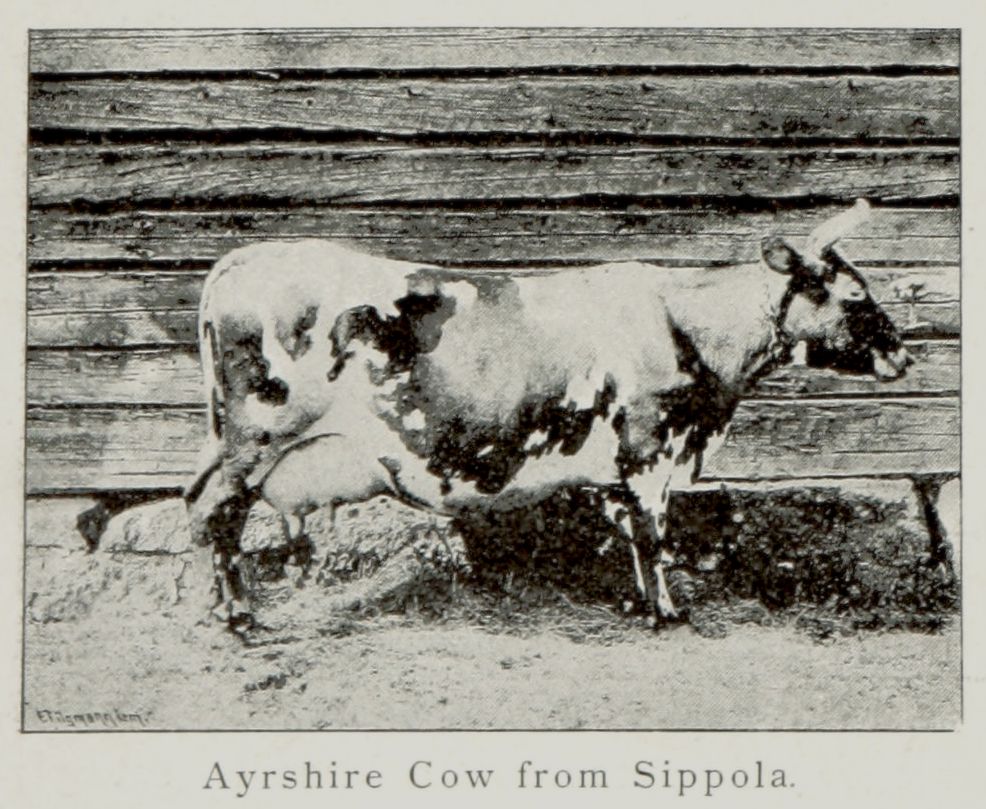

Numbers, conservation and the herd book
Finnish Ayrshires make up about 61 per cent of the dairy herd in Finland, the largest share of any dairy breed there. The breed is not at risk: FAO gave that assessment in 2007, and DAD-IS reached the same conclusion in 2021. Finnish breeders set up their Ayrshire association in 1901 and opened a herd register alongside it. The breed's genetics have also travelled, with semen exported to Britain during the 1960s and 1970s.
Questions people ask about Finnish Ayrshire
Where does the Finnish Ayrshire come from?
The breed's home is Finland, but its ancestors were Scottish. Ayrshire cattle were shipped to Finland in batches between about 1847 and 1923, and those imports became the foundation of the Finnish population, which has been bred separately ever since.
What is the Finnish Ayrshire kept for?
Milk. Finnish Ayrshires are dairy cows, and a cow's average lactation yields 8571 kg with a fat content of 4.28 per cent. They are the most numerous dairy breed in Finland, making up about 61 per cent of the national dairy herd.
How big is the breed?
Cows stand about 127 cm at the withers and weigh some 580 kg. Bulls are bigger, around 140 cm and up to 1000 kg. The breed average weight is given as 593 kg. The withers is the bony ridge between the shoulder blades, where height is measured.
Is the Finnish Ayrshire rare?
No. Both FAO in 2007 and DAD-IS in 2021 judged the breed not at risk. It is the commonest dairy breed in Finland, accounting for roughly 61 per cent of dairy cows, so the population is large rather than threatened.
Do Finnish Ayrshires have horns?
Some of the breed are polled, which means they grow no horns naturally. The cows shown in one photograph of the breed are polled and wear ear-tags.
Good reading and sources
- Finnish Ayrshire on WikipediaEncyclopedia
- More photos on Wikimedia CommonsPhotos and video
- Wikidata recordOpen data
The facts on this page come from the Wikipedia article "Finnish Ayrshire", written by its contributors and used under the CC BY-SA 4.0 licence, and from its Wikidata record (CC0). EveryCow rewrote the text in its own words, with AI assistance, and compares every page with the article to make sure no passage is copied. It may be reused under the same CC BY-SA 4.0 licence with a link back.
It may contain mistakes. Sizes, colours and customs differ from one herd, valley or breeder to the next. Folk beliefs are described as tradition, never as advice. If something is wrong, tell us. Last refreshed 2026-10-16.
More from Finland
All the breeds of Finland 🇫🇮 FinlandWestern Finncattle
A red, hornless dual-purpose breed from western Finland, kept for milk and beefTaurine · Dairy · Polled
🇫🇮 FinlandWestern Finncattle
A red, hornless dual-purpose breed from western Finland, kept for milk and beefTaurine · Dairy · Polled
 🇫🇮 FinlandEastern Finncattleitäsuomenkarja
A dual-purpose Finncattle landrace from eastern Finland, also called kyyttöTaurine · Dairy
🇫🇮 FinlandEastern Finncattleitäsuomenkarja
A dual-purpose Finncattle landrace from eastern Finland, also called kyyttöTaurine · Dairy
 🇫🇮 FinlandFinncattle
Small, hornless Finnish dairy cattle in three types: red, white and red-and-whiteTaurine · Dairy · Polled
🇫🇮 FinlandFinncattle
Small, hornless Finnish dairy cattle in three types: red, white and red-and-whiteTaurine · Dairy · Polled
 🇫🇮 FinlandNorthern Finncattle
A polled white landrace from Finland, kept for both milk and beefTaurine · Dual-purpose · Polled
🇫🇮 FinlandNorthern Finncattle
A polled white landrace from Finland, kept for both milk and beefTaurine · Dual-purpose · Polled
Its cousins elsewhere
All dairy breeds 🇺🇸 United States and 3 moreBrown Swiss
A medium-sized American dairy breed descended from the Alpine Braunvieh, kept for high milk yield and cheese-making.Composite · Dairy · Rich milk
🇺🇸 United States and 3 moreBrown Swiss
A medium-sized American dairy breed descended from the Alpine Braunvieh, kept for high milk yield and cheese-making.Composite · Dairy · Rich milk
 🇮🇳 India and 1 moreGir
A humped dairy breed from Gujarat, red and white with long drooping ears and a domed foreheadZebu · Dairy · Heat-tolerant
🇮🇳 India and 1 moreGir
A humped dairy breed from Gujarat, red and white with long drooping ears and a domed foreheadZebu · Dairy · Heat-tolerant
 🇮🇳 IndiaPunganur
A tiny zebu of the Andhra Pradesh hills, kept for milk and draught workZebu · Dual-purpose · Rich milk
🇮🇳 IndiaPunganur
A tiny zebu of the Andhra Pradesh hills, kept for milk and draught workZebu · Dual-purpose · Rich milk
 🇮🇳 IndiaRathiराठी
A brown and white dairy breed from the Thar Desert of Rajasthan, kept by nomadic Rath herders.Zebu · Dairy · Heat-tolerant
🇮🇳 IndiaRathiराठी
A brown and white dairy breed from the Thar Desert of Rajasthan, kept by nomadic Rath herders.Zebu · Dairy · Heat-tolerant