
Eastern Finncattle
In its own language: itäsuomenkarja
A dual-purpose Finncattle landrace from eastern Finland, also called kyyttö
Eastern Finncattle is a dual-purpose landrace from eastern Finland, kept for milk and beef. Cows give roughly 4100 kg of milk in a lactation, with 3.5 per cent protein and 4.4 per cent fat, and the eastern stock was recognised as a breed of its own in the 1890s.
- A dual-purpose landrace from eastern Finland
- Known in Finnish as itäsuomenkarja, or kyyttö
- Recognised as a separate breed in the 1890s
- Cows give roughly 4100 kg of milk in a lactation
- The milk tests near 4.4 per cent fat and 3.5 per cent protein
What do Eastern Finncattle cattle look like?
Eastern Finncattle is a landrace of domestic cattle and one of the native Finncattle types. It comes from the eastern part of Finland, where it is known as itäsuomenkarja, or kyyttö. It is a dual-purpose breed, so herds are kept for milk and for beef rather than for one alone. A cow gives roughly 4100 kg of milk over a lactation, and that milk carries close to 4.4 per cent fat and 3.5 per cent protein. Breeders group it with the other Finncattle landraces of the country.
Where does the Eastern Finncattle come from?
This breed belongs to eastern Finland. Cows there were set apart as a breed of their own in the 1890s. That step grew out of attempts to raise milk output: sorting local cattle into named breeds was one part of the improvement work. At the same time there was wide interest in clearly defined breeds, and that interest ran alongside strong nationalist feeling in Finland. So the naming of the eastern stock as a breed came from practical breeding aims as much as from politics.
How the Eastern Finncattle is bred and kept
Eastern Finncattle became a named breed in the 1890s, in the middle of a drive to raise milk production in Finland. Setting a population apart and giving it a name was treated as one tool in that work of improvement. Selection therefore leaned towards milk. At the same moment there was a broad fashion for well-characterised breeds, and strong nationalist feeling ran alongside it; together these helped the eastern stock win standing as a breed of its own.
Eastern Finncattle, drawn
What the Eastern Finncattle is kept for
Herds are kept for two jobs at once: milk and beef. A cow's lactation is put at roughly 4100 kg, and the milk is a rich one, testing near 3.5 per cent protein and 4.4 per cent fat. Cows are milked, and animals that leave the milking herd go into beef. Both milk and meat come from the same herd, which is what a dual-purpose breed means in practice.
From the Eastern Finncattle
Questions people ask about Eastern Finncattle
Where does Eastern Finncattle come from?
It belongs to eastern Finland. Finnish speakers call it itäsuomenkarja, or kyyttö. The eastern stock was recognised as a breed in its own right in the 1890s, during work to lift milk production in the country.
What is it kept for?
It is a dual-purpose breed, so it supplies both milk and beef. A cow yields about 4100 kg of milk in a lactation, and the milk is a rich one, testing close to 4.4 per cent fat and 3.5 per cent protein.
Why was it made a breed in the 1890s?
Recognition came as part of efforts to raise milk output. Splitting local cattle into well-defined breeds was one strand of that improvement work, and the wider interest in clearly characterised breeds matched strong nationalist feeling at the time.
Is it only a dairy animal?
No. It is classed as dual-purpose, used for milk and for beef rather than for milk alone. Cows are milked, and animals that leave the milking herd are finished for meat.
Good reading and sources
The facts on this page come from the Wikipedia article "Eastern Finncattle", written by its contributors and used under the CC BY-SA 4.0 licence, and from its Wikidata record (CC0). EveryCow rewrote the text in its own words, with AI assistance, and compares every page with the article to make sure no passage is copied. It may be reused under the same CC BY-SA 4.0 licence with a link back.
It may contain mistakes. Sizes, colours and customs differ from one herd, valley or breeder to the next. Folk beliefs are described as tradition, never as advice. If something is wrong, tell us. Last refreshed 2026-10-16.
More from Finland
All the breeds of Finland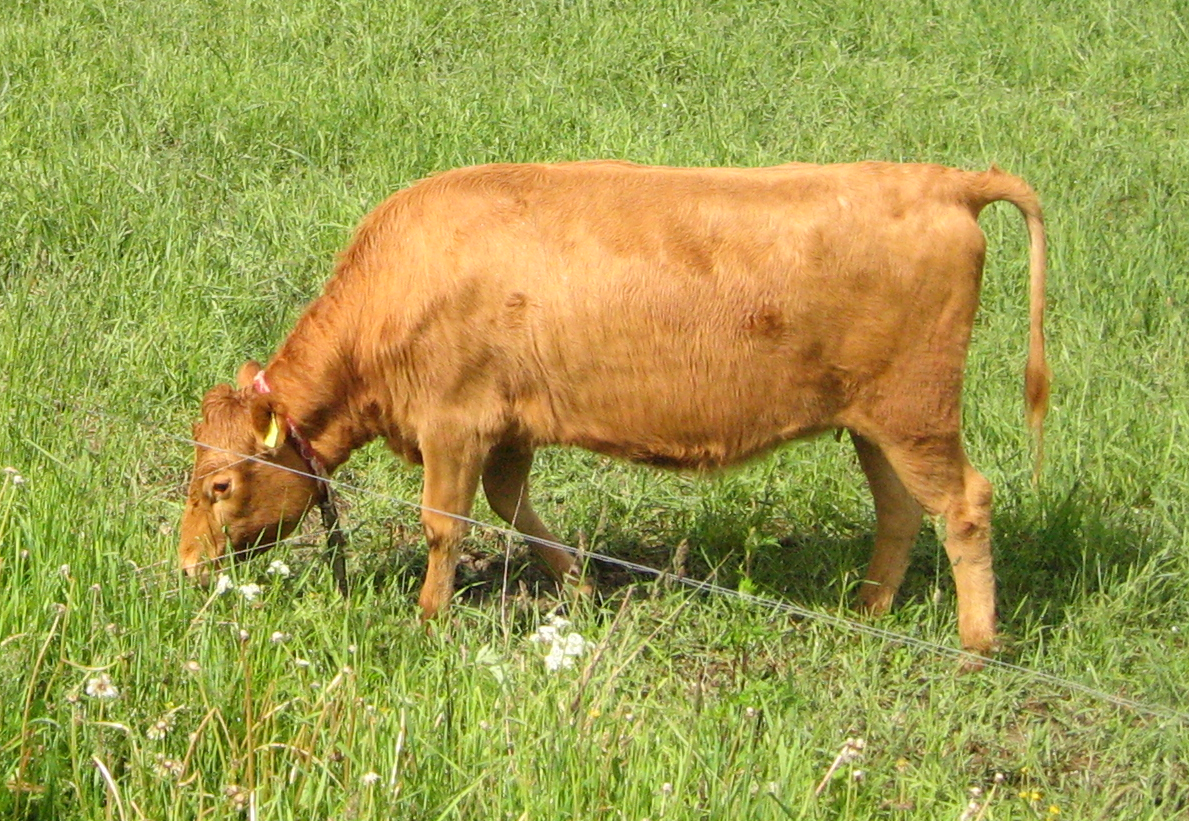 🇫🇮 FinlandWestern Finncattle
A red, hornless dual-purpose breed from western Finland, kept for milk and beefTaurine · Dairy · Polled
🇫🇮 FinlandWestern Finncattle
A red, hornless dual-purpose breed from western Finland, kept for milk and beefTaurine · Dairy · Polled
 🇫🇮 FinlandNorthern Finncattle
A polled white landrace from Finland, kept for both milk and beefTaurine · Dual-purpose · Polled
🇫🇮 FinlandNorthern Finncattle
A polled white landrace from Finland, kept for both milk and beefTaurine · Dual-purpose · Polled
 🇫🇮 FinlandFinnish AyrshireSuomen Ayrshire
Finland's most numerous dairy breed, red and white, from Scottish Ayrshire stockTaurine · Dairy · Rich milk
🇫🇮 FinlandFinnish AyrshireSuomen Ayrshire
Finland's most numerous dairy breed, red and white, from Scottish Ayrshire stockTaurine · Dairy · Rich milk
 🇫🇮 FinlandFinncattle
Small, hornless Finnish dairy cattle in three types: red, white and red-and-whiteTaurine · Dairy · Polled
🇫🇮 FinlandFinncattle
Small, hornless Finnish dairy cattle in three types: red, white and red-and-whiteTaurine · Dairy · Polled
Its cousins elsewhere
All dairy breeds 🇮🇩 Indonesia and 5 moreBantengbanṭéng (Javanese/Sundanese)
A wild Southeast Asian ox; its tame form, Bali cattle, runs feral in northern AustraliaBanteng · Beef · Drought-hardy
🇮🇩 Indonesia and 5 moreBantengbanṭéng (Javanese/Sundanese)
A wild Southeast Asian ox; its tame form, Bali cattle, runs feral in northern AustraliaBanteng · Beef · Drought-hardy
 🇮🇳 India and 4 moreGayal
A semi-domesticated bovine of the Eastern Himalayas, kept for meat, milk and ceremonyMithun · Beef
🇮🇳 India and 4 moreGayal
A semi-domesticated bovine of the Eastern Himalayas, kept for meat, milk and ceremonyMithun · Beef
 🇮🇩 Indonesia and 4 moreBali cattle
A small humped breed from Indonesia, descended from wild banteng, kept for meat and plowing.Banteng · Beef · Disease-resistant
🇮🇩 Indonesia and 4 moreBali cattle
A small humped breed from Indonesia, descended from wild banteng, kept for meat and plowing.Banteng · Beef · Disease-resistant
 🇵🇰 Pakistan and 5 moreZebu
Humped, heat-tolerant cattle of South Asia, kept for milk, meat, work and ridingZebu · Dairy · Heat-tolerant
🇵🇰 Pakistan and 5 moreZebu
Humped, heat-tolerant cattle of South Asia, kept for milk, meat, work and ridingZebu · Dairy · Heat-tolerant