Siri
A black or black-and-white zebu breed of the eastern Himalaya, kept for ploughing
Siri is a humped zebu breed from Sikkim, Darjeeling and Bhutan, built for mountain country. The cattle are usually black or black with white patches, wear a long thick coat all year, and carry long sharp horns; strong legs and feet make them useful for ploughing fields.
- A zebu breed with the hump set slightly forward of other zebu breeds
- Home given as Sikkim, Darjeeling and Bhutan
- Usually black, either all black or black with white
- Horns are long and sharp unless they are cut
- Strong legs and feet make them useful for ploughing fields
What do Siri cattle look like?
Siri is a zebu breed, so the animals are humped. Their hump sits a little further forward on the back than the hump of other zebu breeds. The coat is usually black, either solid or with white patches, and the hair is long and thick all year round. Siri are large next to many other kinds of cattle, and they carry long, sharp horns unless those horns are cut. Strong legs and feet fit the breed for ploughing, and the bulls are prized as among the strongest native breeds.
Where does the Siri come from?
The breed belongs to the eastern Himalaya. Its home is given as Sikkim, Darjeeling and Bhutan, and it is a native zebu of that country. Sikkim and Darjeeling lie in India, while Bhutan is a country of its own, so the breed's range crosses a national frontier. The hump marks it out as humped cattle rather than a humpless kind, and the hump is carried slightly forward of the usual zebu position.
What the Siri is known for
Siri cope well with mountain country. Their long, powerful legs are given as the reason they manage there, and those same legs, with strong feet, make them steady on steep, uneven ground and useful at the plough. Bulls of the breed are prized; they are described as among the strongest of the native breeds, which is why a good bull matters so much.
Siri, drawn
What the Siri is kept for
Siri are working cattle. Their strong legs and feet make them useful for ploughing fields, and that is the job named for them. Because they live well in the mountains, the ploughing can be done where other cattle struggle, by animals raised in that hill country. Bulls carry the highest value: they are described as among the strongest of the native breeds, so a good bull is worth a great deal to its owner.
The land and climate of the Siri
These are mountain cattle. They are kept in the hill districts of Sikkim, Darjeeling and Bhutan and are reported to live well there. Long, powerful legs are the reason given, letting the animals move about mountain ground where the footing is uneven and the going is steep. The coat is thick and the hair is long, and it stays that way through the year.
At a glance: where it belongs
Land and climate
From the Siri
Questions people ask about Siri
Where does Siri cattle come from?
Sikkim, Darjeeling and Bhutan are named as its home, in the eastern Himalaya, and it is a native zebu of that mountain country. Sikkim and Darjeeling are in India, while Bhutan is a separate country, so the breed's range crosses a border.
What are Siri cattle kept for?
Ploughing. Strong legs and feet make them useful in the fields, and because they live well in the mountains the work can be done where other cattle would struggle. Bulls are especially valued, being described as among the strongest native breeds.
What do Siri cattle look like?
They are usually black, either solid black or black with white. The coat is thick and the hair long, and it stays that way all year round. The horns are long and sharp when they are not cut, and the hump sits slightly forward of the usual zebu position.
Are Siri cattle suited to mountain life?
They are reported to live well in the mountains, and their long, powerful legs are given as the reason. Those legs and strong feet carry them over steep, uneven ground in the hill districts of Sikkim, Darjeeling and Bhutan where the breed is kept.
Good reading and sources
The facts on this page come from the Wikipedia article "Siri cattle", written by its contributors and used under the CC BY-SA 4.0 licence, and from its Wikidata record (CC0). EveryCow rewrote the text in its own words, with AI assistance, and compares every page with the article to make sure no passage is copied. It may be reused under the same CC BY-SA 4.0 licence with a link back.
It may contain mistakes. Sizes, colours and customs differ from one herd, valley or breeder to the next. Folk beliefs are described as tradition, never as advice. If something is wrong, tell us. Last refreshed 2026-10-16.
More from India
All the breeds of India 🇵🇰 Pakistan and 5 moreZebu
Humped, heat-tolerant cattle of South Asia, kept for milk, meat, work and ridingZebu · Dairy · Heat-tolerant
🇵🇰 Pakistan and 5 moreZebu
Humped, heat-tolerant cattle of South Asia, kept for milk, meat, work and ridingZebu · Dairy · Heat-tolerant
 🇵🇰 Pakistan and 4 moreSahiwal
A heat-tolerant zebu from the Punjab, kept for milk, meat and draught workZebu · Dairy · Heat-tolerant
🇵🇰 Pakistan and 4 moreSahiwal
A heat-tolerant zebu from the Punjab, kept for milk, meat and draught workZebu · Dairy · Heat-tolerant
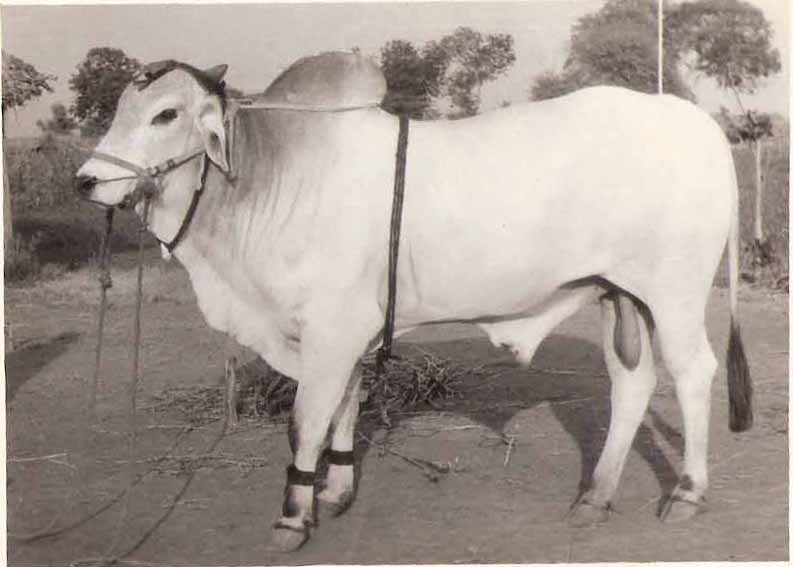 🇮🇳 India and 5 moreOngole
A short-horned zebu breed from Andhra Pradesh, white with dark markings, used for work and milk.Zebu · Draught · Heat-tolerant
🇮🇳 India and 5 moreOngole
A short-horned zebu breed from Andhra Pradesh, white with dark markings, used for work and milk.Zebu · Draught · Heat-tolerant
 🇮🇳 IndiaKhillari
A draft breed from Maharashtra and Karnataka, compact with sweeping horns and grey-white coats.Zebu · Draught · Heat-tolerant
🇮🇳 IndiaKhillari
A draft breed from Maharashtra and Karnataka, compact with sweeping horns and grey-white coats.Zebu · Draught · Heat-tolerant
Its cousins elsewhere
All draught breeds 🇲🇳 Mongolia and 4 moreYakགཡག་
A shaggy, cold-hardy highland bovine kept across the Himalayas and Tibetan PlateauYak · Triple-purpose · Cold-hardy
🇲🇳 Mongolia and 4 moreYakགཡག་
A shaggy, cold-hardy highland bovine kept across the Himalayas and Tibetan PlateauYak · Triple-purpose · Cold-hardy
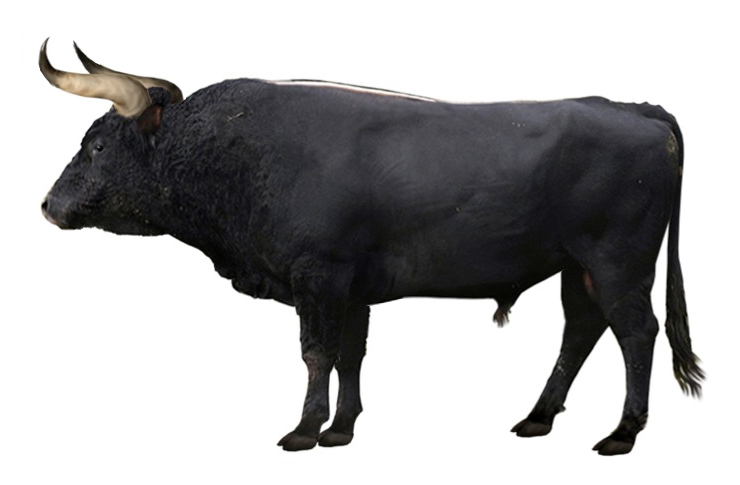 🇵🇱 Poland and 5 moreAurochs
The wild ancestor of all domestic cattle, extinct since 1627Wild · Long-horned
🇵🇱 Poland and 5 moreAurochs
The wild ancestor of all domestic cattle, extinct since 1627Wild · Long-horned
 🇮🇩 Indonesia and 5 moreBantengbanṭéng (Javanese/Sundanese)
A wild Southeast Asian ox; its tame form, Bali cattle, runs feral in northern AustraliaBanteng · Beef · Drought-hardy
🇮🇩 Indonesia and 5 moreBantengbanṭéng (Javanese/Sundanese)
A wild Southeast Asian ox; its tame form, Bali cattle, runs feral in northern AustraliaBanteng · Beef · Drought-hardy
 🇨🇳 China and 2 moreWild yak
A massive, shaggy wild bovine native to the high plateaux and peaks of the HimalayasYak · Beef · Cold-hardy
🇨🇳 China and 2 moreWild yak
A massive, shaggy wild bovine native to the high plateaux and peaks of the HimalayasYak · Beef · Cold-hardy